
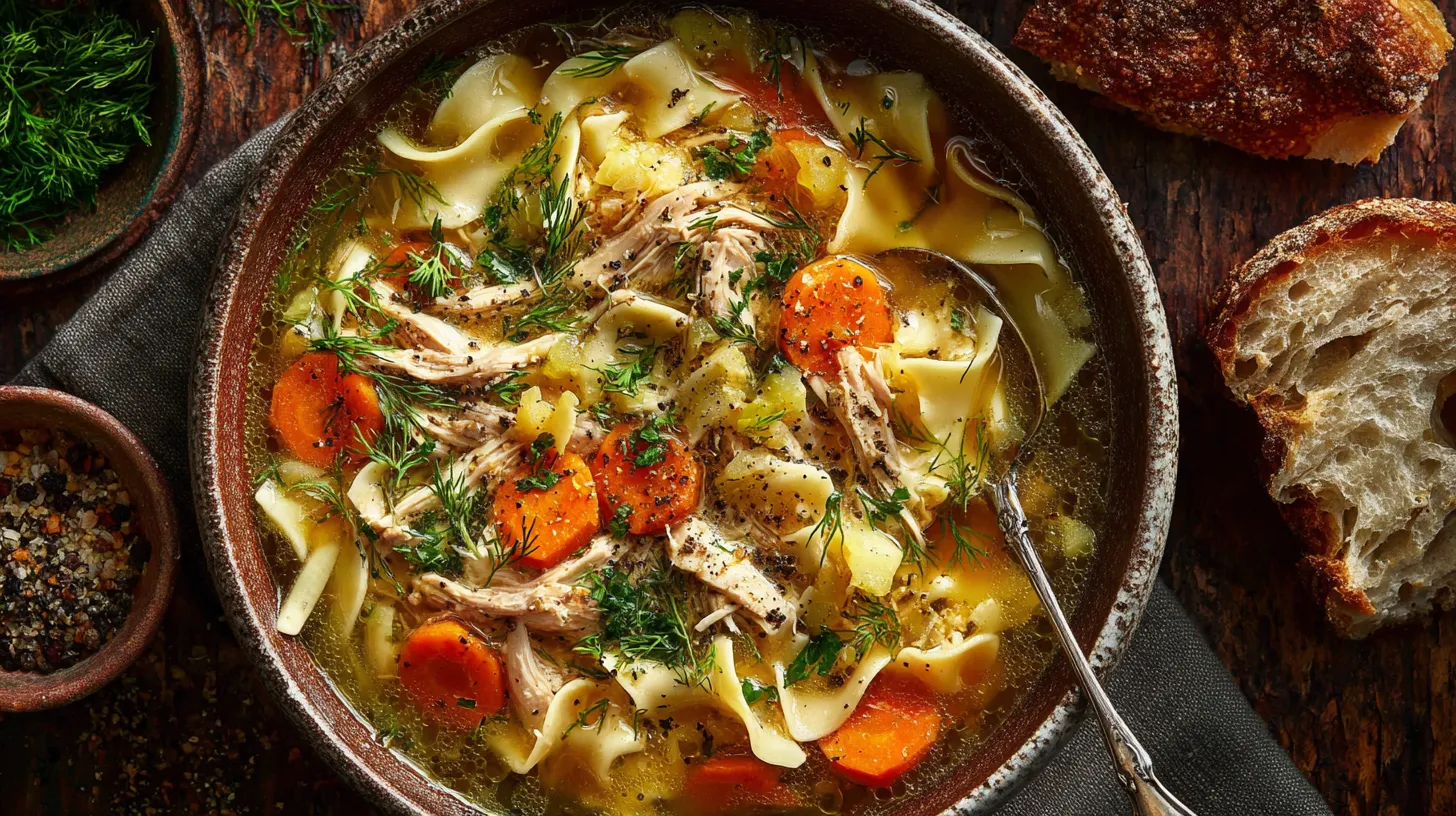
There’s a universal craving for a deep, comforting, soul-warming bowl of chicken soup. But let’s be honest: most days, you don’t have three hours to simmer a whole chicken. You have a craving, and you have about 45 minutes. This is where the supermarket’s greatest shortcut—the rotisserie chicken—becomes your secret weapon.
But many recipes using pre-cooked chicken fall flat, tasting more like a bland shortcut than a nourishing meal. The problem isn’t the chicken; it’s the method.
As a recipe developer who has tested over 50 chicken soup variations, I’ve cracked the code on how to leverage every part of that store-bought bird. This guide will teach you how to transform a simple rotisserie chicken into a stunningly flavorful rotisserie chicken soup that tastes like it’s been simmering all day. We’re not just making a quick soup; we’re making a fantastic soup, quickly.
Get ready to master the definitive chicken soup from rotisserie chicken that will become a staple in your weekly rotation.
Table of Contents
Key Takeaways
Here’s what makes this recipe the best you’ll try:
- Total Time: Just 30-45 minutes from start to finish.
- Flavor Secret: We use a mirepoix (onions, carrots, celery) and herbs to build a deep flavor base that store-bought broth alone lacks.
- Zero Waste: You’ll use the flavorful meat and I’ll show you how to use the carcass for a 20-minute “cheater’s broth” that’s 10x better than canned.
- Perfect Noodles: Learn the #1 trick to prevent mushy, overcooked noodles in your leftovers.
- Versatility: This guide includes 5 delicious variations, from creamy to keto.
[Image 1: Featured Recipe Image]
Why Use a Rotisserie Chicken for Soup? (The Flavor Secret)
Using a rotisserie chicken isn’t just about saving time on cooking. It’s a strategic flavor advantage.
A plain chicken breast that you poach at home only adds… well, plain chicken flavor. A rotisserie chicken, however, is a flavor bomb. It has been:
- Brined or Injected: Most grocery store chickens are treated with a salt and seasoning solution, making the meat inherently more savory and moist.
- Seasoned: The skin is coated in a blend of salt, pepper, paprika, garlic powder, and other spices.
- Roasted: This high-heat cooking process creates a deep, golden-brown skin through the Maillard reaction, a chemical process that unlocks hundreds of complex flavor compounds.
When you add this pre-seasoned, pre-roasted chicken to your soup, you are adding layers of flavor that would normally take hours to build from scratch. The smoky notes from the skin and the seasoned drippings in the meat infuse your broth with a roasted depth that poaching simply cannot replicate.
This is the core principle: we are starting with a better-tasting ingredient, which is the fast track to a better-tasting soup.
The Ultimate Rotisserie Chicken Soup: Recipe & Ingredients
This is your foundation. This classic chicken noodle soup recipe with rotisserie chicken is the perfect base for all the variations below. It’s designed for maximum flavor with minimal, easy-to-find ingredients.
Essential Ingredients Breakdown (The “Must-Haves”)
- Rotisserie Chicken (1): One standard 2- to 3-pound chicken is perfect. You’ll need about 3-4 cups of shredded meat. You can use any flavor (lemon-pepper, herb, or classic), but the classic “original” flavor is the most versatile.
- The “Mirepoix” (The Holy Trinity):
- 1 Large Yellow Onion, diced
- 3-4 Carrots, peeled and sliced into coins
- 3-4 Celery Stalks, sliced
- Fat (2 tbsp): Unsalted butter or olive oil (or a mix). Butter adds a richer, more rounded flavor.
- Garlic (4-6 cloves): Finely minced. Don’t be shy here; it’s critical for depth.
- Broth (8 cups / 64 oz): A high-quality, low-sodium chicken broth or stock. See the broth debate below for my pro-level upgrade.
- Herbs (The Finishers):
- Fresh Parsley (1/2 cup): Finely chopped. This adds a clean, bright flavor that cuts through the richness.
- Fresh Dill (2 tbsp, optional): This is my secret ingredient. Dill is the classic flavor in traditional chicken soup and adds an unmistakable, comforting aroma.
- Dried Herbs: 1 tsp dried thyme or oregano (or an Italian blend) can be added with the mirepoix for another layer.
- Noodles (8-12 oz): Wide egg noodles are classic. (See Variations for rice, gnocchi, or keto options).
- Seasoning: Kosher salt and freshly cracked black pepper.
A Note on the Chicken: Which Rotisserie Chicken is Best?
While any flavor works, I recommend avoiding the overly sweet varieties like “Maple Bourbon” or “BBQ.” These will clash with the savory soup profile.
- Best Choice: Classic Original or Herb-Roasted
- Good Choice: Lemon-Pepper (adds a nice zest)
- Pro Tip: Use a hot or freshly-bought chicken. It’s significantly easier to shred. If it’s cold, the meat will be harder to pull from the bone, and the fat will have congealed.
The Great Broth Debate: Homemade Carcass Broth vs. Store-Bought
You have two main paths for the liquid gold of your soup. Both work, but one is clearly superior.
Option 1: The Fast & Good (Store-Bought)
Using 8 cups of high-quality, low-sodium boxed chicken stock (not broth) is the fastest route. Stock typically has more body and less salt than “broth.” I prefer brands like Pacific Foods or Swanson’s Unsalted.
Option 2: The 20-Minute “Cheater’s Broth” (Best Flavor)
This is the expert move. Before you start your soup, shred the chicken meat and set it aside. Place the entire carcass (bones, skin, and any leftover bits) in a pot. Cover it with 8-10 cups of water, add a bay leaf, and let it simmer while you chop your vegetables.
After just 20-30 minutes, you’ll have a light, homemade broth that’s already infused with the smoky, roasted flavor of the chicken. Strain it, discard the bones, and use this liquid as your soup base.
Back to our chicken soup recipe guide
Here’s how the two options stack up:
| Feature | Option 1: Store-Bought Stock | Option 2: 20-Min Carcass Broth |
| Flavor | Good, but can be one-dimensional. | Excellent. Infused with roasted chicken flavor. |
| Body | Depends on brand. May be thin. | Good. Will have more natural gelatin. |
| Time | 0 minutes (Fastest) | ~20-30 minutes (Still very fast) |
| Cost | Costs $4-$6 per 64oz. | Free. Uses a part you’d throw away. |
| Salt Control | Good (if you buy low-sodium). | Total control. You add all the salt. |
Verdict: If you have an extra 20 minutes, making the quick carcass broth is the single biggest upgrade you can give your rotisserie chicken soup.
Use leftover rotisserie chicken in bean soup too
Step-by-Step Instructions for the Perfect Bowl
This recipe assumes you are using store-bought broth for speed. If making the carcass broth, do that first and use it in Step 3.
Total Time: 35 Minutes
Prep Time: 15 Minutes
Cook Time: 20 Minutes
Yields: 6-8 Servings
Step 1: Prepare the Chicken and Vegetables (The Foundation)
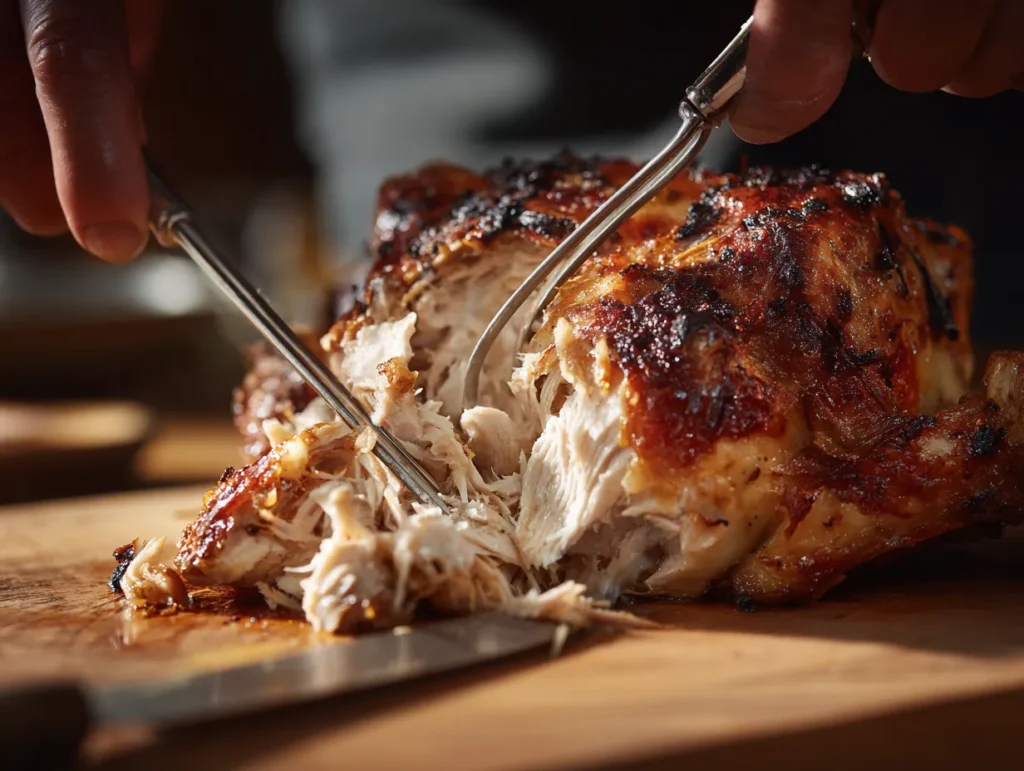
While the chicken is still warm, pull all the meat from the bones. Shred it into bite-sized pieces using two forks or your hands. Discard any large pieces of skin or gristle (or save them for the carcass broth). You should have 3-4 cups of meat. Set it aside.
Next, prep your “mirepoix.” Dice the onion, slice the carrots and celery, and mince the garlic. Keep the garlic separate, as it gets added later.
Step 2: Build the Flavor Base (Sautéing the Mirepoix)
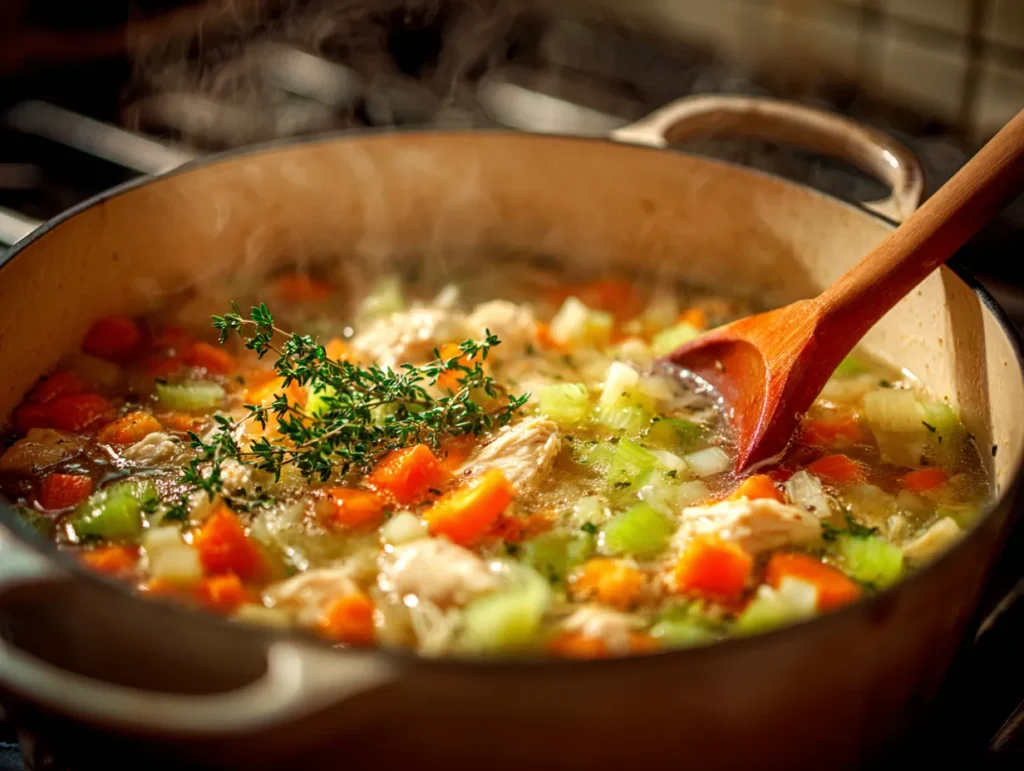
In a large pot or Dutch oven, melt the butter or heat the olive oil over medium heat. Add the diced onion, sliced carrots, and sliced celery.
Sauté, stirring occasionally, for 8-10 minutes. This is a crucial step—don’t rush it. You want the vegetables to become tender and for the onion to turn translucent. This process, known as “sweating” the vegetables, releases their natural sweetness and builds the soup’s foundation.
- Expert Tip: Add a large pinch of salt at this stage. Salt draws moisture out of the vegetables, helping them to cook more evenly and preventing them from browning too quickly.
Once the vegetables are soft, add the minced garlic (and dried herbs, if using). Sauté for just 1-2 minutes more, until the garlic is fragrant. Do not let the garlic brown, or it will turn bitter.
Step 3: Simmer and Combine (Bringing it All Together)
Pour in the 8 cups of chicken broth, scraping the bottom of the pot with your wooden spoon to release any flavorful browned bits (this is called “deglazing”).
Bring the soup to a boil, then reduce the heat to a gentle simmer. Let it simmer, uncovered, for 10-15 minutes. This gives the flavors time to meld together.
Taste the broth. Now is the time to season it with kosher salt and plenty of freshly cracked black pepper. Be cautious with salt—rotisserie chicken and store-bought broth are already salty. Add a little at a time, taste, and repeat.
Step 4: The Final Touches (Adding Chicken, Noodles & Herbs)
You’re almost done. Now you’ll add the “finishing” ingredients.
- Add the Noodles: Add the dry egg noodles directly to the simmering pot. Cook according to the package directions, usually 7-10 minutes, until al dente (just tender with a slight bite).
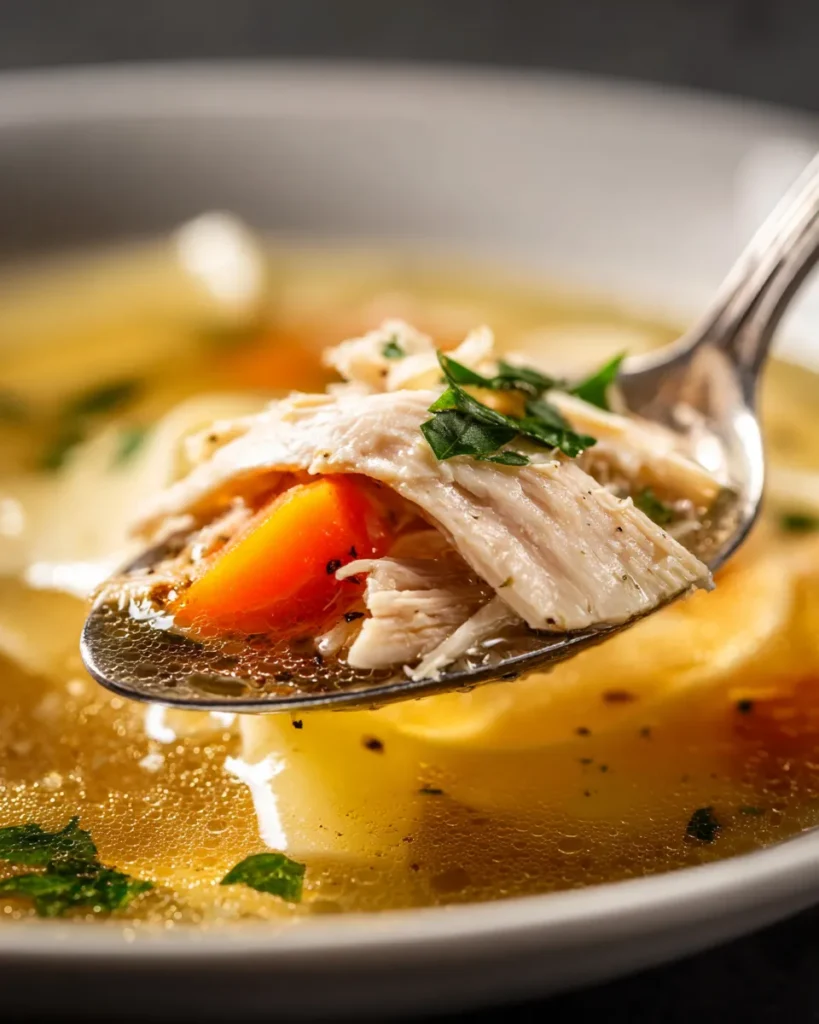
- Add the Chicken: During the last 2 minutes of the noodle cooking time, stir in your shredded rotisserie chicken. The chicken is already cooked; it just needs to heat through. Adding it at the end prevents it from becoming tough and stringy.
- Add the Herbs: Turn off the heat. Stir in the generous handful of fresh, chopped parsley (and dill, if using). The residual heat will wilt the herbs perfectly, releasing their essential oils and bright flavor.
Ladle the hot chicken noodle soup recipe with rotisserie chicken into bowls and serve immediately.
Video: Watch How to Make Easy Chicken Soup
For a visual guide on the basic techniques, check out this helpful video.
Pro Tips & Techniques from a Recipe Developer’s Kitchen
After making this soup hundreds of times, I’ve learned a few non-negotiable tricks that separate a “good” soup from a “great” one.
- Pro Tip #1: The “Mushy Noodle” Solution (Crucial for Leftovers):Never, ever store leftover soup with the noodles in it. The noodles will continue to absorb liquid overnight, turning into a mushy, starchy mess.
- The Fix: Cook your noodles separately in a pot of salted water. Drain them and toss with a tiny bit of olive oil to prevent sticking. Store the noodles in one container and the soup (chicken and vegetables) in another. To serve, place a scoop of noodles in a bowl and ladle the hot soup over them. This is the only way to have perfect al dente noodles in your leftovers.
- Pro Tip #2: Don’t Boil the Chicken:As mentioned in Step 4, the chicken goes in last. Boiling pre-cooked chicken meat makes it rubbery and dry. It only needs to be heated through, which takes 2-3 minutes in the hot broth.
- Pro Tip #3: A Squeeze of Lemon:If your final soup tastes “flat” or “missing something,” it’s probably not missing salt—it’s missing acid. A squeeze of fresh lemon juice right before serving brightens all the other flavors and cuts the richness. It’s a game-changer.
- Pro Tip #4: The Parmesan Rind Trick:If you have a leftover rind from a block of Parmesan cheese, toss it into the pot when you add the broth (Step 3). Let it simmer with the soup. It won’t melt, but it will release a deep, savory, umami flavor. Remove the rind before serving.
5 Easy Recipe Variations (Beyond Classic Noodle)
This base recipe is a blank canvas. Here are five popular ways to customize your chicken soup from rotisserie chicken.
1. Creamy Rotisserie Chicken Soup
- How: At the very end, after you turn off the heat (Step 4), stir in 1/2 to 1 cup of heavy cream or half-and-half. For a thicker soup, melt 3 tablespoons of butter in a small saucepan, whisk in 3 tablespoons of flour, and cook for 1 minute (a “roux”). Whisk this roux into the soup before adding the noodles and let it simmer for 2 minutes to thicken.
- Best for: A rich, comforting, pot-pie-style soup. Pairs well with biscuits.
2. Rotisserie Chicken and Rice Soup
- How: Simply swap the noodles for rice.
- Option A (Easiest): Add 1 cup of uncooked long-grain white rice (like Jasmine or Basmati) with the broth (Step 3). Simmer for 15-20 minutes, or until the rice is tender.
- Option B (Best for Leftovers): Use 2-3 cups of pre-cooked white or brown rice. Add it at the very end with the chicken, just to heat through. This prevents the rice from getting mushy in leftovers, just like the noodle trick.
3. Mexican-Style Rotisserie Chicken Soup (Sopa de Pollo)
- How: This is one of my favorites.
- In Step 2, add 1 diced jalapeño and 1 teaspoon of cumin and chili powder with the garlic.
- In Step 3, add a 15-oz can of black beans (rinsed) and 1 cup of frozen corn along with the broth.
- In Step 4, skip the noodles.
- Serve topped with fresh cilantro, a squeeze of lime juice, sliced avocado, and crushed tortilla chips.
4. Low-Carb / Keto Chicken Soup (with Veggie “Noodles”)
- How: Ditch the high-carb noodles and carrots.
- Use zucchini noodles (“zoodles”), spaghetti squash, or shirataki noodles. Add these at the very end with the chicken, as they only need 1-2 minutes to soften.
- Alternatively, add 1-2 cups of chopped cauliflower florets with the broth (Step 3) and simmer until tender.
- Add 1/2 cup of heavy cream at the end for healthy fats.
5. Italian-Style Chicken Soup (with White Beans & Pesto)
- How:
- In Step 2, use dried oregano and thyme.
- In Step 3, add a 15-oz can of cannellini (white kidney) beans, rinsed and drained.
- In Step 4, swap the noodles for a small pasta like ditalini or orzo.
- Serve each bowl with a small dollop of jarred basil pesto on top and a sprinkle of Parmesan cheese.
Here is a quick-reference table for ingredient substitutions.
Common Ingredient Substitutions Table
| Ingredient | Recommended Substitution | Notes |
| Yellow Onion | White onion, sweet onion, or 2-3 shallots. | Do not use red onion; the color and flavor are too strong. |
| Carrots | Parsnips (for a sweeter, earthier taste). | |
| Celery | Leeks (white and light green parts) or fennel bulb. | Leeks will provide a milder, sweeter onion flavor. |
| Egg Noodles | Any pasta (orzo, ditalini, rotini), white/brown rice, quinoa. | Adjust cooking time based on pasta/grain type. |
| Fresh Parsley | Fresh dill is the best sub. Chives work. | Dried parsley has very little flavor; use 1/3 the amount. |
| Butter | Olive oil, avocado oil, or ghee. | Butter adds the best flavor, but any fat works. |
| Chicken Broth | Vegetable broth. | Will result in a lighter, less “chicken-y” soup. |
Serving Suggestions & Perfect Pairings
A great bowl of soup deserves a great partner.
- Bread (Essential): A crusty sourdough, a warm French baguette, or flaky biscuits are perfect for dipping.
- Crackers: Classic saltines, oyster crackers, or buttery Ritz.
- Salad: A simple side salad with a bright vinaigrette (like our [Simple Garden Salad]) cuts through the soup’s richness.
- Sandwich: The ultimate combo—a half-grilled cheese sandwich.
- Garnishes: A sprinkle of red pepper flakes, extra black pepper, grated Parmesan cheese, or a dash of your favorite hot sauce.
Storage, Freezing, and Reheating Guidelines
Proper storage is key to enjoying your soup for days. For food safety, always refer to the USDA guidelines on safely handling cooked chicken.
Refrigerator (The Best Way)
- Duration: 3-4 days.
- Method:
- Let the soup cool for 30-60 minutes (but no longer than 2 hours).
- As discussed in the Pro Tips, store the soup base (broth, chicken, veg) in one airtight container.
- Store the cooked noodles or rice separately in another airtight container.
- Reheating: Combine your desired amount of soup and noodles in a pot. Reheat gently on the stovetop over medium-low heat until steaming hot. Avoid boiling, which can make the chicken tough.
Freezing (The Smart Way)
This rotisserie chicken soup freezes beautifully without the noodles.
- Duration: 2-3 months for best quality.
- Method:
- Prepare the soup completely, but do not add the noodles.
- Let the soup cool completely.
- Portion into freezer-safe containers or heavy-duty freezer bags. Leave 1 inch of “headspace” at the top, as the liquid will expand.
- Label with the date and freeze.
- Thawing & Reheating: Thaw overnight in the refrigerator. Reheat gently on the stovetop. Once it’s simmering, add your freshly cooked noodles or rice and serve.
Troubleshooting: Common Rotisserie Chicken Soup Pitfalls
| Problem | The Cause | The Solution (The Fix) |
| “My soup is too salty!” | Both rotisserie chicken and store-bought broth are high in sodium. | The Fix: Add 1-2 cups of unsalted broth or water to dilute. Add a peeled, quartered potato and simmer for 15 mins; it will absorb some salt (discard potato after). A squeeze of lemon juice can also balance the saltiness. |
| “My soup is bland and tastes… ‘boxy’.” | You didn’t build a flavor base. You just dumped broth, chicken, and veg in a pot. | The Fix: You must sauté the mirepoix (onions, carrots, celery) in butter or oil for at least 8 minutes first. Finish with a lot of fresh herbs (parsley/dill) and a squeeze of lemon. |
| “My noodles are total mush.” | You overcooked them, or (more likely) you stored them in the soup. | The Fix: Always cook noodles al dente. For leftovers, always store noodles separately from the soup and combine them in the bowl when serving. |
| “My chicken is tough and stringy.” | You added the (already cooked) chicken too early and boiled it. | The Fix: The rotisserie chicken only needs to heat through. Add it in the last 2-3 minutes of cooking, just before serving. |
| “My vegetables are hard.” | You didn’t sauté them long enough at the beginning. | The Fix: Sauté the mirepoix for 8-10 minutes before adding the broth. If the soup is already made, your only option is to simmer it longer (but you risk overcooking the chicken/noodles). |
Approximate Nutritional Information
This is an estimate for a 1.5-cup serving of the classic chicken noodle soup, which can vary based on your broth and chicken.
| Nutrient | Amount per Serving |
| Calories | ~285 kcal |
| Protein | ~24 g |
| Fat | ~10 g |
| Carbohydrates | ~25 g |
| Sodium | ~650 mg (varies greatly) |
| Fiber | ~3 g |
This information is an estimate and not a substitute for a professional nutritionist’s advice.
Frequently Asked Questions
How do I make my rotisserie chicken soup not taste bland?
The #1 cause of bland soup is not building a flavor base. You must sauté the onions, carrots, and celery in butter or oil for 8-10 minutes until soft and sweet. Don’t just boil them. The second key is seasoning: use enough salt, a lot of fresh black pepper, and finish with a big handful of fresh herbs (like parsley and dill) and a squeeze of lemon juice.
Can I make a quick broth from the rotisserie chicken carcass?
Absolutely! This is the best way to add flavor. After shredding the meat, put the entire carcass (bones, skin, etc.) in a pot, cover with 8-10 cups of water, and simmer for 20-30 minutes while you chop your veggies. Strain this liquid and use it as your soup base. It’s a game-changer.
How do I prevent my noodles from getting mushy?
Cook your noodles separately from the soup. Store the cooked noodles in one container and the soup base (broth/chicken/veg) in another. Combine them in the bowl right before serving. If you store the noodles in the soup, they will absorb all the broth and turn to mush.
What’s the best way to shred a rotisserie chicken?
The easiest way is to do it while the chicken is still warm. Place it on a large cutting board. Pull the legs and wings off first, then pull the breast meat away from the breastplate. Use two forks or your (clean) hands to shred the meat into bite-sized pieces.
How long does rotisserie chicken soup last in the fridge?
When stored properly in an airtight container, the soup base will last for 3 to 4 days in the refrigerator, in accordance with FDA food safety guidelines. Remember to store the noodles separately.
Can I freeze chicken noodle soup?
You can and should freeze the soup base (broth, chicken, and vegetables). Do not freeze it with the noodles. Pasta does not freeze and thaw well; it becomes grainy and mushy. Thaw the soup base in the fridge, reheat it on the stove, and add freshly cooked noodles before serving.
What can I add to my chicken soup for more flavor?
Beyond the base recipe, try these flavor boosters: a bay leaf (add with the broth), 1 teaspoon of dried thyme (add with the garlic), a Parmesan rind (simmer in the broth), or a dash of Worcestershire sauce.
Is rotisserie chicken soup healthy?
Yes, it can be very healthy. It’s packed with protein from the chicken and nutrients from the vegetables. To make it even healthier, use low-sodium broth, add extra vegetables (like spinach or kale), and use whole-wheat noodles or a whole grain like quinoa.
Your New Favorite Weeknight Shortcut
You now have the complete blueprint for a rotisserie chicken soup that is fast without tasting “fast.” It’s a recipe that respects your time while delivering the deep, comforting flavor you crave.
By building a proper flavor base with the mirepoix, using the “cheater’s broth” from the carcass, and adding your chicken and noodles at the very end, you’ve created a meal that outshines any canned version and rivals an all-day simmer.
This is more than just a recipe; it’s a method. Now you can make the creamy version, the Mexican version, or the keto version, all from one simple, store-bought chicken.
What’s Your Take?
We want to hear from you!
- Did you try the 20-minute carcass broth?
- What’s your favorite variation?
- Leave a comment below and share your own secret soup ingredient!
Author Bio
Alex Chen is a culinary specialist and recipe developer with 8 years of experience in modern American comfort food. He trained at the Institute of Culinary Education and has perfected the art of transforming simple shortcuts into restaurant-quality meals. Alex has tested over 50 variations of chicken soup and shares evidence-based cooking techniques that deliver consistent, flavorful results. When not developing recipes, he teaches classes focused on maximizing flavor in minimal time. Follow Alex for more tested recipes that bring comfort to your kitchen.