
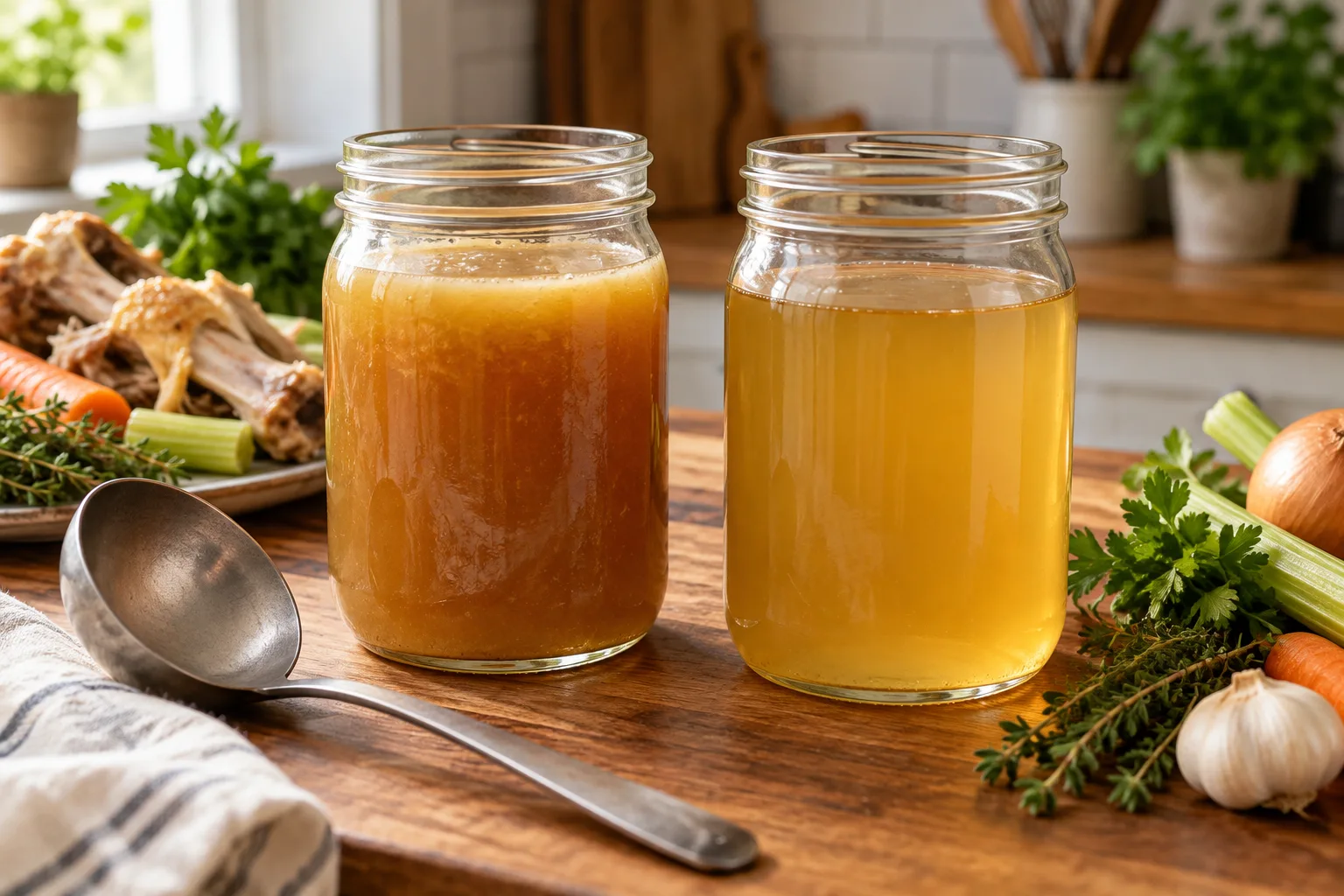
TL;DR
What it is for: A quick decision guide for the soup aisle and your recipes: understand stock, broth and bone broth, then pick the right one or swap them with confidence.
- Chicken stock vs broth: stock is simmered mainly from bones and has more body; broth is made mostly from meat and is lighter and seasoned.
- Bone broth is a stock simmered much longer (12–24 hours) for extra gelatin.
- You can swap them 1:1 in almost any recipe; adjust the salt.
- Store-bought labels are used loosely, so compare sodium and ingredients on the carton.
In the chicken stock vs broth debate, the short answer is this: stock is simmered mostly from bones for several hours, so it is richer and thicker and usually unsalted, while broth is simmered mostly from meat for a shorter time, so it is lighter and seasoned. In most recipes you can use one for the other at a 1:1 ratio, adjusting the salt.
Table of Contents
Chicken stock vs broth: the 5 differences
Chicken stock vs broth comes down to five practical differences. The table sums up the classic kitchen definitions. Home cooks and brands do not always follow them strictly, but they explain why the two taste different.
| Chicken stock | Chicken broth | Bone broth | |
|---|---|---|---|
| Main ingredient | Bones, joints, some meat | Meat, some bones | Bones, wings, feet |
| Simmer time | 3–6 hours | 1–2 hours | 12–24 hours |
| Body when chilled | Soft gel | Liquid | Firm gel |
| Seasoning | Usually unsalted | Seasoned to sip | Varies |
| Best uses | Sauces, gravies, risotto | Soups, sipping, cooking grains | Sipping, rich soups, sauces |
1. Ingredients
Stock starts with bones: carcasses, backs, necks and wings. Broth starts with meat, sometimes a whole chicken, with fewer bones.
2. Simmer time
Bones need hours to release collagen, so stock simmers 3–6 hours. Meat gives up its flavor faster, and broth is ready in 1–2 hours.
3. Body
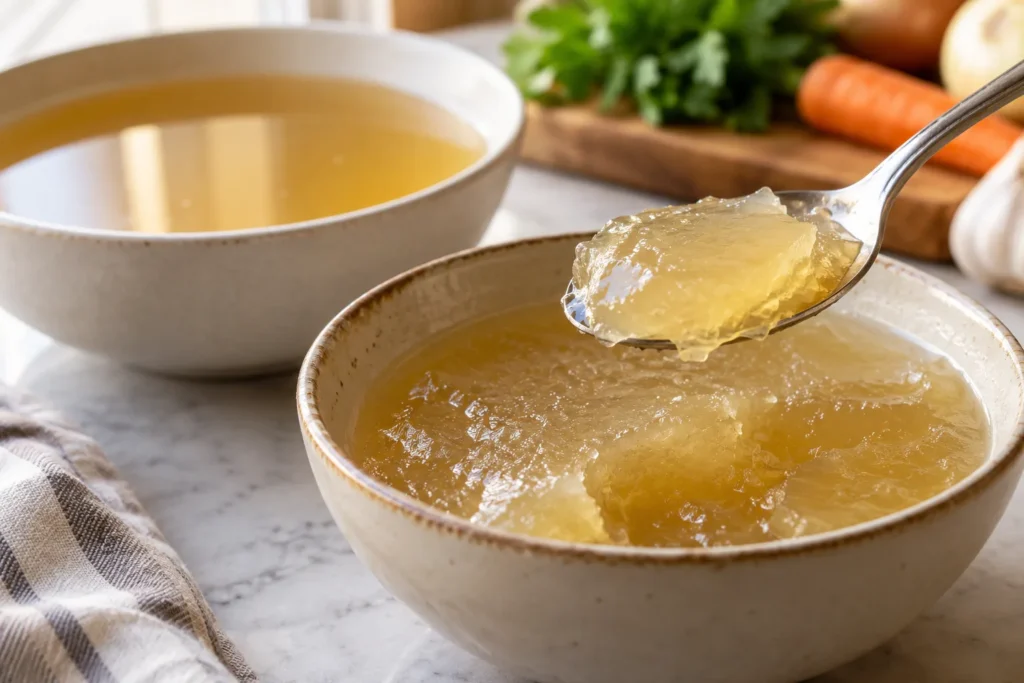
The collagen in bones turns into gelatin, so stock feels silky and sets softly in the fridge. Broth stays thin and pourable when cold.
4. Salt
Chefs leave stock unsalted because it is reduced into sauces, which concentrates any salt. Broth is seasoned so it tastes good on its own.
5. Use in the kitchen
Stock is a building block; broth is closer to a finished soup. That is the practical heart of the chicken stock vs broth question.
Is chicken stock the same as chicken broth?
Is chicken stock the same as chicken broth? Not by the classic definitions, but they are close relatives and nearly interchangeable. In everyday American cooking, many people, and many brands, use the two words loosely, so a carton labeled stock can taste much like one labeled broth.
The difference between chicken stock and chicken broth matters most in two situations: when you reduce the liquid into a pan sauce or gravy, where the gelatin in stock gives a glossy texture and unsalted stock avoids an over-salted result; and when you sip it or serve it as a simple soup, where seasoned broth tastes better on its own.
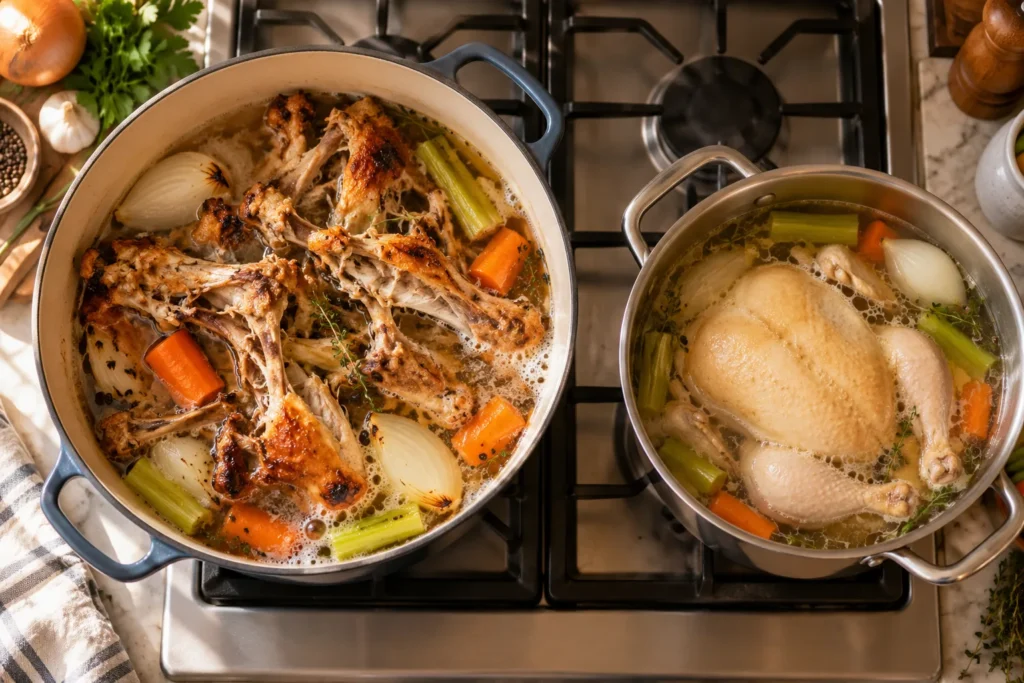
Bone broth vs stock
Bone broth vs stock is mostly a question of time. Bone broth is essentially a stock simmered far longer, 12 to 24 hours, often with extra wings or feet, so it extracts more gelatin and tastes deeper. It is usually seasoned lightly for sipping. Our chicken bone broth recipe walks through roasting the bones, the long simmer and getting a firm gel.
Nutrition claims around bone broth vary widely. Broth and stock contain some protein and minerals, but the amounts depend on the batch, so treat them as flavorful cooking liquids rather than supplements.
Chicken stock vs broth: when to use each
When the chicken stock vs broth choice comes up in a recipe, think about what the liquid has to do.
| Dish | Better choice | Why |
|---|---|---|
| Pan sauce or gravy | Stock | Gelatin thickens; no extra salt when reduced |
| Risotto | Stock | Body and a creamy finish |
| Braises and stews | Stock or broth | Both work; stock gives a richer sauce |
| Chicken noodle soup | Broth | Seasoned, ready-to-eat flavor |
| Cooking rice or grains | Broth | Adds flavor without fuss |
| Sipping | Broth or bone broth | Seasoned and satisfying |
For soups, browse our chicken soup recipes; most of them work with either liquid.
Can you substitute broth for stock?
Yes, you can substitute broth for stock, and stock for broth, at a 1:1 ratio, so the chicken stock vs broth choice rarely ruins a dish. Use it in almost any recipe. Just adjust the salt and, sometimes, the body.
| You have | Recipe calls for | Swap | Adjust |
|---|---|---|---|
| Regular broth | Stock | 1:1 | Cut added salt by about half |
| Low-sodium broth | Stock | 1:1 | Simmer sauces a little longer |
| Stock | Broth | 1:1 | Season with salt and lemon |
| Bone broth | Stock or broth | 1:1 | Taste first; it may be richer |
| Bouillon paste | Broth | 1 tsp + 1 cup water | Skip other salt |
- Broth instead of stock: use low-sodium broth, skip salt until the end, and simmer the sauce a little longer if it needs more body. A teaspoon of unflavored gelatin bloomed in the broth adds stock-like body to a pan sauce.
- Stock instead of broth: season it with salt and a squeeze of lemon, and add herbs or a little onion if you are serving it as a soup.
- Bouillon: 1 cube or 1 teaspoon of paste plus 1 cup of hot water replaces 1 cup of broth; it is salty, so reduce other salt.
- Water: works in a pinch for grains and long braises, with more seasoning; avoid it in sauces where the liquid is the main flavor.
Chicken stock vs broth at the grocery store
Cartons vary more by brand than by the word stock or broth. Check the ingredient list for chicken, vegetables and salt near the top, and compare sodium per cup. A product labeled “low sodium” must contain 140 mg or less per serving, and “reduced sodium” means at least 25% less than the regular version; the FDA guide to reading sodium on labels explains these terms.
| Label | What it means | Use it for |
|---|---|---|
| Regular broth or stock | Fully seasoned | Soups as is |
| Reduced sodium | At least 25% less sodium than regular | Most cooking |
| Low sodium | 140 mg or less per serving | Sauces you will reduce |
| Unsalted / no salt added | No salt added in processing | Total control over seasoning |
Chicken stock vs broth at home: making both
Making both at home is the best way to taste the chicken stock vs broth difference for yourself. Homemade is easy and uses scraps you would throw away. For stock, simmer roasted carcasses with onion, carrot and celery for 3–6 hours; our chicken stock recipe has the details. For broth, simmer a whole chicken or bone-in pieces with vegetables for 1–2 hours, then use the meat for soup or salad.
Cool homemade stock or broth quickly and refrigerate it within 2 hours. It keeps 3 to 4 days in the fridge, according to the FoodSafety.gov cold food storage chart, and freezes well for 2 to 3 months. Freeze some in ice cube trays for pan sauces. More kitchen basics are in our chicken cooking guides.
Frequently Asked Questions
Chicken stock vs broth: which has more flavor?
Homemade stock usually has more body and a deeper, roasted flavor, while broth tastes more of chicken meat and is seasoned. In store-bought cartons the difference depends more on the brand than on the label.
Which is healthier, chicken stock or broth?
Neither is clearly healthier. Stock has a little more gelatin and protein, broth often has more sodium. Choose low-sodium versions and check the label if you watch your salt.
Can I use chicken broth instead of stock in gravy?
Yes. Use low-sodium broth, hold back the salt until the end, and simmer a few minutes longer to thicken. A little extra flour or cornstarch slurry makes up for the thinner body.
Why does homemade stock turn to jelly in the fridge?
The collagen from bones and joints turns into gelatin as it simmers, and gelatin sets when cold. It melts back into liquid as soon as you heat it, and it is a sign of a rich stock.
Is bouillon the same as broth?
Bouillon is a dried or paste concentrate that you dissolve in hot water to make broth. It is convenient but usually saltier, so reduce the salt in the recipe.
Does chicken stock vs broth matter in chicken noodle soup?
Not much. Broth gives a ready-seasoned soup; stock gives more body but needs salt. Many cooks mix the two.
