
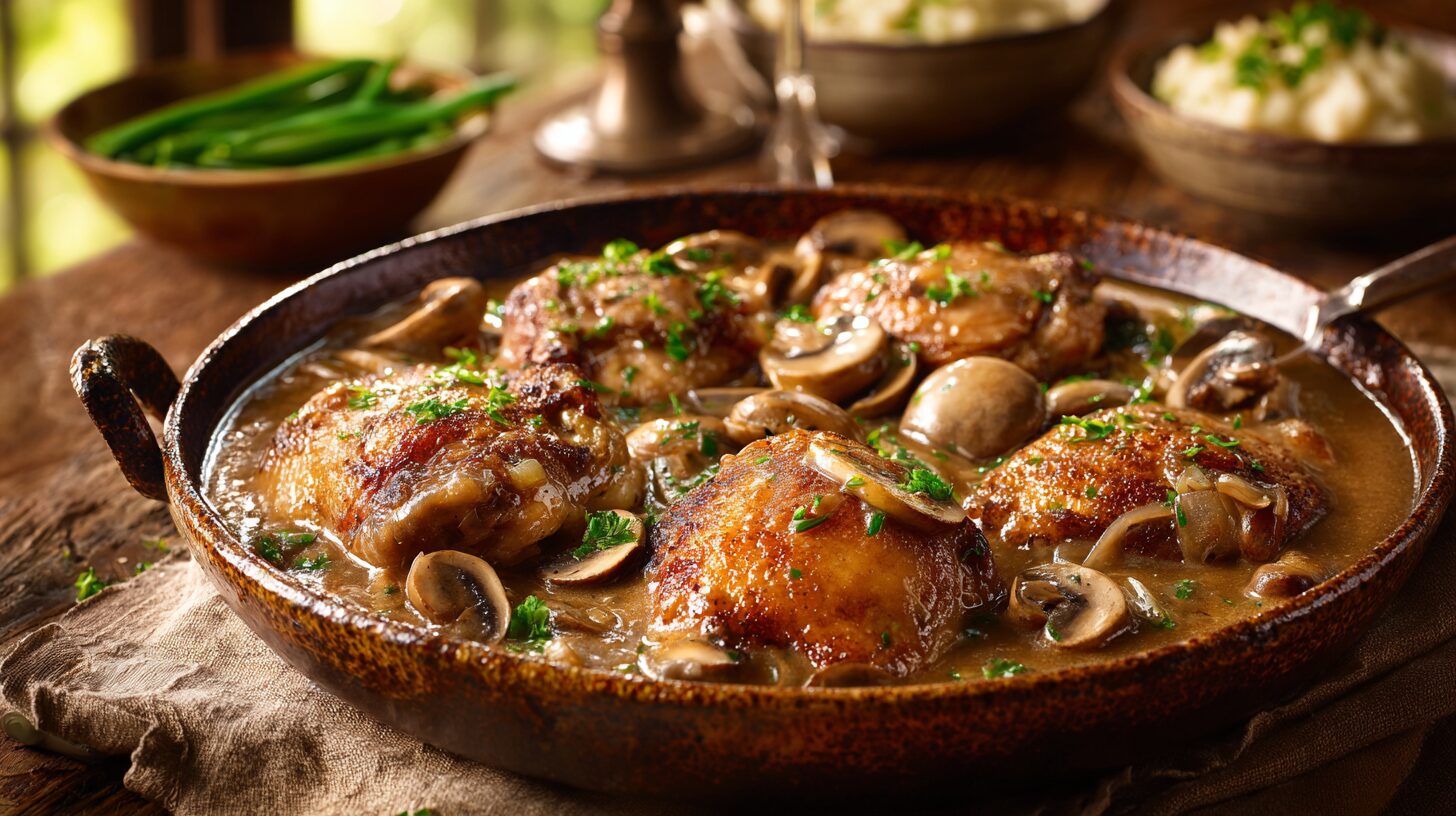
Picture this: A cold evening, a warm kitchen, and a skillet filled with the most tender, fall-apart chicken you’ve ever imagined, all swimming in a rich, savory onion gravy that tastes like it’s been simmering for days. This isn’t just dinner; it’s an experience. This is the magic of a perfect smothered chicken recipe.
If you’ve ever found recipes for smothered chicken intimidating, or if your past attempts have resulted in tough chicken or a lackluster gravy, you’ve come to the right place. This dish, a cornerstone of Southern and soul food cuisine, is all about technique, patience, and building layers of flavor.
But here’s the secret: it’s not hard. Not when you understand the “why” behind each step.
In this definitive guide, we’re not just giving you a recipe; we’re teaching you the craft of smothered chicken. We’ll explore everything from its rich history to the science of a perfect sear, the secret to a lump-free gravy, and the key differences between using smothered chicken thighs and smothered chicken breast.
Get ready to master one of America’s greatest comfort foods.
Key Takeaways
Pressed for time? Here are the must-know facts for mastering this smothered chicken recipe:
- Browning is Non-Negotiable: The deep, savory flavor of any great smothered chicken recipe comes from browning the seasoned, floured chicken before you even think about the gravy. This step, called the Maillard reaction, creates the flavor base.
- Use the “Fond”: The “fond” (the dark, browned bits stuck to the bottom of the pan after searing) is flavor gold. Deglazing the pan with onions and broth is the secret to an incredible smothered chicken and gravy.
- Thighs vs. Breasts: Smothered chicken thighs are highly recommended for their moisture, fat content, and rich flavor, making them very forgiving. Smothered chicken breast can be used, but you must adjust the “smothering” time to avoid drying it out.
- Patience is the Final Ingredient: The “smothering” part—gently simmering the seared chicken in the gravy—is what breaks down tough fibers and makes the chicken fork-tender. Do not rush this step.
What Exactly Is Smothered Chicken?
At its core, “smothered” is a cooking technique, not just a dish. It’s a classic example of “low and slow” cooking, where a main ingredient (most famously chicken or pork chops) is seared at a high temperature and then slowly simmered—or smothered—in a rich gravy until it is profoundly tender.
The star of the show is almost always the smothered chicken with gravy. This isn’t just any gravy; it’s typically a deep, brown onion gravy, made from a roux (a cooked mixture of fat and flour) and the “fond” developed in the pan.
A Taste of History: The Soul Food Roots of Smothered Chicken
Smothered chicken is a pillar of African American soul food. Its origins are tied to the resourcefulness and culinary genius of enslaved African Americans in the American South. This cooking method was a masterful way to take tougher, less desirable cuts of meat and, through time and technique, transform them into something meltingly tender and deeply flavorful.
The “smothering” technique, combined with the “holy trinity” of onion, celery, and bell pepper (common in Louisiana Creole and Cajun versions), and the use of a dark roux, all point to the blending of West African, French, and Southern American cooking traditions. It’s a dish that represents resilience, family, and the ability to create extraordinary flavor from simple ingredients. When you make a smothered chicken recipe, you’re participating in a rich and important culinary history.
Why This Classic Comfort Food Endures
So why are recipes for smothered chicken still so popular? Because it’s the definition of comfort.
- Flavor: It’s savory, rich, and deeply satisfying in a way that few other dishes are.
- Texture: The contrast between the (once) crispy, seasoned crust of the chicken and the tender, juicy meat inside, all enveloped in a velvety gravy, is culinary perfection.
- Nostalgia: For many, it’s a taste of home, of Sunday dinners and family gatherings.
- Versatility: It pairs perfectly with countless sides, from fluffy white rice and mashed potatoes to collard greens and cornbread.
The Anatomy of the Perfect Smothered Chicken Recipe
A truly great smothered chicken recipe is a sum of its parts. Get each part right, and the final dish will be flawless.
The Star Player: Choosing Your Chicken (Thighs vs. Breasts)
This is the most common question, and the choice has a major impact on the final dish.
- Smothered Chicken Thighs (The Expert’s Choice): We strongly recommend using bone-in, skin-on chicken thighs. The bone adds flavor and richness to the gravy as it simmers. The skin protects the meat and renders its fat, creating the perfect base for your gravy. Dark meat is naturally more moist and flavorful and can stand up to the long simmering time without drying out. If you prefer boneless, boneless-skinless thighs are the next best choice.
- Smothered Chicken Breast (The Leaner Option): You can absolutely make a smothered chicken breast recipe. However, white meat is lean and prone to drying out. If using breasts, we recommend searing them and then only simmering (smothering) them for the last 15-20 minutes of cooking, just until they reach an internal temperature of 165°F.
Here’s a quick comparison:
| Feature | Smothered Chicken Thighs (Bone-In) | Smothered Chicken Breast (Boneless) |
| Flavor | Deep, rich, “chicken-y” flavor | Milder flavor |
| Moisture | Very moist and forgiving | Prone to drying out |
| Cook Time | Longer simmer (30-45+ min) | Shorter simmer (15-20 min) |
| Gravy Base | Excellent (renders more fat & collagen) | Good (renders less fat) |
| Recommendation | Highly Recommended for best results. | Good for a leaner option, but requires careful timing. |
Building the Flavor Base: The “Holy Trinity” and Beyond
Your gravy will only be as good as the aromatics you use.
- Onions: This is the #1 most important aromatic. For a classic smothered chicken recipe, you need a lot of onions, typically 1-2 large ones, sliced thin. As they cook down, they release their sugars, caramelize, and practically melt into the gravy, giving it body and a subtle sweetness.
- The Holy Trinity: In many Louisiana-style recipes, you’ll use the “Holy Trinity” of onion, celery, and green bell pepper. This creates a distinct, foundational Creole/Cajun flavor.
- Garlic: A few cloves of minced garlic, added in the last minute of sautéing the vegetables, adds a pungent kick that rounds out the flavor.
The “Smother”: Creating a Rich, Velvety Gravy
The gravy is what makes it “smothered.” It’s built in three stages:
- The Fat: This comes from the rendered chicken fat left in the pan after searing. You may need to add a little butter or oil to have enough (about 3-4 tablespoons).
- The Roux: This is equal parts fat and all-purpose flour. You sprinkle the flour over the cooked onions and fat and cook it for 1-2 minutes, stirring constantly. This “cooks out” the raw flour taste and is what will thicken your gravy.
- The Liquid: This is typically chicken broth or stock. You slowly whisk the broth into the roux-and-onion mixture. This slow addition is the secret to a lump-free gravy. Some recipes also call for a splash of heavy cream, half-and-half, or evaporated milk at the end for extra richness.
Seasoning is Everything: Spices That Make the Dish
Your chicken and your gravy need to be seasoned separately but with a complementary profile.
- For the Chicken: A generous coating of a seasoning blend is crucial before you dredge in flour. A classic Southern blend includes:
- Kosher Salt
- Black Pepper
- Garlic Powder
- Onion Powder
- Paprika (sweet or smoked)
- A pinch of Cayenne Pepper
- For the Gravy: The gravy gets most of its flavor from the chicken, the fond, and the onions. It’s finished with herbs like:
- Dried Thyme
- Dried Rosemary
- Bay Leaves
- A splash of Worcestershire sauce or soy sauce for umami.
The Ultimate Smothered Chicken Recipe (Our Step-by-Step Guide)
This is the one. This is the smothered chicken recipe that will become a new family favorite. It’s designed for maximum flavor and tender, juicy results every single time. We will be using bone-in, skin-on chicken thighs for the best possible outcome.
Meet Your Ingredients (The “Mise en Place”)
Gathering your ingredients first (a “mise en place”) makes the cooking process smooth and stress-free.
For the Chicken:
- 6-8 bone-in, skin-on chicken thighs
- 1 cup all-purpose flour
- 1.5 tsp kosher salt
- 1 tsp black pepper
- 1 tsp garlic powder
- 1 tsp onion powder
- 1 tsp smoked paprika
- ¼ tsp cayenne pepper (optional, for a slight kick)
- 3 tbsp neutral oil (vegetable or canola), or as needed
- 1 tbsp unsalted butter
For the Smothered Chicken and Gravy:
- 2 large yellow onions, thinly sliced
- 1 green bell pepper, thinly sliced (optional, for a Creole flavor)
- 1 stalk celery, thinly sliced (optional, for a Creole flavor)
- 4 cloves garlic, minced
- 3 tbsp all-purpose flour (from the chicken dredging bowl is fine)
- 4 cups low-sodium chicken broth
- 1 tsp dried thyme
- 2 bay leaves
- ½ cup heavy cream (optional, for a creamier gravy)
- Salt and pepper to taste
- Fresh parsley, chopped, for garnish
Kitchen Equipment You’ll Need
- Large, heavy-bottomed skillet or Dutch oven (cast iron is perfect)
- Shallow bowl or plate (for flour)
- Tongs
- Whisk
- Plate lined with a wire rack (for resting the chicken)
Step 1: Preparing and Seasoning the Chicken
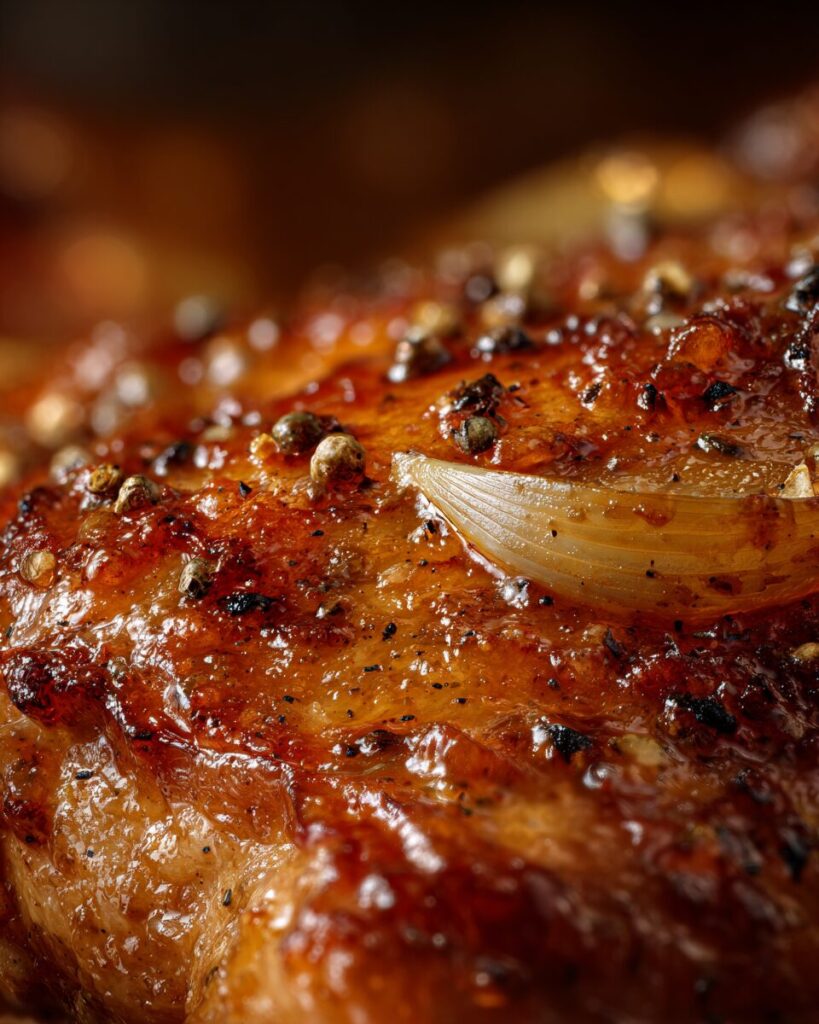
- Pat the Chicken Dry: Use paper towels to pat your chicken thighs completely dry. This is the most important step for getting a crispy, golden-brown sear. Wet chicken will steam, not sear.
- Mix Seasonings: In a small bowl, combine the 1.5 tsp salt, 1 tsp black pepper, 1 tsp garlic powder, 1 tsp onion powder, 1 tsp smoked paprika, and ¼ tsp cayenne.
- Mix Flour: In your shallow bowl, add the 1 cup of all-purpose flour.
- Season the Chicken: Generously season the chicken thighs on all sides (including under the skin) with your spice blend. Don’t be shy!
- Dredge the Chicken: One by one, press the seasoned chicken thighs into the flour, coating all sides. Shake off any excess flour. Place the dredged chicken on a plate. Let it rest for 5-10 minutes; this helps the flour “glue” to the chicken.
Step 2: The Perfect Sear (Don’t Crowd the Pan!)
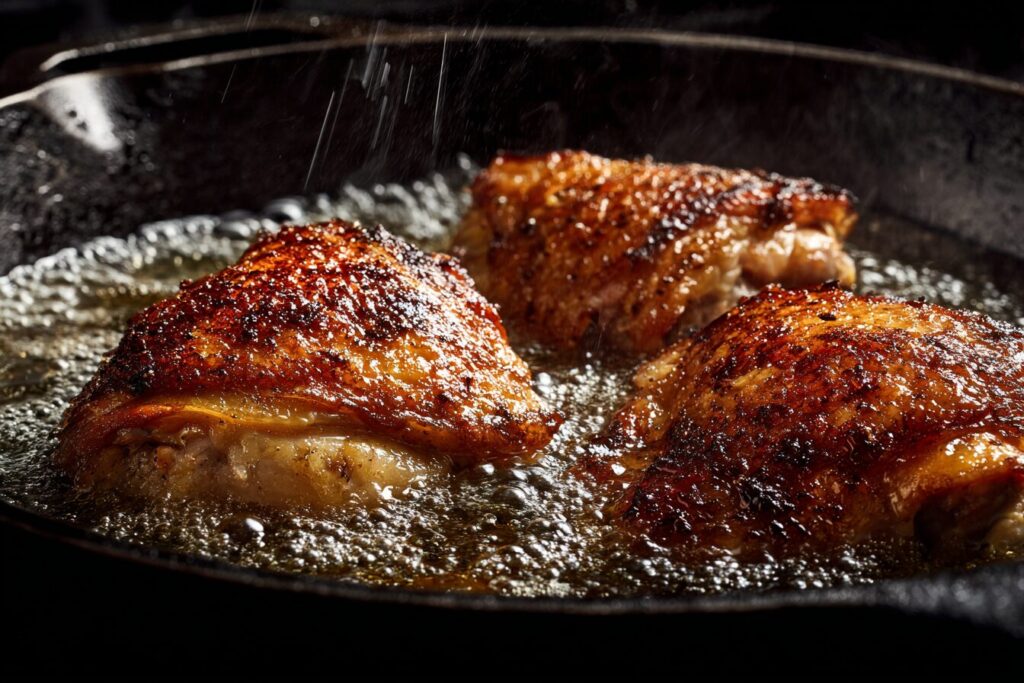
- Heat Your Pan: Place your heavy-bottomed skillet over medium-high heat. Add the 3 tbsp of oil. You know the oil is ready when it shimmers, or when a pinch of flour sizzles instantly.
- Sear in Batches: Carefully place 3-4 chicken thighs in the pan, skin-side down. Do not crowd the pan! Crowding will drop the oil temperature and steam the chicken.
- Don’t Touch It: Let the chicken sear, undisturbed, for 5-7 minutes, or until the skin is a deep, golden-brown and releases easily from the pan.
- Flip and Sear: Flip the chicken thighs and sear on the other side for another 4-5 minutes. The chicken will not be cooked through. This step is purely for browning and flavor.
- Rest the Chicken: Remove the seared chicken to your wire rack-lined plate. Repeat with the remaining chicken thighs, adding more oil if the pan looks dry.
Step 3: Building the Gravy (The Magic of Roux)
- Sauté Aromatics: Turn the heat down to medium. There should be about 3-4 tablespoons of rendered fat and oil in the pan. If there’s much more, pour some off. If there’s less, add the 1 tbsp of butter.
- Add Onions: Add your sliced onions (and bell pepper/celery, if using). Sauté, stirring frequently and scraping the bottom of the pan with a wooden spoon. This is deglazing. The moisture from the onions will lift all those priceless brown bits (the fond) from the bottom of the pan, which is where all the flavor is.
- Cook Down: Continue cooking the onions for 8-10 minutes, until they are very soft, limp, and starting to caramelize.
- Add Garlic: Add the minced garlic and cook for 1 more minute, until fragrant.
- Create the Roux: Sprinkle the 3 tbsp of flour over the onions. Stir constantly for 1-2 minutes. This will look like a thick, clumpy paste. This is your roux, and cooking it removes the raw flour taste.
Step 4: The “Smothering” Process (Simmering to Perfection)
- Add Broth Slowly: While whisking constantly, slowly pour in about 1 cup of the chicken broth. Whisk vigorously to break up the roux and create a smooth paste.
- Add Remaining Liquid: Once the paste is smooth, slowly whisk in the remaining 3 cups of broth.
- Season the Gravy: Add the dried thyme, bay leaves, and a pinch of salt and pepper. Remember, your chicken is seasoned, so go easy on the salt for now.
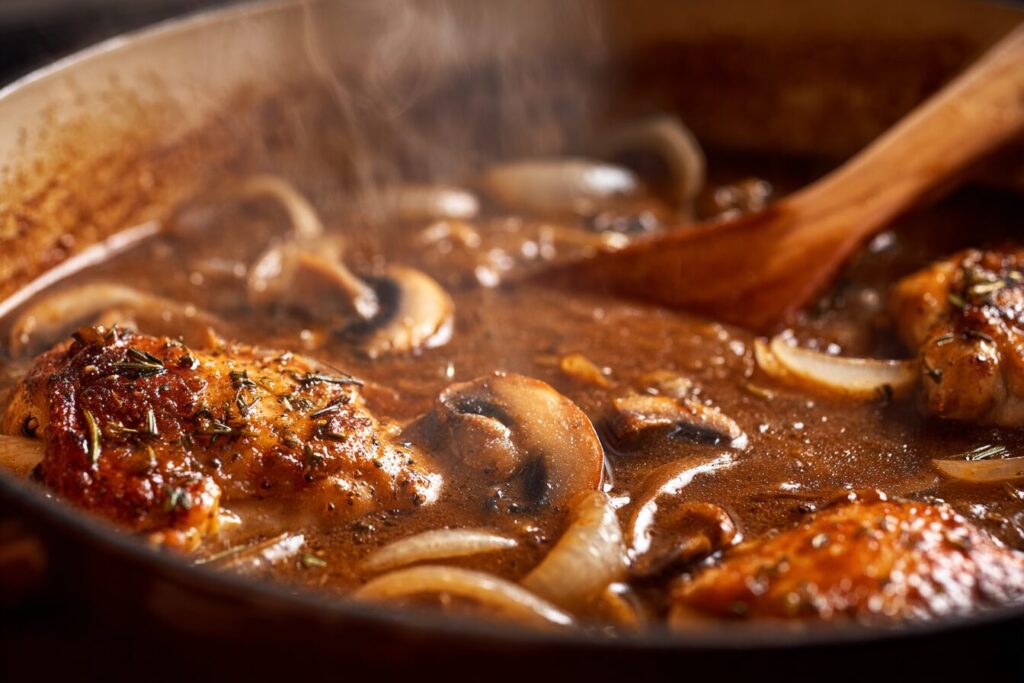
- Simmer: Bring the gravy to a gentle simmer. It will begin to thicken.
- Return the Chicken: Nestle the seared chicken thighs (and any juices from the plate) back into the gravy. Try to keep the skin-side up if possible, though it will get soft during the smothering process.
- Cover and Smother: Reduce the heat to low, cover the skillet, and let the chicken simmer gently for 30-45 minutes. The chicken is done when it’s fork-tender and the internal temperature reaches at least 165°F (though dark meat is even better at 175-185°F).
- Final Touches: Remove the bay leaves. If you’re using heavy cream, stir it in now. Taste the gravy and adjust seasoning with more salt and pepper as needed.
- Serve: Garnish your smothered chicken with gravy with fresh parsley and serve immediately.
Pro-Tips from the Test Kitchen for Your Smothered Chicken
- The Secret to a Lump-Free Gravy, Every Time: The key is temperature differential. You can either add cold broth to your hot roux (as we did above), or you can add a cold roux-slurry to a hot liquid. The easiest, most foolproof method is the one in our smothered chicken recipe: whisk cold or room-temp broth slowly into the hot roux/onion mixture.
- How to Get That Deep, Golden-Brown Crust: This comes down to two things: dry chicken and hot oil. If your chicken is wet, the pan’s energy will be spent boiling off water instead of browning the chicken. If your oil isn’t hot enough, the flour will absorb the oil and get greasy instead of crispy.
- Don’t Rush the Simmer: Why Patience Pays Off: The “smothering” is where the magic happens. This gentle, covered simmer is a form of braising. It breaks down the collagen (connective tissue) in the chicken thighs, turning it into gelatin. This is what makes the meat unforgettably tender and adds a silky body to the gravy.
Common Smothered Chicken Recipe Variations
Once you’ve mastered the classic, you can play with the formula.
Creamy vs. Brown Gravy: What’s the Difference?
- Classic Brown Gravy (like ours): This gravy gets its dark color from the seared chicken “fond” and the caramelized onions. It’s rich and savory.
- Creamy Smothered Chicken: This variation relies less on a dark roux and more on dairy. You would finish the gravy with a larger amount of heavy cream, half-and-half, or even a can of evaporated milk for a classic old-school finish. The flavor is milder and creamier.
Smothered Chicken Thighs: The Ultimate in Flavor
As we’ve stressed, smothered chicken thighs are the superior cut for this dish. They are the key to a truly succulent, flavorful, and foolproof meal. Both bone-in and boneless work, but bone-in will always give you a richer gravy.
Lighter Fare: A Guide to Using Smothered Chicken Breast
If you must use smothered chicken breast, follow these modifications to our smothered chicken recipe:
- Use boneless, skinless chicken breasts. You can use them whole or slice them into cutlets.
- Season and dredge as usual.
- Sear them for only 3-4 minutes per side, just to get a golden crust.
- Remove them and make the gravy as directed.
- When the gravy is simmering, add the chicken back, cover, and simmer on low for only 15-20 minutes, or until the internal temperature just hits 165°F. Do not overcook!
Baked Smothered Chicken: A Hands-Off Approach
Want an easier cleanup? You can adapt this smothered chicken recipe for the oven.
- Sear the chicken on the stovetop as directed.
- Make the gravy in the same pan.
- Return the chicken to the pan, cover it (with a lid or foil), and place the entire oven-safe skillet in a preheated 350°F oven.
- Bake for 35-45 minutes, or until the chicken is tender.
Slow Cooker Smothered Chicken: Set It and Forget It
This is a great option for a weeknight.
- Do not skip the sear! Sear your seasoned and floured chicken in a skillet first. This is crucial for flavor.
- Place the seared chicken in the bottom of your slow cooker.
- In the same skillet, sauté the onions and make the gravy.
- Pour the gravy over the chicken in the slow cooker.
- Cook on LOW for 4-6 hours or HIGH for 3-4 hours. The chicken will be fall-off-the-bone tender. The gravy may be a bit thinner, so you can thicken it at the end with a cornstarch slurry if you like.
Regional Twists (Creole, Cajun, etc.)
- Creole Smothered Chicken: Add the “Holy Trinity” (onion, bell pepper, celery) as the base for your gravy. Add a splash of hot sauce and a pinch of dried oregano.
- Cajun Smothered Chicken: Similar to Creole, but often features a darker, richer roux (cooked longer) and a bit more cayenne pepper and paprika for a spicier, smokier kick.
What to Serve with Smothered Chicken and Gravy
The gravy is the star, so you need a side that can soak it all up.
- The Classics:
- Fluffy White Rice (the traditional pairing)
- Creamy Mashed Potatoes
- Egg Noodles
- Essential Southern Sides:
- Collard Greens (braised with bacon or smoked turkey)
- Southern-Style Green Beans
- Creamy Baked Macaroni and Cheese
- Cornbread (for dipping)
- Fried Okra
- Lighter Pairings:
- Steamed Asparagus
- A simple side salad with a vinaigrette
Troubleshooting Your Smothered Chicken Recipe
Even the best cooks run into trouble. Here’s how to fix common issues.
| Problem | Why It Happened | The Solution |
| “My Gravy is Too Thin!” | Not enough flour (roux) or too much liquid. | In a separate bowl, mix 1 tbsp cornstarch with 2 tbsp cold water to make a slurry. Whisk this into the simmering gravy. It will thicken in 1-2 minutes. |
| “My Gravy is Too Thick!” | Too much flour, or it over-reduced. | Simply whisk in more warm chicken broth or a splash of cream, a little at a time, until it reaches the consistency you want. |
| “My Gravy is Lumpy!” | The roux and liquid weren’t combined properly (likely added liquid too fast or it was too hot). | Pour the gravy through a fine-mesh sieve into another pot (this is a pain, but it works). For small lumps, a vigorous whisking or an immersion blender can save it. |
| “My Chicken is Tough!” | You used smothered chicken breast and overcooked it, OR you didn’t “smother” your smothered chicken thighs long enough to break down the collagen. | If using breasts, it’s hard to reverse. If using thighs, the answer is more time. Let it keep simmering gently on low heat for another 20-30 minutes. |
| “My Gravy is Bland!” | Under-seasoned. Didn’t get a good “fond” from the sear. | Add more salt and pepper! A splash of Worcestershire sauce, soy sauce, or even a little liquid aminos can add a deep umami flavor. A pinch of cayenne or a dash of hot sauce can also wake it up. |
Storing, Freezing, and Reheating Smothered Chicken
This is one of those dishes that tastes even better the next day as the flavors meld.
The Right Way to Store Leftovers
- Refrigerate: Let the smothered chicken cool to room temperature, then transfer to an airtight container. It will keep in the refrigerator for 3-4 days.
Can You Freeze Smothered Chicken? (Yes, Here’s How)
- Yes, this dish freezes beautifully.
- To Freeze: Place in a freezer-safe, airtight container or a heavy-duty freezer bag. Try to submerge the chicken in the gravy to protect it from freezer burn. It will last for up to 3 months.
- To Thaw: Thaw overnight in the refrigerator.
Reheating Without Ruining the Texture
- Stovetop (Recommended): Place the smothered chicken and gravy in a pot or skillet over medium-low heat. Add a splash of chicken broth or water to loosen the gravy. Cover and heat gently, stirring occasionally, until warmed through (about 10-15 minutes).
- Microwave: You can microwave it, but do so in 60-second intervals, stirring in between. The chicken may become slightly tougher with this method.
Conclusion: Why This Smothered Chicken Recipe Belongs in Your Rotation
This smothered chicken recipe is more than just a meal; it’s a technique and a tradition. It’s a testament to the idea that simple, humble ingredients, when treated with care and a little bit of time, can become something truly spectacular.
You now have the complete blueprint for success. You know to pat your chicken dry for a perfect sear. You know to scrape up that “fond” to build a gravy with soul. And you know to be patient, to let the simmer work its magic until the chicken is tender and the smothered chicken with gravy is ready to create a lifelong food memory.
This is the ultimate comfort food, and now, you’re the expert.
For the Curious…
- To understand the “why” behind searing meat, explore the Maillard Reaction on Wikipedia, the chemical process that gives browned food its distinctive flavor.
- For the gold standard on poultry safety, always refer to the U.S. Department of Agriculture’s (USDA) guide on safe minimum internal temperatures for poultry.
About the Author
Chef Marcus Hayes is a culinary historian and recipe developer specializing in classic American Southern and soul food. With over 15 years of experience in professional kitchens, he is dedicated to preserving heritage recipes and making them accessible for modern home cooks.
Frequently Asked Questions (FAQ)
Q1: Why is my smothered chicken tough? This almost always has one of two causes: 1) You used smothered chicken breast and cooked it for too long, causing it to dry out. 2) You used smothered chicken thighs but didn’t cook them long enough. Unlike breasts, thighs get more tender the longer they braise. If your thighs are tough, they just need more time simmering on low heat.
Q2: What is the best chicken to use for a smothered chicken recipe? The best cut is bone-in, skin-on chicken thighs. The bone adds flavor to the gravy, the skin provides fat for browning and the roux, and the dark meat stays incredibly moist and tender during the long “smothering” process.
Q3: How do you make the gravy for smothered chicken from scratch? The gravy is made in the same pan you seared the chicken in. You sauté onions and garlic in the leftover chicken fat, then sprinkle in flour to create a roux. Finally, you slowly whisk in chicken broth, scraping up all the browned bits (fond) from the bottom of the pan. This is what creates the rich smothered chicken and gravy.
Q4: What’s the difference between smothered chicken and étouffée? While both are “smothered” dishes from the American South, the main difference is the base. Smothered chicken is typically based on a brown or onion gravy. Étouffée (a Cajun/Creole dish) is most famously made with crawfish or shrimp and is based on a “blonde” roux and the “Holy Trinity” (onion, celery, bell pepper), often finished with tomato.
Q5: Do you have to use flour in this recipe? Yes, the flour is essential for two reasons. First, dredging the chicken in seasoned flour is what creates the delicious, brown crust when you sear it. Second, flour is used as the thickener (the “roux”) for the gravy. For a gluten-free version, you could dredge the chicken in a GF all-purpose blend and thicken the gravy with a cornstarch slurry.