
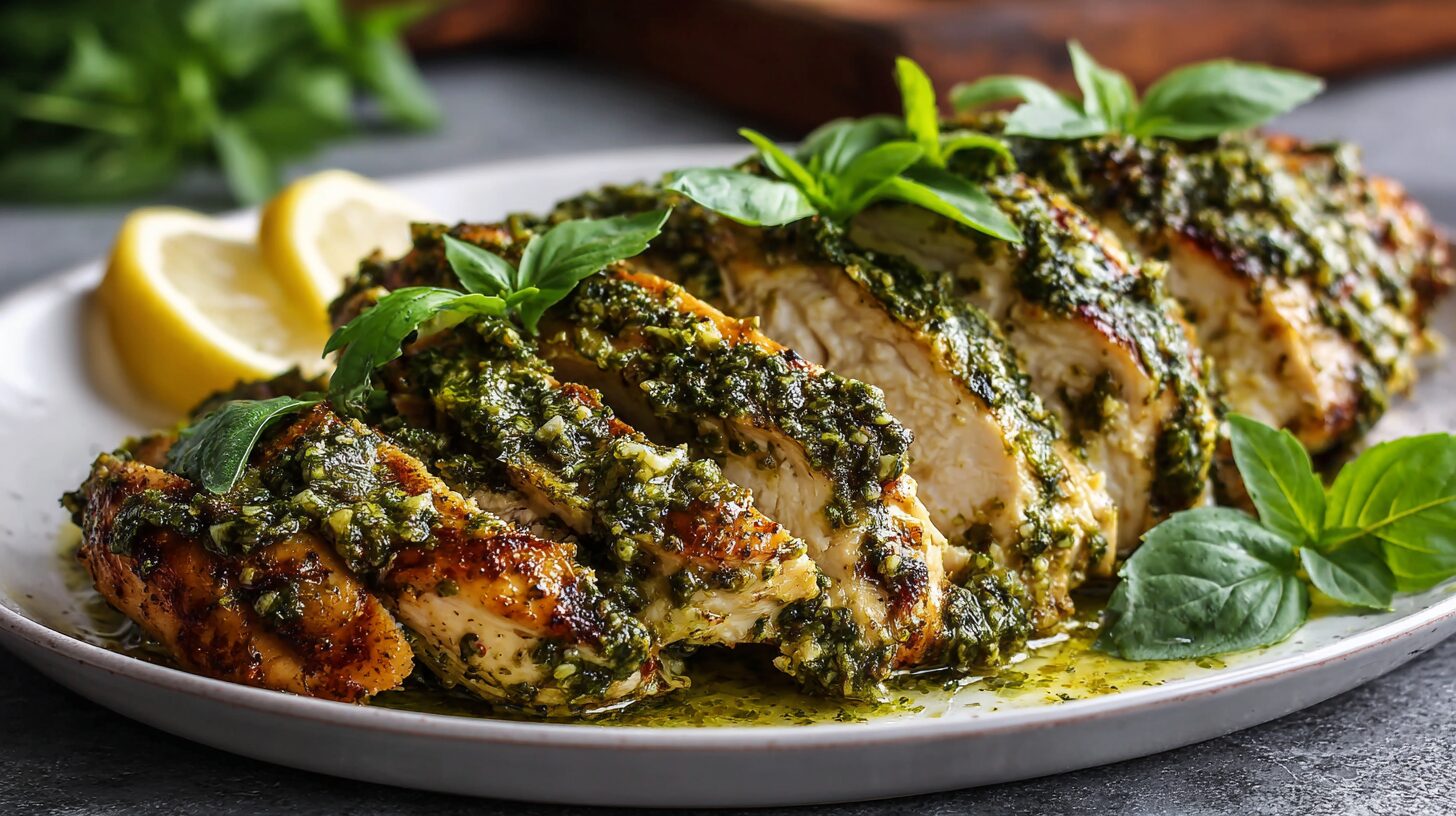
Ever get that 6 PM panic? Dinner needs to happen, but you’re fresh out of ideas that don’t involve a boring, dry piece of chicken. You crave something vibrant, flavorful, and fast—something that tastes like a restaurant meal without the two-hour prep time.
That’s where this pesto chicken recipe comes in. It’s the ultimate weeknight hero.
We’re not just tossing some chicken in a jar of sauce. We’re talking about incredibly juicy, perfectly seared chicken enveloped in a bright, herby, and garlicky basil pesto. This is the definitive guide to mastering chicken and pesto.
After 10 years of developing Italian-American recipes, I’ve tested every method—baking, grilling, pan-searing—and pinpointed the exact techniques that prevent dry chicken and keep your pesto from turning a sad, murky brown. This recipe is simple, versatile, and delivers flawless results every time.
Key Takeaways
- Ready in 30 Minutes: This entire pesto chicken recipe goes from prep to plate in half an hour.
- Juicy Chicken Guaranteed: Our secret is pounding the chicken thin for even cooking and a fast, hot sear.
- Vibrant Green Pesto: The #1 rule: Never “cook” your pesto. Add it off the heat to keep its fresh flavor and bright color.
- Endlessly Versatile: This chicken is perfect on its own, sliced over salads, or used as the base for our easy chicken pesto pasta recipe or a pesto chicken bake.
- Homemade or Store-Bought: This recipe works beautifully with your favorite store-bought pesto or our 5-minute homemade version.
Why This Pesto Chicken Recipe Works (And Tastes Amazing)
What makes this the best chicken pesto recipe? It’s all about the technique. Many recipes have you bake the chicken with the pesto, which “cooks” the fresh basil, dulls the garlic, and often turns the sauce dark.
This method celebrates the fresh, raw power of pesto.
- We build flavor first: The chicken is seasoned and seared on its own to develop a beautiful golden-brown crust (hello, Maillard reaction!). This creates a depth of flavor that simply coating raw chicken can’t achieve.
- We protect the pesto: Pesto is a fresh, uncooked sauce. Its magic lies in the volatile oils from the basil and garlic. By tossing the hot, cooked chicken with the pesto off the heat, the chicken’s residual warmth is just enough to “bloom” the sauce, releasing its aroma without destroying its delicate flavor.
- We guarantee juicy results: Pounding the chicken breasts to an even thickness is the single most important step for juicy white meat. It eliminates the common “dry edges, raw center” problem, allowing the entire piece to cook through perfectly in just a few minutes.
Essential Ingredients for Perfect Chicken Pesto
You only need a few simple ingredients to make this chicken and pesto dish shine. The key is quality.
- Boneless, Skinless Chicken: Breasts are the lean, classic choice. Boneless, skinless thighs also work beautifully and are even more forgiving if you tend to overcook things.
- Basil Pesto: This is the star. You have two great options here, and both are valid.
- Olive Oil: A good-quality extra-virgin olive oil for searing and for the pesto itself.
- Salt and Pepper: Kosher salt and freshly cracked black pepper are essential.
- Optional Flavor Boosters: A squeeze of fresh lemon juice at the end brightens everything up. A pinch of red pepper flakes adds a welcome kick.
The Pesto Problem: Homemade vs. Store-Bought
Let’s be real: on a Tuesday night, making homemade pesto might be a non-starter. But if you have 5 minutes, it’s a game-changer. Here’s the breakdown.
| Feature | Homemade Pesto | Store-Bought Pesto |
| Flavor | Excellent. Bright, fresh, garlicky, and nutty. You control the ingredients. | Good to Poor. Can be dull, “cooked” tasting, or overly salty. |
| Color | Vibrant Green. (If made correctly). | Variable. Often a darker, olive green due to pasteurization. |
| Cost | Moderate. Fresh basil and pine nuts can be expensive. | Low to Moderate. Often uses cheaper oils (like sunflower) and nuts (like cashews). |
| Convenience | Low. Requires a food processor and fresh ingredients. | Excellent. Just open the jar. |
| The Verdict | Best for flavor. Make a big batch and freeze it in ice cube trays! | Best for speed. Look for brands in the refrigerated section that list “olive oil” as the first oil. |
Pro-Tip (My 5-Minute “Gold Standard” Pesto): In a food processor, blend 2 cups fresh basil, 1/2 cup grated Parmesan, 1/3 cup pine nuts, 2-3 garlic cloves, and 1/2 tsp salt. With the machine running, drizzle in 1/2 cup extra-virgin olive oil until smooth.
Pesto Ingredient Substitutions
Pesto is flexible! Don’t let a missing ingredient stop you.
| Ingredient | Common Substitute(s) | Notes |
| Pine Nuts | Walnuts (classic), Almonds (blanched), Pistachios | Each nut brings a slightly different flavor. Walnuts are the most common swap. |
| Basil | Spinach & Basil (50/50 mix), Arugula (peppery), Kale | A 50/50 mix with spinach mutes the basil flavor but is cheaper and stays green. |
| Parmesan | Pecorino Romano (saltier, sharper), Asiago (aged) | Pecorino is a fantastic, punchy alternative. |
| Dairy-Free | Nutritional Yeast (1/4 cup) + extra salt | Use 1-2 tbsp of nutritional yeast to mimic that “cheesy” umami flavor. |
Step-by-Step Instructions: The Easiest Pesto Chicken
This is the core pesto chicken recipe, designed for a quick pan-sear.
Yields: 4 servings
Prep time: 10 minutes
Cook time: 15-20 minutes
Total time: 25-30 minutes
Ingredients:
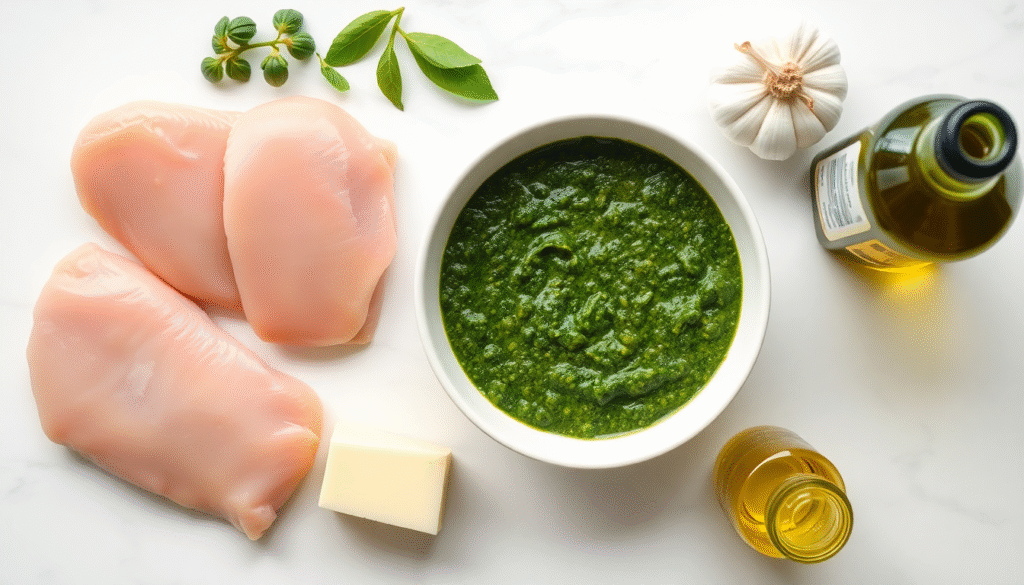
- 2 large boneless, skinless chicken breasts (about 1.5 lbs total)
- 1 tbsp olive oil
- 1 tsp Kosher salt
- 1/2 tsp freshly ground black pepper
- 1/2 cup basil pesto (homemade or high-quality store-bought)
- Optional: 1/2 cup cherry tomatoes, halved
Instructions:
- Prep the Chicken: Place the chicken breasts on a cutting board and cover them with a piece of plastic wrap. Using a meat mallet or a heavy rolling pin, pound the chicken to an even 1/2-inch thickness. This is the most important step for juicy chicken.
- Season Generously: Pat the chicken dry with paper towels (this helps get a good sear). Season both sides generously with salt and pepper.
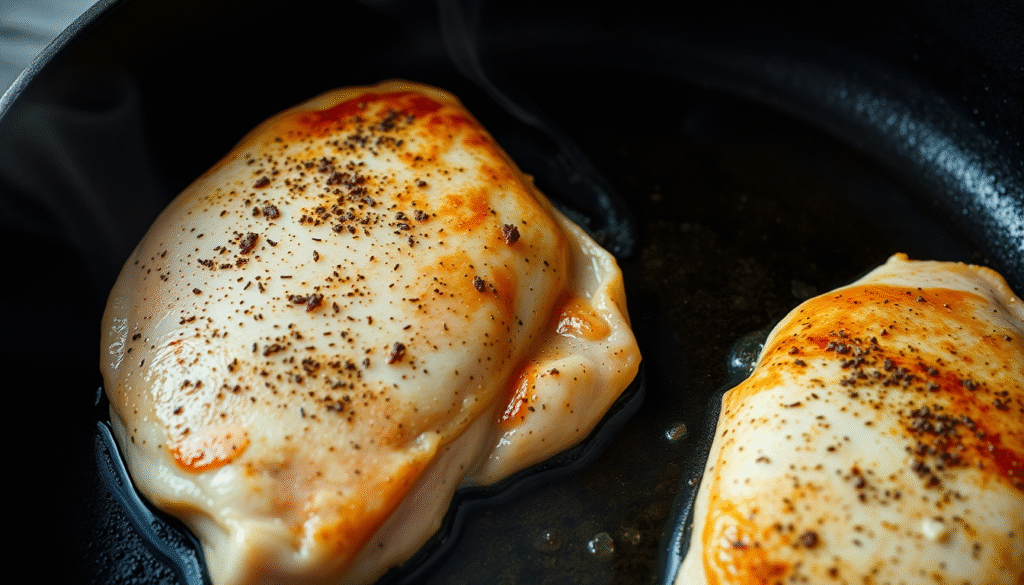
- Heat the Pan: Place a large skillet (cast iron is fantastic here) over medium-high heat. Add the olive oil. Once the oil is shimmering (but not smoking), it’s ready.
- Sear the Chicken: Carefully place the chicken breasts in the hot pan. Don’t move them. Let them cook undisturbed for 5-7 minutes. You’re looking for a deep, golden-brown crust to form on the bottom.
- Flip and Finish: Flip the chicken. The other side will need slightly less time, about 4-6 minutes. The chicken is done when a meat thermometer inserted into the thickest part reads 165°F (74°C). This is the safest way to check, as recommended by the FDA’s food safety guidelines.
- Rest the Chicken: Transfer the cooked chicken to a clean cutting board and let it rest for 5 minutes. This allows the juices to redistribute, ensuring every bite is tender.
- Add the Pesto (The Secret Step): This is the key. Do not put the pesto in the hot pan. After the chicken has rested, you can either:
- Option A (Cubed): Cube the chicken, place it in a large bowl, add the pesto, and toss to combine.
- Option B (Whole): Slice the chicken breast, place it on a serving platter, and spoon the pesto over the top.
- Serve: If using, toss in the halved cherry tomatoes for a burst of freshness. Serve immediately.
Pro Tips from the Kitchen (My Expert Techniques)
After making this dish hundreds of times, I’ve learned a few things.
- Pound it Flat, No Excuses: I can’t say this enough. Pounding chicken to an even thickness is the difference between a partly-dry, partly-rubbery breast and a perfectly tender, juicy result. It’s the #1 pro-tip for all chicken breast recipes.
- The Pesto Stays Raw: I’ll say it again: add pesto off the heat. Heat decimates fresh basil flavor and turns it brown. Let the residual heat of the cooked chicken warm the sauce. This is the secret to a restaurant-quality chicken and pesto dish.
- Don’t Fear the Thermometer: Stop guessing. Slicing into a breast to “check if it’s pink” lets all the juices run out. A $15 instant-read thermometer is the best tool you can own for guaranteeing perfectly cooked, safe, and juicy meat every time.
- The “Green Pesto” Trick: If you’re making homemade pesto and are obsessed with keeping that bright green color, here’s an advanced tip from Serious Eats: Blanch your basil leaves in boiling water for 15 seconds, then shock them in an ice bath before making your pesto. This deactivates an enzyme that causes browning.
Explore our global chicken recipe hub
Must-Try Recipe Variations (To Match Your Cravings)
This base recipe is a launchpad. The secondary keywords tell me you’re also looking for these specific variations. Here’s how to make them.
H3: The Ultimate Easy Chicken Pesto Pasta Recipe
This is the most popular way to use chicken and pesto.
- Cook 1 lb of your favorite short pasta (like penne, fusilli, or farfalle) according to package directions.
- Crucially: Before draining, reserve 1 cup of the starchy pasta water.
- Prepare the pesto chicken recipe as written above and cube the cooked chicken.
- In a large bowl, combine the drained hot pasta, the cubed pesto chicken, and an additional 1/2 cup of pesto.
- Add the reserved pasta water, 1/4 cup at a time, tossing vigorously. The hot, starchy water will emulsify with the pesto and chicken juices to create a light, creamy pesto chicken sauce that perfectly coats every noodle.
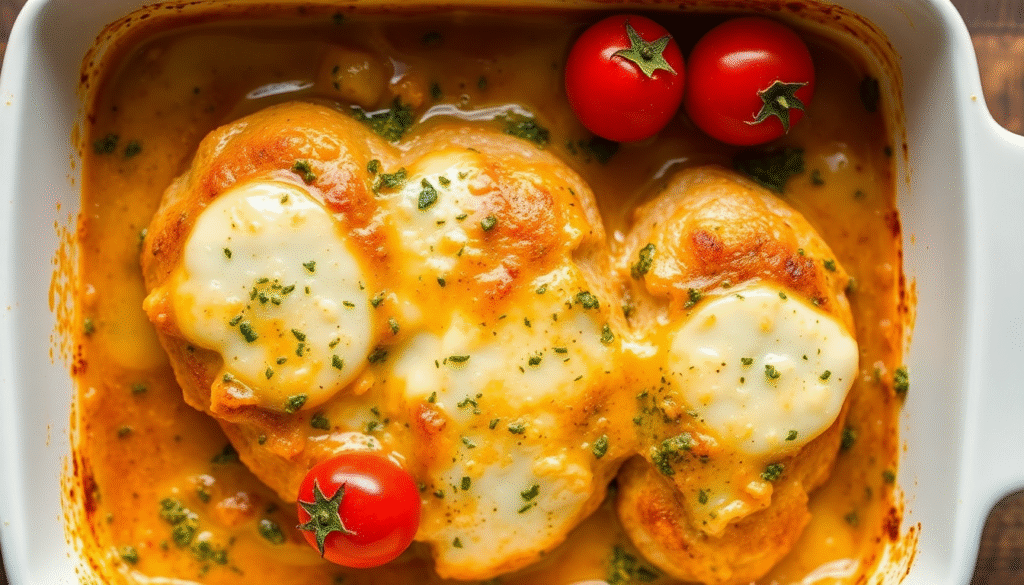
H3: Comfort Food Classic: The Pesto Chicken Bake
This is a fantastic, cheesy, one-pan meal. It’s the perfect baked pesto chicken for a cozy night.
- Preheat your oven to 400°F (200°C).
- Pound the chicken breasts to 1/2-inch thickness and season with salt and pepper.
- Place the chicken in a 9×13 baking dish. Spread 1-2 tablespoons of pesto evenly over the top of each breast.
- Layer with toppings: Sliced fresh tomatoes, sliced fresh mozzarella, and a sprinkle of Parmesan.
- Bake for 20-25 minutes, or until the chicken is cooked through (165°F) and the cheese is bubbly and golden.
H3: Decadent & Delicious: Creamy Pesto Chicken
Want a rich, restaurant-style sauce? This creamy pesto chicken variation is pure indulgence.
- Prepare and sear the chicken as directed in steps 1-5. Remove the chicken from the pan and set it aside.
- In the same pan, reduce the heat to medium. Add 1 tbsp butter and 2 cloves of minced garlic. Sauté for 1 minute until fragrant.
- Optional: Deglaze the pan with 1/4 cup dry white wine or chicken broth, scraping up any browned bits.
- Stir in 3/4 cup heavy cream and 1/4 cup grated Parmesan cheese. Simmer for 2-3 minutes until the sauce begins to thicken.
- Remove the pan from the heat. Stir in 1/2 cup of basil pesto.
- Return the chicken (and any accumulated juices) to the pan. Toss to coat and serve immediately.
Other Cooking Methods
Your pan-sear is just one option. This recipe adapts well.
| Cooking Method | Temperature | Time | Instructions |
| Oven (Bake) | 400°F (200°C) | 20-25 min | Pound chicken, season. Bake on a sheet pan. Rest, then toss with pesto. |
| Grill | Medium-High | 5-7 min/side | Pound chicken, season, and oil grill grates. Grill. Rest, then toss with pesto. |
| Air Fryer | 380°F (190°C) | 12-15 min | Pound chicken, season. Place in air fryer basket. Flip halfway. Rest, then toss with pesto. |
| Stovetop (Bake) | N/A | N/A | See Pesto Chicken Bake recipe above. |
What to Serve with Pesto Chicken (Perfect Pairing)
This dish is a team player. It pairs beautifully with…
- Pasta: Linguine, penne, or farfalle (bow-ties).
- Grains: Creamy polenta, fluffy quinoa, or orzo.
- Roasted Vegetables: Cherry tomatoes (they burst and create their own sauce), zucchini, asparagus, or bell peppers.
- Salads: A simple Caprese salad (tomato, mozzarella, basil) or a peppery arugula salad with lemon vinaigrette.
- Bread: A warm, crusty baguette for sopping up every last bit of pesto.
Storage, Freezing, and Meal Prep Guidelines
This pesto chicken recipe is fantastic for meal prep.
How to Store Leftovers Safely
- Refrigerate: Place leftover chicken (already tossed with pesto) in an airtight container. Store in the refrigerator for 3-4 days, as recommended by the USDA.
- Reheat: The best way to reheat is gently in a skillet over low heat with a splash of water or broth to keep it moist. You can also microwave in 30-second bursts, but be careful not to overcook it.
Meal Prepping Chicken and Pesto Like a Pro
This is my preferred method for the best flavor:
- Cook the Chicken: Cook the chicken breasts completely (sear, bake, or grill). Let them cool, then slice or cube them.
- Store Separately: Store the cooked chicken in one airtight container. Store your pesto in a separate small container.
- Combine When Ready: When you’re ready to eat, reheat the chicken, then toss it with the cold pesto. This preserves that fresh, bright pesto flavor, even on day 3.
Can You Freeze Pesto Chicken?
- Pesto Only: Yes! Pesto freezes brilliantly. Freeze it in an ice cube tray, then pop the cubes into a freezer bag. They’ll last for 6 months.
- Cooked Chicken: Yes, you can freeze the cooked, pesto-tossed chicken in a freezer-safe bag for up to 3 months. Thaw overnight in the fridge before reheating. The texture will be slightly softer, but the flavor will be great.
Troubleshooting Common Pesto Problems
| Problem | The Cause | The Solution |
| “My pesto is brown/black.” | You “cooked” it. Adding fresh pesto to a ripping hot pan kills the basil and turns it dark. | Add pesto OFF the heat. Let the residual heat of the chicken warm it gently. |
| “My chicken is dry and rubbery.” | Two causes: 1) Uneven thickness, and 2) Overcooking. | Pound the chicken to 1/2-inch even thickness. Use a meat thermometer and pull it off the heat at 165°F. |
| “My pesto is bitter.” | This can be from a few things: “over-blending” the olive oil, using old/rancid pine nuts, or using “stemmy” basil. | Blend pesto without oil first, then drizzle it in slowly. Taste your nuts before using them. Use only the basil leaves. |
| “My sauce is oily.” | Pesto is an oil-based sauce. If it “breaks,” the oil will separate. | When tossing with pasta, use hot, starchy pasta water to emulsify the oil and water, creating a creamy, stable sauce. |
Swap pesto for alfredo with our simple recipe
Frequently Asked QuestionsWhat’s the best cut of chicken for pesto chicken?
Boneless, skinless chicken breasts are the most popular choice. They provide a perfect, lean canvas for the pesto. However, boneless, skinless chicken thighs are my personal favorite for a pesto chicken bake or pasta, as their higher fat content makes them extra juicy, flavorful, and almost impossible to overcook.
How do I make this a creamy pesto chicken recipe?
The easiest way is to add 1/2 cup of heavy cream, half-and-half, or even cream cheese to the pan after the chicken is cooked. Remove the chicken, make the sauce, and return the chicken to the pan. For a pasta, simply stir in cream with the pesto and pasta water to create a rich, indulgent sauce.
How do I make an easy chicken pesto pasta recipe?
The key is to use the starchy pasta water. Cook your pasta. Cook your chicken as directed in this recipe and cube it. In a large bowl, toss the hot pasta, cubed chicken, and pesto. Add 1/2 cup of the reserved hot pasta water and toss until a light, creamy sauce forms and coats the pasta.
Why did my pesto turn brown when I cooked it?
You applied direct, high heat. Basil, the main-ingredient in pesto, is a delicate herb. When it hits a hot pan, the chlorophyll (which makes it green) breaks down instantly, turning it a dark, brownish-green. To keep it vibrant, always add your pesto off the heat at the very end of cooking.
How do I store and reheat leftover chicken pesto?
Store leftovers in an airtight container in the fridge for 3-4 days. Reheat gently in a skillet over low heat with a splash of broth or water to keep it from drying out. You can also microwave it, but be careful not to overcook the chicken, which will make it tough.
Is store-bought pesto just as good as homemade?
It can be a fantastic time-saver, but it’s rarely “just as good.” Homemade pesto is brighter, fresher, and more garlicky. When buying store-bought, look for brands in the refrigerated section (not the jarred aisle). Check the ingredients: the best ones will list basil, olive oil, nuts, and cheese first, not water or other oils like sunflower.
What can I use instead of pine nuts in pesto?
Pine nuts are traditional but expensive. Walnuts are the most common and affordable substitute. Blanched almonds, pistachios, and even cashews (for a creamier texture) all work wonderfully. For a nut-free version, you can use pumpkin seeds (pepitas) or sunflower seeds.
The Only Pesto Chicken Recipe You’ll Ever Nee
You now have the definitive playbook for mastering pesto chicken. You know the single most important step for juicy chicken (pound it flat!), the one secret to vibrant green pesto (add it off-heat!), and how to adapt this one base recipe into a creamy pesto chicken, a cheesy pesto chicken bake, or a crowd-pleasing easy chicken pesto pasta recipe.
This isn’t just a recipe; it’s a technique that unlocks dozens of fast, flavorful weeknight meals.
Your turn. Try this recipe, and then come back and leave a comment below. I want to know: What did you serve it with? Did you try one of the variations?
Author Bio: Alex Carter is a culinary specialist with 10 years of experience in Italian and Mediterranean cuisine. He trained at the Institute of Culinary Education and has perfected the art of recreating restaurant-quality dishes at home. Alex has tested over 50 pesto-based recipes and shares evidence-based cooking techniques that deliver consistent results. When not developing recipes, he teaches cooking classes focused on modern Italian-American flavor profiles. Follow Alex for more tested recipes that bring fresh, simple favorites to your kitchen.