
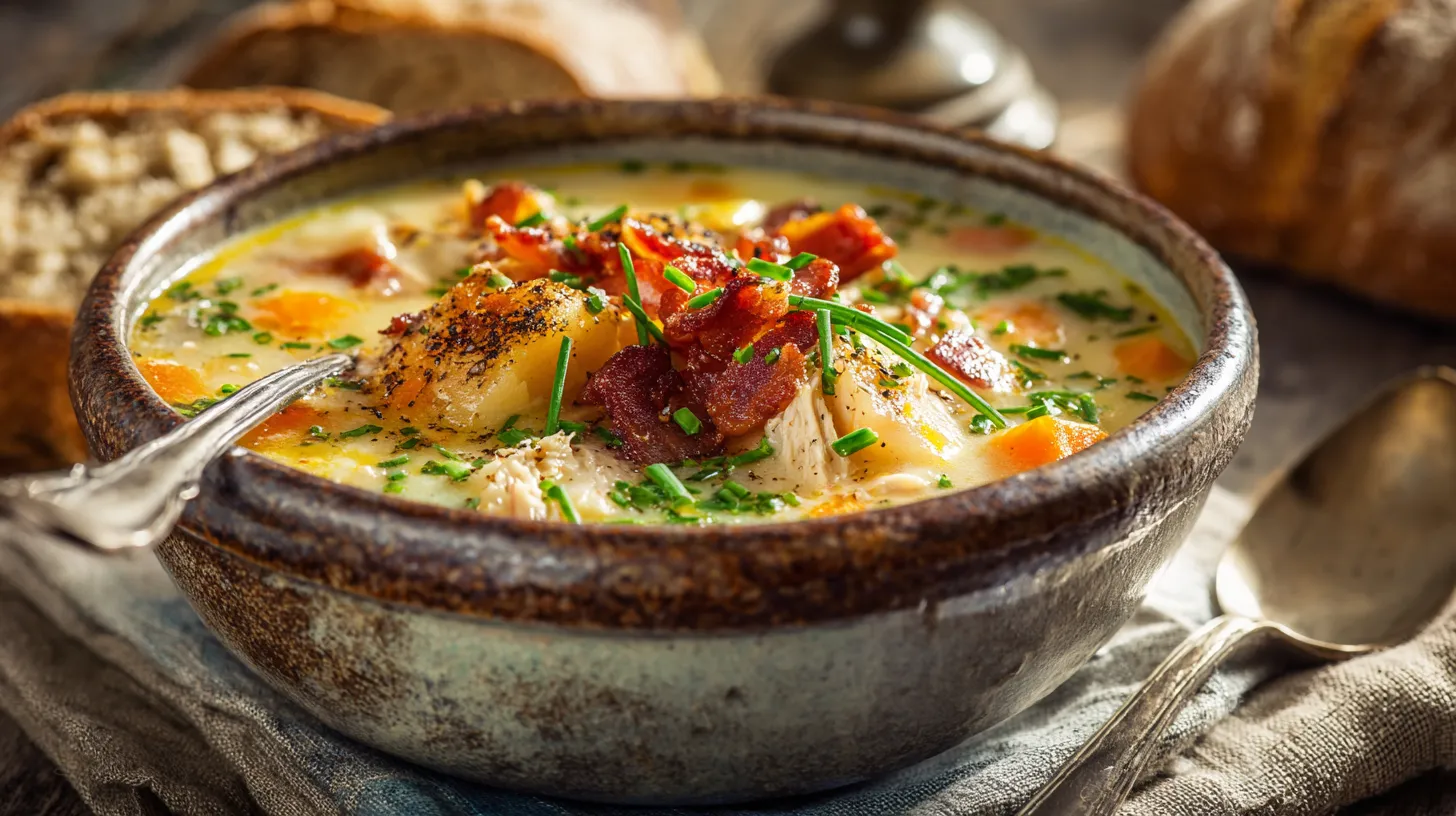
Imagine a cold evening, a steaming bowl cradled in your hands, and a spoon sinking into the richest, most comforting soup you’ve ever tasted. That’s the magic of a perfect chicken potato soup. It’s the one-pot meal that feels like a warm hug, combining tender chicken, fluffy potatoes, and savory aromatics in a luxuriously creamy broth.
But finding a recipe that delivers on that promise can be frustrating. Many turn out too thin, too lumpy, or bland. You want a soup that’s hearty enough for dinner but simple enough for a weeknight.
You’ve found it. This isn’t just another recipe; it’s the definitive guide to mastering this comfort food classic. As a culinary strategist who has tested dozens of comfort food variations, I’ve engineered this chicken and potato soup for maximum flavor and a foolproof, velvety texture. We’ll cover everything—from the right potatoes to use to the secret for a non-gummy, perfectly creamy chicken potato soup.
Table of Contents
Key Takeaways: Your Path to the Perfect Soup
Here’s what you need to know to get this recipe right the first time:
- Total Time: Ready in about 1 hour, perfect for a weeknight.
- Key Ingredients: Yukon Gold potatoes, boneless chicken, heavy cream, and the “holy trinity” (onion, carrots, celery).
- The Creamy Secret: We use a simple roux (butter + flour) and finish with heavy cream for a stable, velvety base that never breaks.
- Potato Choice is Crucial: Yukon Gold potatoes are our top pick. They are medium-starch, so they become tender and creamy without completely disintegrating like starchy Russets.
- Versatility is King: This guide includes variations for a lighter, broth-based soup, a spicy bacon version, and instructions for your slow cooker or Instant Pot.
Why This Chicken Potato Soup is the Ultimate Comfort Food
Not all soups are created equal. What makes this chicken potato soup stand out from the rest? It’s about the perfect balance of three key elements: texture, flavor, and satisfaction.
- The Perfect Texture: This recipe achieves a luxurious creaminess that coats the back of a spoon. It’s thick, but not a pasty, heavy stew. The potatoes are tender-but-intact, the chicken is juicy, and the veggies add a soft, savory bite.
- Deep, Layered Flavor: We build flavor in steps. It starts with sautéing the mirepoix (onion, carrots, and celery) to create a sweet, aromatic base. We then deglaze, toast the flour, and simmer with high-quality broth and herbs. Every single step adds a new layer of savory depth.
- The Hearty “One-Pot Meal” Factor: This isn’t a light starter. This is a robust, satisfying meal in a bowl. The combination of protein (chicken) and complex carbs (potatoes) makes it incredibly satiating, striking that perfect balance between a hearty stew and a creamy chicken and potato soup. It’s the meal you crave when you need comfort, warmth, and a full belly.
Essential Ingredients Breakdown (And Smart Substitutions)
Great soup starts with great ingredients. Here’s a detailed look at what you need and why it matters.
The Best Potatoes for Soup (And Why It Matters)
The potato you choose is the single most important factor for your soup’s final texture.
- Best Choice (Our Pick): Yukon Gold: These are the all-stars. Their medium-starch content means they hold their shape reasonably well but also release just enough starch to help thicken the soup. Their creamy, buttery flavor is a perfect match for the broth.
- The Starchy Option: Russets: These are high in starch and very fluffy. They will break down significantly during cooking, which can be good if you want to naturally thicken your soup. However, if overworked, they can turn the soup gummy or pastey. Use them if you plan to blend a portion of your soup.
- The Waxy Option: Red Potatoes: These are low-starch and hold their shape completely. They are excellent for a broth-based chicken soup with potatoes where you want distinct, firm chunks of potato, but they won’t contribute to the creaminess.
Chicken: Boneless vs. Bone-In (And Leftovers!)
You have options for your chicken, and all of them work well.
- Boneless, Skinless Chicken (Breasts or Thighs): This is the easiest and fastest. We dice it and cook it right in the pot. Thighs will provide a slightly richer flavor and are more forgiving, while breasts are leaner.
- Leftover or Rotisserie Chicken: This is the ultimate time-saver. A shredded rotisserie chicken is already seasoned and tender. Simply skip the “cook chicken” step and add the shredded chicken to the soup during the last 5-10 minutes of simmering, just to heat it through.
- Bone-In Chicken: Using bone-in chicken (like split breasts) will create a richer, more flavorful broth. You would simmer the chicken in the broth first, then remove it, shred the meat, and return the meat to the pot before adding the veggies. This adds about 20-25 minutes to your cook time but deepens the flavor.
The “Holy Trinity”: Potatoes, Carrots, and Celery
While the name is chicken potato soup, the foundational flavor comes from the classic mirepoix of onion, carrots, and celery.
- Onion: A yellow onion provides a sweet, aromatic base.
- Carrots: Add a subtle sweetness and beautiful color.
- Celery: Provides a fresh, slightly peppery background note that cuts through the richness.
Don’t skip these! Even if you’re not a fan of cooked carrots, dicing them small makes them melt into the soup, leaving their flavor behind.
Creating the Creamy Base: The “How-To”
This is where many creamy chicken potato soup recipes go wrong. Here are the keys to success:
- The Roux: We use a simple roux of all-purpose flour and butter. Toasting the flour in the butter for 1-2 minutes cooks out the raw “floury” taste and creates a powerful, stable thickening agent.
- The Broth: Use a low-sodium chicken broth or stock. This allows you to control the salt level.
- The Dairy: We finish with heavy cream. Why? It has a high-fat content (around 36%), which means it can be simmered gently without “breaking” or curdling. Do not add it cold! Using room-temperature or slightly warmed cream is a pro-tip to prevent shocking the soup.
Step-by-Step Cooking Instructions: The Perfect Creamy Chicken Potato Soup
This recipe is designed for a 6-quart Dutch oven or heavy-bottomed pot. Follow these steps precisely for a foolproof result.
(Recipe Card Placeholder)
(The JSON-LD schema in Phase 6 contains the official, crawlable recipe. This is the detailed, long-form explanation.)
Step 1: Prep Your Ingredients (Mise en Place)
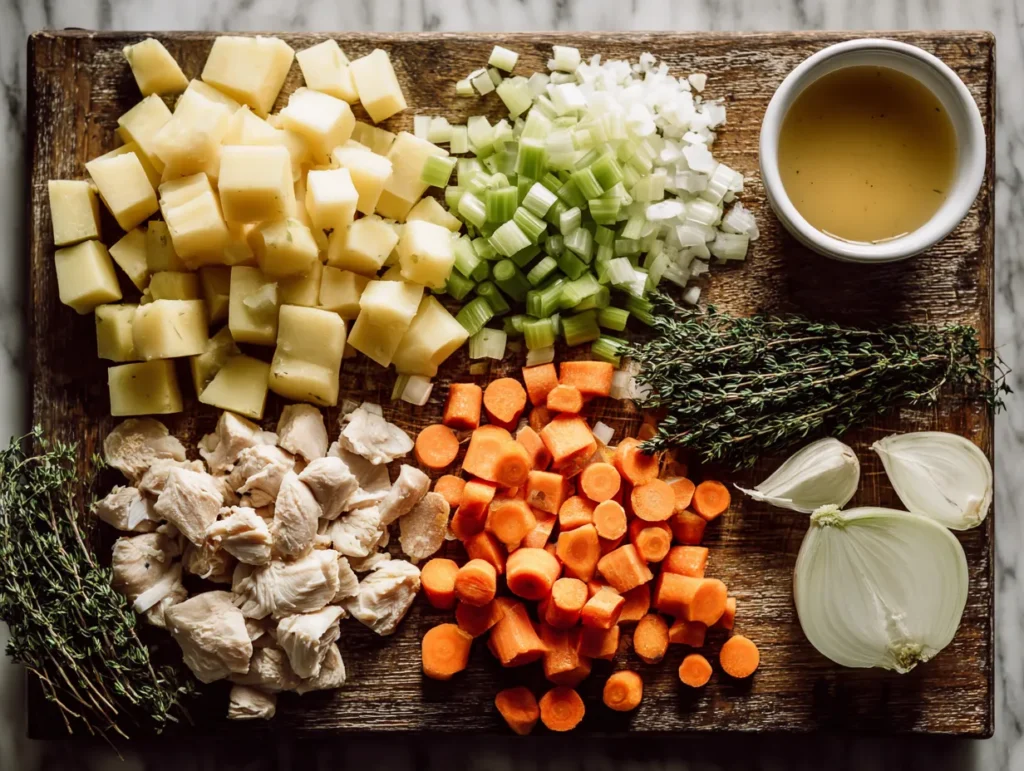
- Dice 1 large yellow onion, 2-3 carrots, and 2-3 celery stalks (about 1.5 cups of mirepoix). Mince 4 cloves of garlic.
- Dice 2 lbs of Yukon Gold potatoes into uniform 1/2-inch cubes. (No need to peel, but you can if you prefer).
- Dice 1.5 lbs of boneless, skinless chicken breasts or thighs into 1-inch pieces. Pat them dry with a paper towel and season with salt and pepper.
Step 2: Brown the Chicken
- Heat 1 tablespoon of olive oil in your Dutch oven over medium-high heat.
- Add the chicken pieces in a single layer (work in batches if needed).
- Sear for 2-3 minutes per side until golden brown. The chicken does not need to be cooked through.
- Remove the chicken with a slotted spoon and set it aside on a plate.
Step 3: Build the Aromatic Base
- In the same pot, melt 4 tablespoons of unsalted butter over medium heat.
- Add the diced onion, carrots, and celery. Sauté for 6-8 minutes, stirring occasionally, until the vegetables are soft and the onion is translucent.
- Add the minced garlic and sauté for 1 more minute until fragrant.
Step 4: Create the Roux and Deglaze
- Sprinkle 1/4 cup of all-purpose flour over the vegetables.
- Stir constantly for 1-2 minutes. The flour will absorb the butter and form a thick paste. This step is crucial for cooking out the raw flour taste.
- Slowly pour in 1/2 cup of the chicken broth, scraping the bottom of the pot with a wooden spoon to release all the browned bits (the “fond”). This is where the best flavor lives!
Step 5: Simmer the Soup
- Once the bottom is clean, slowly whisk in the remaining 5.5 cups of chicken broth.
- Add the diced potatoes, the seared chicken (and any juices from the plate), 1 teaspoon of dried thyme, 1/2 teaspoon of dried rosemary, 1 bay leaf, 1 teaspoon of salt, and 1/2 teaspoon of black pepper.
- Bring the soup to a boil, then immediately reduce the heat to low.
- Cover and simmer for 15-20 minutes, or until the potatoes are fork-tender. Do not overcook, or they will become mushy.
Step 6: Finish with Cream and Serve
- Remove the bay leaf.
- Stir in 1 cup of heavy cream (preferably at room temperature).
- Let the soup heat through for another 5 minutes on low heat. Do not let it boil after adding the cream.
- Taste and adjust seasoning with more salt and pepper if needed.
- Serve hot, garnished with fresh parsley, crispy bacon, and shredded cheddar cheese.
Pro Tips & Techniques for Restaurant-Quality Soup
As an expert, I’ve learned that small details make a big difference. Here are the “why’s” behind the “how’s.”
The Secret to a Silky (Not Gummy) Soup
Gummy soup is the #1 complaint. It’s almost always caused by overcooking or overworking starchy potatoes (like Russets).
- Solution 1: Use Yukon Golds. Their waxy-creamy texture is more stable.
- Solution 2: Simmer, don’t boil. A rolling boil will agitate the potatoes, releasing too much starch and breaking them down aggressively.
- Solution 3: If you use an immersion blender (see below), blend before the potatoes are fully cooked, or blend only a small portion. Blending cooked potatoes is how you make gluey mashed potatoes, and the same science applies here.
Building Flavor: Why You Must Sauté Your Veggies
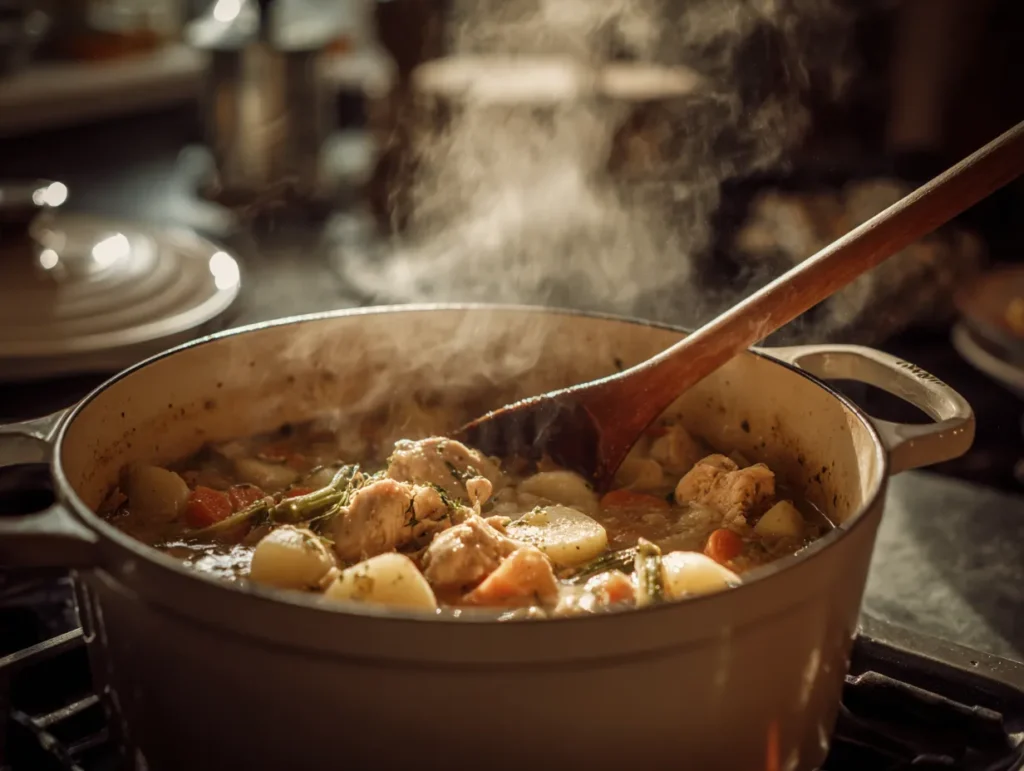
Tossing raw veggies into broth and boiling them results in a watery, one-note soup. Sautéing them in butter or oil first is a non-negotiable step.
This process, called “sweating,” coaxes out their natural sugars. As these sugars caramelize on the bottom of the pot (the fond), they build an incredibly deep, savory-sweet foundation that broth alone can never achieve. When you deglaze with the broth, you lift all that concentrated flavor right back into your soup.
How to Thicken Your Chicken Potato Soup (The Right Way)
You have three main options for thickening. Our recipe uses a roux, which is the most stable and flavorful.
- Roux (Best Method): A 1:1 ratio of fat (butter) and flour, cooked before adding liquid. This is the classic French technique used in bisques and chowders. It creates a stable, velvety texture and adds richness.
- Cornstarch Slurry (Quick Method): Mix 1-2 tablespoons of cornstarch with an equal amount of cold water or broth, then whisk it into the simmering soup. It will thicken in 1-2 minutes. It’s effective and gluten-free, but can sometimes result in a slightly “slick” or “shiny” texture compared to a roux. For more on this, culinary sites like Serious Eats offer deep dives into the science of thickeners.
- Immersion Blender (Natural Method): Use an immersion blender to pulse the soup 3-4 times. This breaks down some of the potatoes and vegetables, releasing their natural starches to thicken the broth. Warning: Do this sparingly to avoid a gummy texture.
Recipe Variations (To Make It Your Own)
This recipe is a perfect template. Here’s how to adapt it to your taste or kitchen gadgets.
The Ultimate Creamy Chicken and Potato Soup (Loaded Baked Potato Style)
Want it even more decadent? Make these two small changes:
- Add Bacon: Cook 6-8 strips of bacon in the pot first. Remove the bacon, crumble it, and use 2 tablespoons of the bacon fat (instead of butter) to cook your vegetables.
- Add Cream Cheese: At the end, before adding the heavy cream, whisk in 4 ounces of softened cream cheese until it’s fully melted into the broth.
- Serve: Garnish heavily with the crumbled bacon, shredded sharp cheddar, and sliced green onions.
Lighter, Broth-Based Chicken Soup with Potatoes
If you’re not in the mood for a creamy chicken potato soup, this is an easy fix.
- Skip the Roux & Cream: Completely omit the flour and heavy cream.
- Use Waxy Potatoes: Switch to Red Potatoes, as they will hold their shape perfectly in the thinner broth.
- Finish with Herbs: Add 2 tablespoons of fresh, chopped parsley and 1 tablespoon of fresh dill at the very end to brighten the flavor.
Cooking Method Guide: Slow Cooker or Instant Pot
This soup is incredibly flexible.
| Method | Prep Time | Cook Time | Best For… |
| Stovetop | 20 mins | 40 mins | Best flavor control & texture |
| Slow Cooker | 20 mins | 4-6 hours (Low) / 2-3 hours (High) | “Set it and forget it” convenience |
| Instant Pot | 20 mins | 10 mins (High Pressure) + QR | Speed and tenderizing chicken |
Slow Cooker Instructions:
- (Optional but recommended) Sear chicken and sauté vegetables on the stovetop first, then transfer to the slow cooker.
- Add all ingredients except flour and cream.
- Cook on LOW for 4-6 hours or HIGH for 2-3 hours, until chicken and potatoes are tender.
- Remove chicken, shred it, and return to pot.
- In a separate bowl, whisk 1/2 cup of the heavy cream with the 1/4 cup of flour (this is a “slurry”).
- Stir the cream/flour mixture into the soup. Turn to HIGH and cook for 15-20 more minutes to thicken. Stir in any remaining cream.
Instant Pot Instructions:
- Use the “Sauté” function. Sear the chicken, remove. Sauté the vegetables.
- Stir in the garlic and flour (roux) and cook for 1 minute.
- Turn “Sauté” off. Deglaze with 1/2 cup broth, scraping the bottom clean to prevent a “Burn” warning.
- Add remaining broth, chicken, potatoes, and seasonings.
- Secure the lid. Cook on “Manual” (High Pressure) for 10 minutes.
- Perform a quick pressure release.
- Remove lid. Stir in the heavy cream. Let sit for 5 minutes to thicken slightly.
Serving Suggestions & Pairings
A soup this hearty deserves the perfect partner.
- Bread (Essential): A thick, crusty artisan bread or sourdough boule is non-negotiable for dipping.
- Sandwiches: Pair it with a classic grilled cheese or a sharp cheddar panini.
- Salads: A simple green salad with a bright vinaigrette cuts through the soup’s richness. Try an arugula salad with lemon and parmesan.
- Toppings Bar: Set out bowls of toppings so everyone can customize their bowl.
- Crumbled crispy bacon
- Shredded sharp cheddar or gruyère cheese
- Sliced green onions or fresh chives
- A dollop of sour cream
- Oyster crackers or croutons
Storage & Meal Prep Guidelines
This soup makes for fantastic leftovers, but dairy- and potato-based soups need special care.
How to Store and Reheat (Without It Separating)
- Refrigeration: Let the soup cool for about 30-45 minutes (don’t leave it out longer than 2 hours). Store in an airtight container in the refrigerator for up to 4 days.
- Reheating: The soup will thicken considerably when cold. Reheat it gently in a pot over medium-low heat. Add a splash of broth or milk to thin it back out to its original consistency. Avoid boiling, which can cause the cream to separate and the potatoes to get mushy.
Can You Freeze Chicken Potato Soup? (The Surprising Answer)
Expert advice: It’s not recommended.
Soups containing dairy (especially heavy cream) have a high tendency to “break” or separate when thawed. The texture becomes grainy and unappealing. Furthermore, cooked potatoes freeze very poorly; they become watery, mealy, and develop a strange, spongy texture.
If you must freeze it:
- Make the soup without the potatoes and cream.
- Freeze this “base” (chicken, veggies, broth) for up to 3 months.
- Thaw overnight in the fridge. Reheat on the stovetop, and then add freshly boiled or roasted potato cubes and the heavy cream, simmering until just heated through. This is the only way to preserve the soup’s integrity.
- For food storage guidelines, always refer to official sources like the USDA’s “Safe Food Handling” fact sheets.

Key Ingredient Substitutions
Need to make a swap? Here’s a quick-reference table.
| Ingredient | Substitute | Why It Works / Important Notes |
| All-Purpose Flour | Gluten-Free 1-to-1 Baking Flour | Use the same amount to make a GF roux. A cornstarch slurry also works. |
| Heavy Cream | Half-and-Half | A good substitute, but lower in fat. Be extra careful not to boil it, as it will curdle more easily. |
| Heavy Cream (Dairy-Free) | Full-Fat Canned Coconut Milk | This is the best dairy-free option. It’s thick and resists curdling. It will add a very subtle coconut flavor. |
| Butter | Ghee, Avocado Oil, or Olive Oil | Use for sautéing. For a dairy-free roux, use a vegan butter stick or oil. |
| Chicken | Turkey (leftover) or White Beans | Leftover Thanksgiving turkey is a perfect swap. For a vegetarian version, use 2 cans of cannellini beans (rinsed). |
| Chicken Broth | Vegetable Broth | An easy swap, especially if making a vegetarian (bean) version. |
Troubleshooting Common Soup Issues
- “My soup is too thin!”
- Fix: Make a cornstarch slurry. Mix 1 tablespoon of cornstarch with 1 tablespoon of cold water, then whisk it into the simmering soup. It will thicken in 1-2 minutes. Repeat if needed.
- “My soup is way too thick!”
- Fix: This is an easy one! Simply whisk in more chicken broth, 1/4 cup at a time, until it reaches your desired consistency.
- “My cream curdled and the soup looks split!”
- Cause: This happens when dairy is “shocked.” You either added cold cream directly to a boiling soup, or you let the soup boil after adding the cream.
- Fix: Unfortunately, this is hard to fix. You can try blending a small portion of the soup with an immersion blender to re-emulsify it. The best fix is prevention: always use room-temp cream and never boil it.
- “My potatoes dissolved into mush.”
- Cause: You likely used starchy Russet potatoes and/or boiled the soup for too long.
- Fix: Prevention is key. Use Yukon Golds and stick to a gentle simmer for just 15-20 minutes.
Frequently Asked Questions (FAQ)
What are the best potatoes to use for chicken potato soup?
The best, most reliable potatoes are Yukon Golds. Their medium-starch content and creamy, buttery texture make them the perfect all-purpose soup potato. They hold their shape well enough not to dissolve, but they are soft enough to complement the creamy broth.
How do I make my chicken and potato soup creamy without cream?
You have two great options.
- Blend It: Use an immersion blender and pulse the soup 5-10 times. This breaks down some of the potatoes and vegetables, and their natural starches will thicken the broth.
- Use Evaporated Milk: Swap the 1 cup of heavy cream for 1 (12 oz) can of evaporated milk. It’s a fantastic, stable (and lower-fat) substitute for cream in soups.
- Use a Cashew Cream: For a dairy-free option, blend 1 cup of raw, soaked cashews with 3/4 cup of water until completely smooth, then stir it in at the end.
Why did my chicken potato soup get gummy or pasty?
This is almost always a potato problem. It’s caused by overcooking starchy potatoes (like Russets) or over-blending the soup with an immersion blender. The agitation and heat release too much starch, which seizes up and becomes gluey. Stick to Yukon Golds and a gentle simmer.
Can I use leftover or rotisserie chicken for this soup?
Absolutely! This is one of the best ways to make a quick chicken and potato soup. You’ll need about 3-4 cups of shredded cooked chicken. Simply skip Step 2 (searing the chicken) and add the shredded chicken to the pot at the end (Step 6), simmering for 5 minutes just to heat it through.
Is it better to use flour or cornstarch to thicken soup?
For a creamy soup like this, flour (as a roux) is better. A roux builds flavor by toasting in the butter and creates a more velvety, opaque, and stable creaminess. Cornstarch is a pure starch thickener that works fast but can create a slightly “slick” or “shiny” texture. It’s a great quick-fix but a roux provides a superior foundation.
Can I make this chicken potato soup in a slow cooker?
Yes! It’s a great “set it and forget it” meal. The full instructions are in the “Recipe Variations” section above, but the key is to add the flour and cream at the end of the cooking time to ensure it thickens properly and the cream doesn’t separate over the long cook.
How long does chicken potato soup last in the fridge?
When stored properly in an airtight container, your chicken soup with potatoes, carrots, and celery will last for 3 to 4 days in the refrigerator. When reheating, do so gently on the stovetop and add a splash of broth to thin it, as it will thicken significantly when chilled. Always make sure chicken is reheated to an internal temperature of $165^\circ\text{F}$, as recommended by the FDA.
Watch How It’s Made
Sometimes seeing it in action makes all the difference. While this video isn’t our exact recipe, it shows a great visual guide for the techniques of building a creamy chicken potato soup.
Conclusion: Your New Go-To Comfort Meal
You are now fully equipped to make a truly exceptional bowl of chicken potato soup. You know the right ingredients to choose (hello, Yukon Golds!), the expert techniques to build flavor (like making a roux), and how to troubleshoot any problem that comes your way. This recipe is more than just instructions—it’s a reliable, delicious, and deeply comforting meal you can return to again and again.
This is the definitive guide, and now it’s your turn to make it.
Our Call-to-Action: Try this recipe this week! When you do, leave a comment below and let us know how it turned out. Did you add bacon? Did you try it in the Instant Pot? We want to hear your story!