
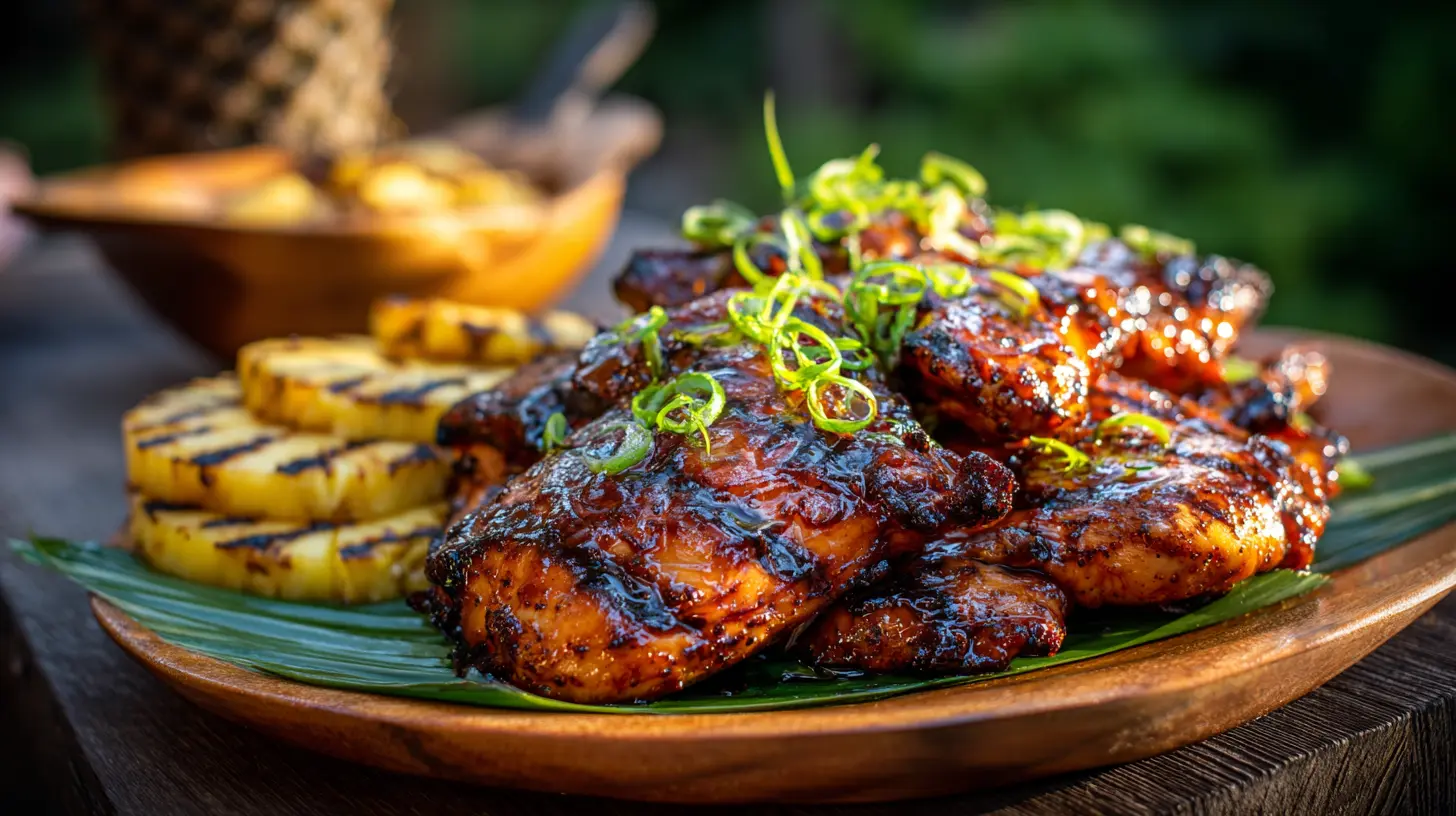
Imagine the scent of smoky, caramelized pineapple and ginger wafting from a grill, the sound of chicken sizzling as it’s basted with a glistening, deep-red sauce. This is the sensory magic of authentic Huli Huli Chicken, Hawaii’s iconic roadside barbecue.
You’ve probably tried to capture that vacation flavor at home, only to be met with sauces that are too thin, too sweet, or just taste like a basic teriyaki. You’re searching for that perfect balance of sweet, savory, and tangy that sticks to the chicken and creates an irresistible char.
You’ve found the definitive guide. This is not just another quick marinade; this is a comprehensive huli huli chicken recipe that honors the original while making it perfectly achievable for your home kitchen.
As a culinary strategist who has spent over a decade perfecting grilling techniques and Pacific-inspired flavors, I’ve tested countless variations to lock down the science of the perfect Huli Huli. We’ll break down the “why” behind each step, from how the pineapple tenderizes the meat to how to achieve that signature char without burning the sauce.
Get ready to master the dish that will make your backyard the most popular spot on the block.
Key Takeaways
- Authentic Flavor Profile: This recipe nails the signature sweet, savory, and tangy balance with a pineapple-ginger-soy base.
- The “Huli Huli” Secret: “Huli” means “turn.” The technique requires frequent turning and basting over the grill.
- Marinade is Key: A 4 to 24-hour marinade is essential for tender, flavorful chicken. We’ll show you the perfect ratio.
- Grill or Oven: While grilling is traditional, our huli huli chicken recipe oven method uses the broiler for a near-perfect char.
- Don’t Burn the Sugar: The basting sauce is added late in the cooking process to prevent the sugars from burning before the chicken is cooked.
- Beyond Teriyaki: Huli Huli is not teriyaki. It’s fruitier, tangier, and traditionally uses ketchup as a base.
What is Huli Huli Chicken? The Story Behind Hawaii’s Famous Dish
Before we light the grill, it’s worth knowing the story. This isn’t just a generic [hawaiian chicken recipe]; it has a specific, delicious history.
The original Huli Huli Chicken was created in 1955 by Ernest Morgado, a Hawaiian-Portuguese businessman. Morgado, head of the Pacific Poultry Company, began grilling chicken for a farmers’ meeting using his mother’s secret marinade.
His method was unique: he cooked the chicken halves between two grills, and when it was time to flip, his crew would shout “Huli!”—the Hawaiian word for “turn.” The name stuck, and “Huli Huli Chicken” (or “Turn Turn Chicken”) became a legend, sold at fundraisers and roadside stands across Oahu and eventually, the world.
The Meaning of “Huli Huli”: More Than Just “Turn”
While “huli” literally means “turn,” the name embodies the entire cooking process. The constant turning and basting is what creates the chicken’s signature lacquered, caramelized crust. It’s an active, hands-on grilling method where the marinade and the flame work together.
The name “Huli-Huli” is actually a registered trademark, which is why you’ll often see “copycat” or “Hawaiian-style” recipes. But the flavor profile is what we’re all chasing.
The Original Molokai Chicken: A Taste of History
Morgado’s original fundraiser chicken was also known as [Molokai chicken], as his poultry business was based on the island of Molokai. While the exact original recipe is a closely guarded secret, culinary historians agree on the key components: a base of soy sauce (shoyu), fresh pineapple juice, brown sugar, fresh ginger, garlic, and, surprisingly, ketchup.
Many modern recipes skip the ketchup, aiming for what they think sounds more “authentic.” But ketchup provides the perfect blend of sweetness, acidity (from vinegar), and umami (from tomatoes) that creates a complex, sticky glaze. Our recipe stays true to this original spirit.
What Makes This Authentic Huli Huli Chicken Recipe Special?
Search for a [huli huli chicken recipe] and you’ll get thousands of results. Many are overly simple, tasting more like a sweet [teriyaki chicken recipe] than the complex, smoky-sweet original.
This recipe is different. It’s the best huli huli chicken recipe because it focuses on three things:
- The Perfect Marinade-to-Baste Ratio: We use a divided marinade. Part is used to tenderize and flavor the chicken, while the other part is boiled down into a thick, sticky basting sauce. This is the secret to a glaze that actually clings to the chicken.
- Flavor Science: We balance the “Core Four” ingredients (soy, pineapple, ginger, garlic) with the right amount of acidity (rice vinegar) and umami (ketchup) to create a flavor that is layered, not one-note.
- Technique-Focused: We show you how to cook it. You’ll learn to use two-zone grilling to cook the chicken through perfectly before applying the final sugary glaze, preventing the dreaded burnt-on-the-outside, raw-on-the-inside chicken.
The Perfect Balance: Sweet, Savory, and Tangy
The problem with many recipes is a failure of balance. Too much pineapple juice and it’s cloying. Too much soy sauce and it’s a salt bomb.
- Sweet: From pineapple juice and brown sugar. The sugars are essential for caramelization (the Maillard reaction).
- Savory (Umami): From soy sauce (shoyu) and ketchup. This provides the deep, satisfying, meaty background flavor.
- Tangy (Acid): From pineapple juice (bromelain) and rice vinegar. The acid doesn’t just add brightness; it also helps tenderize the chicken.
Why This Marinade is the Secret to Tender, Juicy Chicken
The magic ingredient is pineapple juice. It contains an enzyme called bromelain, which is a protease. In plain English, it breaks down tough protein fibers in the chicken, resulting in an incredibly tender bite.
However, this is also a warning: do not over-marinate!
After 24 hours, the bromelain can turn the chicken’s texture from tender to mushy. For this [huli huli chicken recipe authentic] flavor, 4 to 24 hours is the sweet spot. We recommend chicken thighs, as their higher fat content holds up to the marinade and stays juicier on the grill.
Essential Ingredients for the Best Huli Huli Chicken
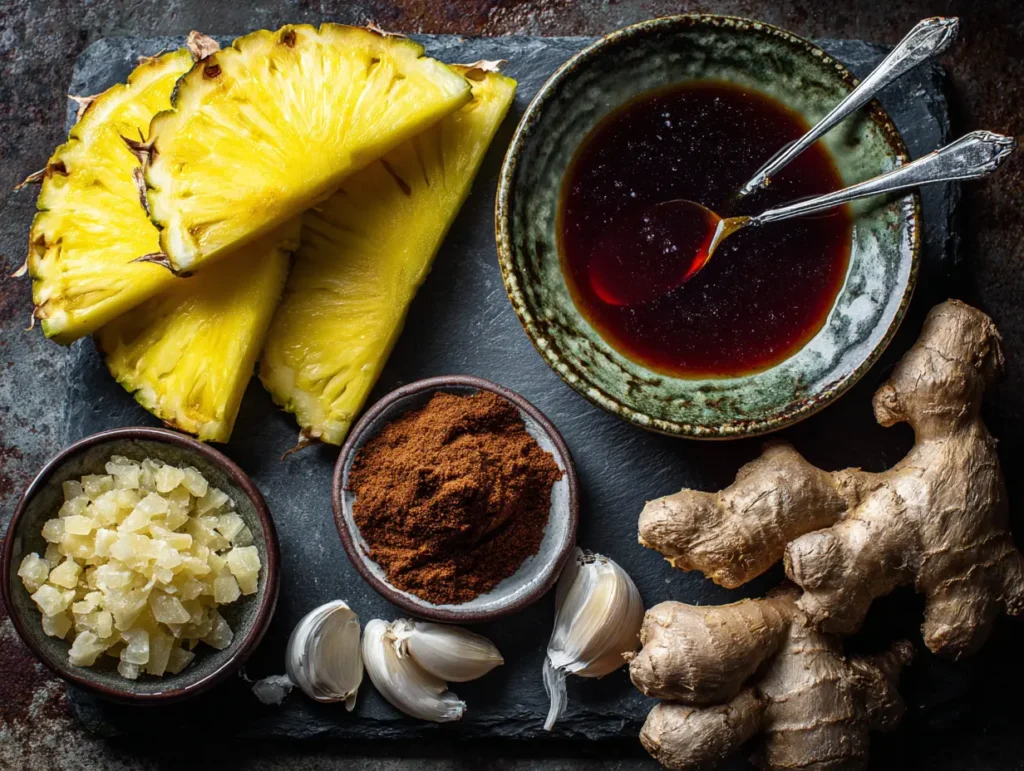
This recipe uses simple, easy-to-find ingredients. The magic is in the combination. For this [simple huli huli chicken recipe], you’ll need:
- Chicken: Boneless, skinless chicken thighs are the best choice. They are forgiving, flavorful, and stay juicy. You can use bone-in, skin-on thighs (they’re even juicier) or chicken breasts, but you’ll need to adjust cook times (see table below).
- Pineapple Juice: Canned, 100% pineapple juice (not from concentrate) is perfect. Fresh is great, but the bromelain is so strong you must marinate for less than 4 hours.
- Soy Sauce: Use a standard, low-sodium soy sauce (or shoyu). This is the salty, umami backbone.
- Ketchup: This is the non-negotiable secret ingredient. It provides body, color, and a sweet-tangy base.
- Brown Sugar: Light or dark brown sugar adds molasses notes and helps the sauce caramelize.
- Fresh Ginger & Garlic: Do not substitute for powder. The fresh, pungent bite of minced ginger and garlic is essential.
- Rice Vinegar: A splash of unseasoned rice vinegar brightens all the flavors and cuts through the sweetness.
- Sesame Oil (Optional): A tiny drizzle adds a nutty, toasted aroma.
Ingredient Substitutions & Healthy Swaps
Need to make a change? Here’s a quick guide.
| Ingredient | Standard | Substitution/Alternative | Notes |
| Soy Sauce | Low-Sodium Soy Sauce | Tamari (gluten-free) or Coconut Aminos (soy-free, paleo) | Coconut aminos are sweeter, so you may want to reduce the brown sugar slightly. |
| Brown Sugar | Light or Dark Brown Sugar | Honey, Maple Syrup, or Monk Fruit Sweetener | For a [healthy huli huli chicken recipe], use a 1:1 sugar-free brown sugar replacement like monk fruit. |
| Ketchup | Standard Ketchup | Unsweetened Ketchup or Tomato Paste + 1 tsp Vinegar | Tomato paste is much more concentrated; use about 2/3 the amount. |
| Pineapple Juice | Canned Pineapple Juice | Orange Juice or Mango Nectar | This will change the flavor profile, but still provides the necessary fruity acid. |
| Chicken Thighs | Boneless, Skinless | Chicken Breasts, Bone-in Thighs, Pork Tenderloin | If using breasts, marinate for only 2-4 hours and cook to 165°F. |
The Step-by-Step Authentic Huli Huli Chicken Recipe (Grill Method)
This is the heart of the process. We will create the marinade, divide it, and then execute the “Huli Huli” on the grill.
(This recipe card is optimized for the article body. Schema will be provided at the end.)
RECIPE CARD
Yields: 6 servings
Prep time: 20 minutes
Marinating time: 4 hours (up to 24 hours)
Cook time: 20 minutes
Total time: 4 hours 40 minutes
Recipe Ingredients
For the Chicken & Marinade:
- 3 lbs boneless, skinless chicken thighs (about 8-10 thighs)
- 1 cup pineapple juice (canned, 100% juice)
- 1/2 cup low-sodium soy sauce (or tamari)
- 1/2 cup ketchup
- 1/2 cup packed light brown sugar
- 4-5 cloves garlic, finely minced (about 1.5 tbsp)
- 1 tbsp fresh ginger, finely grated (use a microplane)
- 1 tbsp rice vinegar
- 1 tsp sesame oil (optional)
- 1 tsp Sriracha or red pepper flakes (optional, for a kick)
For Garnish:
- Sliced green onions
- Toasted sesame seeds
- Grilled pineapple rings
Step-by-Step Instructions
This process is broken into two phases: the marinade and the cook.
H3: Step 1: Create the Signature Marinade
In a medium bowl or large liquid measuring cup, whisk together all the marinade ingredients: pineapple juice, soy sauce, ketchup, brown sugar, minced garlic, grated ginger, rice vinegar, and optional sesame oil/Sriracha. Whisk until the brown sugar is fully dissolved.
H3: Step 2: Marinate the Chicken (The Right Way)
- Reserve the Sauce: Pour 1 cup of the freshly made marinade into a separate small saucepan. Cover and place this saucepan in the refrigerator. This will become your basting sauce. This is a critical food safety step. Never use the marinade the raw chicken touched for basting.
- Marinate the Chicken: Place the chicken thighs in a large ziplock bag or a glass baking dish. Pour the remaining marinade over the chicken, making sure every piece is well-coated.
- Refrigerate: Seal the bag (pressing out the air) or cover the dish. Refrigerate for at least 4 hours or up to 24 hours. Do not go longer, or the pineapple juice will make the chicken mushy.
H3: Step 3: Prepare the Grill for Two-Zone Cooking
The secret to perfectly cooked Huli Huli chicken is two-zone heat. This means one side of your grill is hot (direct heat) and the other side is warm (indirect heat).
- For a Gas Grill: Turn half the burners to medium-high and leave the other half off.
- For a Charcoal Grill: Bank your hot coals to one side of the grill.
Preheat your grill to medium-high (about 400°F). Clean the grates well and oil them with a paper towel dipped in vegetable oil.
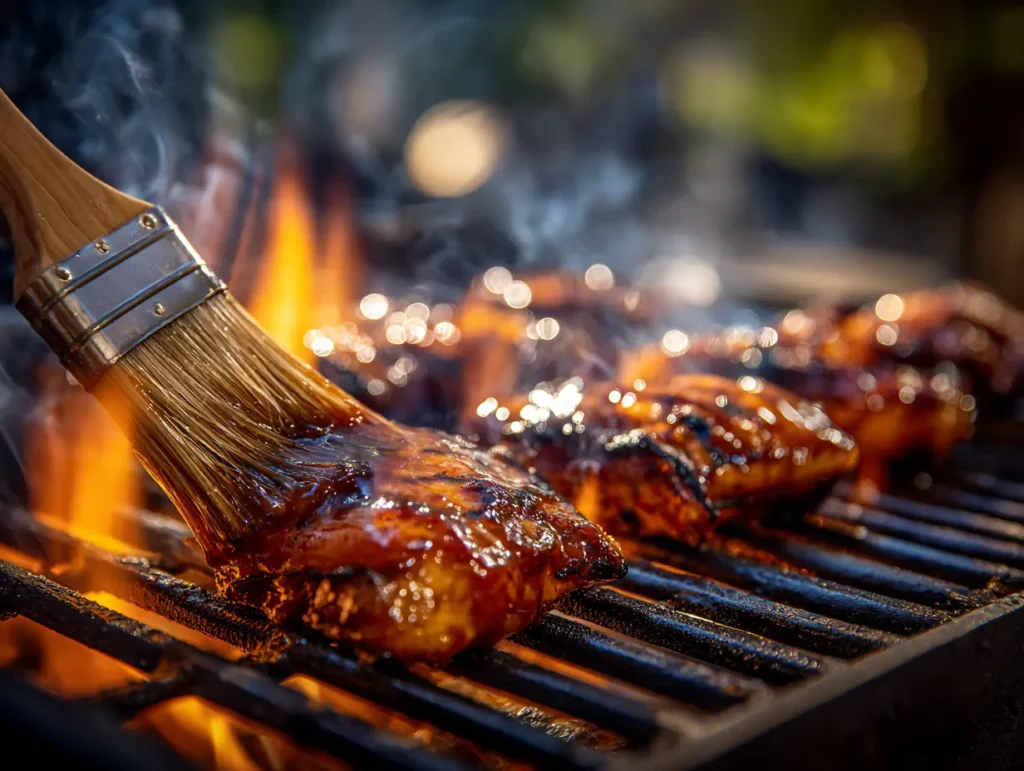
H3: Step 4: Grill, Turn, and Baste (The “Huli Huli” Process)
- Remove Chicken: Take the chicken from the marinade and let any excess drip off. Discard the used marinade.
- Cook on Indirect Heat: Place the chicken thighs on the cooler (indirect heat) side of the grill. Close the lid and let them cook for 6-8 minutes. This cooks the chicken gently from the inside.
- Prepare the Basting Sauce: While the chicken is cooking, take the reserved (clean) 1 cup of marinade from the fridge. Place the saucepan on the stove (or the side burner of your grill) and bring it to a rolling boil. Boil for 5 minutes to thicken slightly and ensure it’s food-safe.
- The First “Huli” (Turn): Flip the chicken thighs. Cook for another 6-8 minutes on the indirect side. The chicken should be almost cooked through (around 155°F).
- Move to Direct Heat & Baste: Now, move the chicken to the hot (direct heat) side of the grill. Baste one side generously with your thickened sauce.
- Huli, Huli, Huli! This is the active part. Flip the chicken every 60-90 seconds.
- Flip. Baste the new top side.
- Wait 60 seconds.
- Flip. Baste the new top side.
- Repeat this “Huli Huli” (turn, turn) process for 4-6 minutes.
- Final Cook: The sauce will caramelize, the edges will char, and the chicken will become sticky and glazed. The chicken is done when a meat thermometer inserted into the thickest part reads 165°F.
- Rest: Remove the chicken to a clean platter. Let it rest for 5-10 minutes before slicing or serving. This allows the juices to redistribute.
Browse all international chicken recipes
Table 3: Estimated Nutritional Information (Per Serving)
(Assuming 6 servings, chicken thighs only)
| Nutrient | Amount |
| Calories | 385 kcal |
| Protein | 34 g |
| Fat | 18 g |
| Carbohydrates | 22 g |
| Sugar | 18 g |
| Sodium | 680 mg |
| (Note: This is an estimate and will vary based on exact brands and marinade absorption.) |
[RECIPE CARD END]
Pro Tips from the Kitchen for Perfect Results
Mastering this [huli huli chicken recipe] is easy if you know the “why” behind the technique.
The Maillard Reaction: Getting That Perfect Char
That delicious, dark-brown crust on grilled meat is called the Maillard reaction. It’s a chemical reaction between amino acids and reducing sugars that happens at high heat. Our marinade is designed for this, with both amino acids (from chicken/soy) and sugars (from pineapple/brown sugar).
By cooking on indirect heat first, we cook the chicken through. By moving it to direct heat at the end, we just focus on creating that Maillard crust without overcooking the inside.
Don’t Sauce Too Soon: The Sugar-Burning Point
If you put the sugary basting sauce on the chicken for the entire cook time, it will burn. Sugar carbonizes (burns) at a much lower temperature than it takes to cook chicken. The result is a black, acrid, bitter crust and raw chicken.
Expert Tip: Only apply the final basting sauce in the last 4-6 minutes of cooking, and do it over direct heat with constant turning. This is the “Huli Huli” method, and it caramelizes the sauce without burning it.
The “Double-Cook” Method for Extra-Sticky Sauce
If your boiled-down basting sauce still feels a little thin, don’t worry. The grilling process will thicken it. For an extra-sticky glaze, you can add 1 tsp of cornstarch (slurried in 1 tbsp cold water) to the sauce while it boils. This is a great cheat for getting that “takeout” style gloss.
Recipe Variations: Huli Huli Chicken Your Way
This recipe is a fantastic base, but it can be adapted for any equipment or diet.
The Best Huli Huli Chicken Recipe (Oven Method)
No grill? No problem. This [authentic huli huli chicken recipe oven] method creates a fantastic result.
- Marinate: Follow Step 1 and 2 exactly as above (marinate chicken, reserve 1 cup of sauce).
- Boil Sauce: Boil the reserved 1-cup of sauce on the stovetop for 5-8 minutes until it’s thick and syrupy.
- Prepare Pan: Preheat oven to 400°F (200°C). Place a wire rack over a foil-lined baking sheet (this is crucial for airflow).
- Bake: Remove chicken from the used marinade (discard it). Place chicken on the wire rack. Bake for 15 minutes.
- Baste & Broil: After 15 minutes, remove the chicken. Brush generously with the thickened (boiled) sauce.
- Broil: Turn your oven’s broiler on HIGH. Place the pan back in the oven, about 6-8 inches from the heat.
- The “Huli”: Broil for 3-5 minutes, watching constantly (it burns fast!). Flip the chicken, baste the other side, and broil for another 3-5 minutes, until charred, sticky, and the internal temp reads 165°F.
- Rest: Let it rest for 5 minutes before serving.
Simple & Easy Huli Huli Chicken (Air Fryer)
This is a fantastic [huli huli chicken recipe easy] weeknight option.
- Marinate chicken and boil the reserved sauce as directed.
- Preheat your air fryer to 380°F (193°C).
- Place marinated chicken thighs in the basket, leaving space between them (work in batches).
- Cook for 10 minutes.
- Flip the chicken, brush generously with the boiled, thickened sauce.
- Cook for another 5-7 minutes, or until the internal temp is 165°F and the sauce is caramelized.
Healthy Huli Huli Chicken Recipe
For a lighter, [healthy huli huli chicken recipe], make these simple swaps:
- Use Tamari (gluten-free) or Coconut Aminos (soy-free).
- Replace brown sugar with a 1:1 brown sugar alternative (like monk fruit).
- Use an unsweetened, no-salt-added ketchup.
- Use chicken breasts instead of thighs (reduce cook time).
How to Make a Huli Huli Chicken Stack
You may see a [huli huli chicken stack recipe] on menus. This is simply a fun way to serve it.
- Base: Start with a scoop of white rice or our
[coconut rice recipe](see below). - Middle: Add a scoop of classic Hawaiian Macaroni Salad.
- Top: Place your freshly cooked Huli Huli chicken (diced or whole) on top.
- Garnish: Drizzle with extra sauce and sprinkle with green onions.
Table 4: Cooking Time & Temperature Guide
| Method | Temperature | Total Cook Time (Approx.) | Internal Temp Target |
| Grill (Thighs) | 400°F (Two-Zone) | 16-20 minutes | 165°F (74°C) |
| Grill (Breasts) | 400°F (Two-Zone) | 12-15 minutes | 165°F (74°C) |
| Oven (Thighs) | 400°F Bake, then Broil | 20-25 minutes | 165°F (74°C) |
| Oven (Breasts) | 400°F Bake, then Broil | 18-22 minutes | 165°F (74°C) |
| Air Fryer (Thighs) | 380°F | 15-17 minutes | 165°F (74°C) |
| (Note: Always cook to temperature, not to time. Per the FDA, all poultry must reach 165°F.) |
Serving Suggestions & Perfect Pairings
A [hawaiian chicken recipe] is all about the “plate lunch”—the sides are just as important!
The Classic: Perfect Hawaiian Macaroni Salad
You can’t have Huli Huli chicken without mac salad. The cool, creamy, tangy salad is the perfect foil for the smoky, sweet chicken. The key to authentic mac salad is simple:
- Overcook the elbow macaroni slightly.
- Mix it with a dressing of Best Foods/Hellmann’s mayonnaise, apple cider vinegar, a little sugar, salt, and pepper.
- Crucially, add grated carrots and onions. Let it chill for at least 4 hours.
Our Favorite Easy Coconut Rice Recipe
This [coconut rice recipe] is the perfect vehicle for soaking up extra sauce.
- Rinse 1.5 cups of Jasmine rice until the water runs clear.
- In a saucepan, combine the rinsed rice, one 13.5-oz can of full-fat coconut milk, 1 cup of water, 1 tsp of sugar, and 1/2 tsp of salt.
- Bring to a boil, stir once, then reduce heat to the lowest possible setting.
- Cover and cook for 15-20 minutes.
- Remove from heat, keep covered, and let steam for 10 minutes. Fluff with a fork.(For a full guide, check out our complete coconut rice recipe here.)
Other Great Sides
- Grilled Pineapple: A non-negotiable. Grill fresh pineapple rings on the hot side of the grill for 2-3 minutes per side until caramelized.
- Steamed White Rice: Simple, clean, and traditional.
- A simple green salad with a ginger-lime vinaigrette.
Huli Huli Chicken vs. Teriyaki Chicken: What’s the Difference?
This is a common question. People often lump Huli Huli in with [teriyaki chicken], but they are distinct.
Teriyaki is a Japanese cooking technique. “Teri” means “luster” (from the sauce) and “yaki” means “grill” or “broil.” The sauce is a simple, thin glaze of soy sauce, mirin (sweet rice wine), and sake.
Huli Huli is a Hawaiian-American dish. Its sauce is much thicker and more complex, featuring a base of ketchup, pineapple juice, and other aromatics. It’s sweeter, fruitier, and tangier than traditional teriyaki.
Table 5: Huli Huli vs. Teriyaki
| Feature | Huli Huli Chicken | Teriyaki Chicken |
| Origin | Hawaii, USA | Japan |
| Key Ingredients | Pineapple Juice, Ketchup, Soy Sauce, Ginger | Soy Sauce, Mirin, Sake, Sugar |
| Flavor Profile | Sweet, Tangy, Fruity, Smoky | Savory, Salty-Sweet, Mild |
| Consistency | Thick, sticky glaze (applied at end) | Thin, lustrous glaze (used as marinade/glaze) |
| Primary Technique | “Huli Huli” (constant turning/basting) | “Yaki” (grilled or broiled) |
Storage, Freezing, and Meal Prep Guidelines
This recipe is fantastic for meal prep.
How to Store Leftovers Safely
- Refrigerate: Cool the chicken completely, then store it in an airtight container in the refrigerator for up to 4 days.
- Reheating: Reheat gently in the microwave or in a 350°F oven until warm. You can also chop it cold and add it to salads. For food safety guidelines, always refer to the USDA’s recommendations.
Freezing Huli Huli Chicken
You can freeze this chicken at two different stages:
- Freezing Raw in Marinade: Place the chicken thighs and the un-reserved portion of the marinade (the part not for basting) in a freezer-safe ziplock bag. Press out all the air and freeze flat for up to 3 months. Thaw overnight in the refrigerator. Note: The bromelain enzyme becomes less active when frozen, so it won’t over-tenderize.
- Freezing Cooked Chicken: Let the cooked chicken cool completely. Store in a freezer bag or airtight container for up to 3 months.
Troubleshooting Common Huli Huli Problems
- “Why is my sauce so thin?”
- You didn’t boil the reserved 1 cup of sauce long enough. It needs to reduce on the stove for 5-8 minutes (or more) to become a thick glaze.
- “My chicken is burnt but raw inside!”
- You skipped the two-zone grilling step. You put the chicken over direct, high heat for the whole time. The sugars burned before the chicken could cook. Solution: Start on indirect heat, cook to 155°F, then move to direct heat to char.
- “My chicken has a weird, mushy texture.”
- You marinated it for too long (over 24 hours) or used fresh pineapple juice for too long. The bromelain enzyme over-tenderized the meat. Stick to the 4-24 hour window with canned juice.
- “The flavor is just ‘meh’.”
- You probably used substitutes for the fresh ginger and garlic. The powdered versions just don’t have the same “pop.” Or, you didn’t marinate it long enough (it needs at least 4 hours).

Here is a fantastic video guide that walks you through a similar grilling process. Watching the technique for a “Huli Huli” style cook can be incredibly helpful for your first time.
Frequently Asked Questions (FAQ)
What does “Huli Huli” mean?
“Huli” (pronounced hoo-lee) is the Hawaiian word for “turn.” The dish is named “Huli Huli Chicken” because the original method involved grilling the chicken between two racks and flipping the entire apparatus, with the crew yelling “Huli!” when it was time to turn.
Can I make Huli Huli Chicken with chicken breasts?
Yes, you can. However, chicken breasts are much leaner and can dry out. To prevent this, marinate them for a shorter time (2-4 hours is plenty) and be very careful not to overcook them. Pull them from the grill or oven the moment they hit 165°F.
How can I make my sauce thicker?
The best way is to boil the reserved 1 cup of marinade on the stovetop for 5-10 minutes. It will reduce and thicken naturally. If you’re in a hurry, you can whisk 1 teaspoon of cornstarch with 1 tablespoon of cold water, then add that “slurry” to the boiling sauce and whisk for 30 seconds. It will thicken instantly.
Is this authentic Huli Huli chicken recipe gluten-free?
This recipe can easily be made gluten-free. The only ingredient containing gluten is the soy sauce. Simply substitute the soy sauce with a gluten-free tamari or coconut aminos at a 1:1 ratio.
Can I make this recipe ahead of time?
Absolutely. This is a great make-ahead dish. You can marinate the chicken for up to 24 hours. You can also make the entire batch of marinade, boil the whole thing down into a sauce, and store it in the fridge for up to a week. Then, just use it as a glaze for chicken when you’re ready to cook.
What’s the difference between this and Molokai chicken?
They are very closely related. [Molokai chicken] is often used to refer to Ernest Morgado’s original 1955 recipe that he first served on the island of Molokai, which eventually became trademarked as “Huli Huli.” For the most part, the names are used interchangeably to describe this specific style of Hawaiian barbecue.
You’re Ready to Master Hawaii’s Best Chicken
You now have more than just a recipe; you have the complete playbook for the best huli huli chicken recipe on the internet. You have the history, the science behind the marinade, and the expert techniques to guarantee a smoky, juicy, and perfectly caramelized result every single time—whether on the grill or in the oven.
This is the dish that will transport you straight to a Hawaiian roadside stand. It’s a true crowd-pleaser that proves you don’t need a plane ticket to get an authentic taste of the islands.
So go ahead, fire up that grill. And when it’s time to flip, don’t forget to yell “Huli!”
We want to see your results! Try this authentic huli huli chicken recipe and leave a comment below. What did you serve it with?
About the Author
Lisa is a culinary strategist and grilling expert with over 10 years of experience in Hawaiian and Polynesian-inspired cuisine. She trained at many resautrants and has perfected the art of recreating authentic, restaurant-quality island dishes at home. Lisa has tested over 50 variations of this Huli Huli chicken recipe and shares evidence-based cooking techniques that deliver consistent, flavorful results. When not developing recipes, [he/she] teaches cooking classes focused on live-fire cooking and Pacific flavor profiles.