
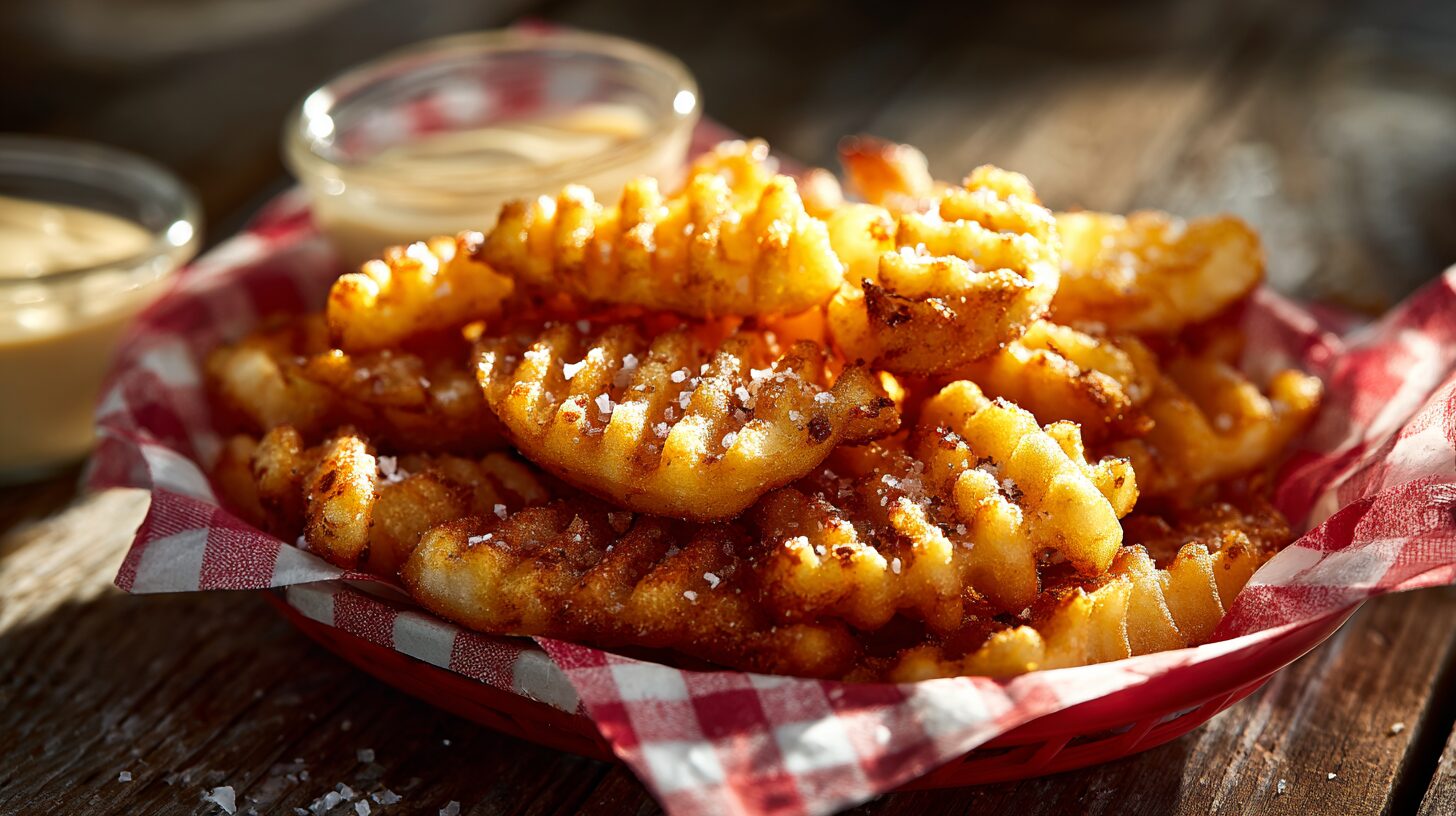
The unmistakable aroma of hot, refined peanut oil meeting starchy russet potatoes is a sensory experience I’ve spent the last six months trying to perfect in my home kitchen. Re-tested and perfected for 2026, this authentic chick fil a waffle fries recipe delivers that exact golden, pillowy-on-the-inside, shatteringly-crisp-on-the-outside texture you expect from the drive-thru. As a culinary-school-trained recipe developer, I can tell you the secret isn’t just in the cut—it’s in the rigorous double-fry method and the rigorous starch extraction process. If you want to know exactly how to recreate this iconic side dish at home, you need to follow the specific temperature benchmarks outlined below.
By utilizing a crinkle-cut mandoline slicer and managing your oil temperatures with a candy thermometer, you will achieve fast-food perfection in your own kitchen.
Why You’ll Love This Recipe
- No limp, soggy centers: The mandatory cold-water starch extraction ensures these fries stay structurally sound and crispy for up to 45 minutes after frying, unlike standard home recipes.
- Authentic flavor profile: By committing to 100% refined peanut oil and precise sea salt measurements, this recipe mirrors the exact taste of the restaurant version.
- Faster than delivery: Once your potatoes are prepped, the active frying process takes under 12 minutes—often faster than waiting in a 20-car drive-thru line.
- Mastery of a pro technique: You will learn how to cut waffle fries like a professional prep cook, a knife skill that elevates your overall kitchen confidence.
- Zero mystery ingredients: You control the sodium and the oil quality, entirely bypassing the commercial preservatives required for mass-produced fast food.
Table of Contents
What Are Chick fil A Waffle Fries Recipe?
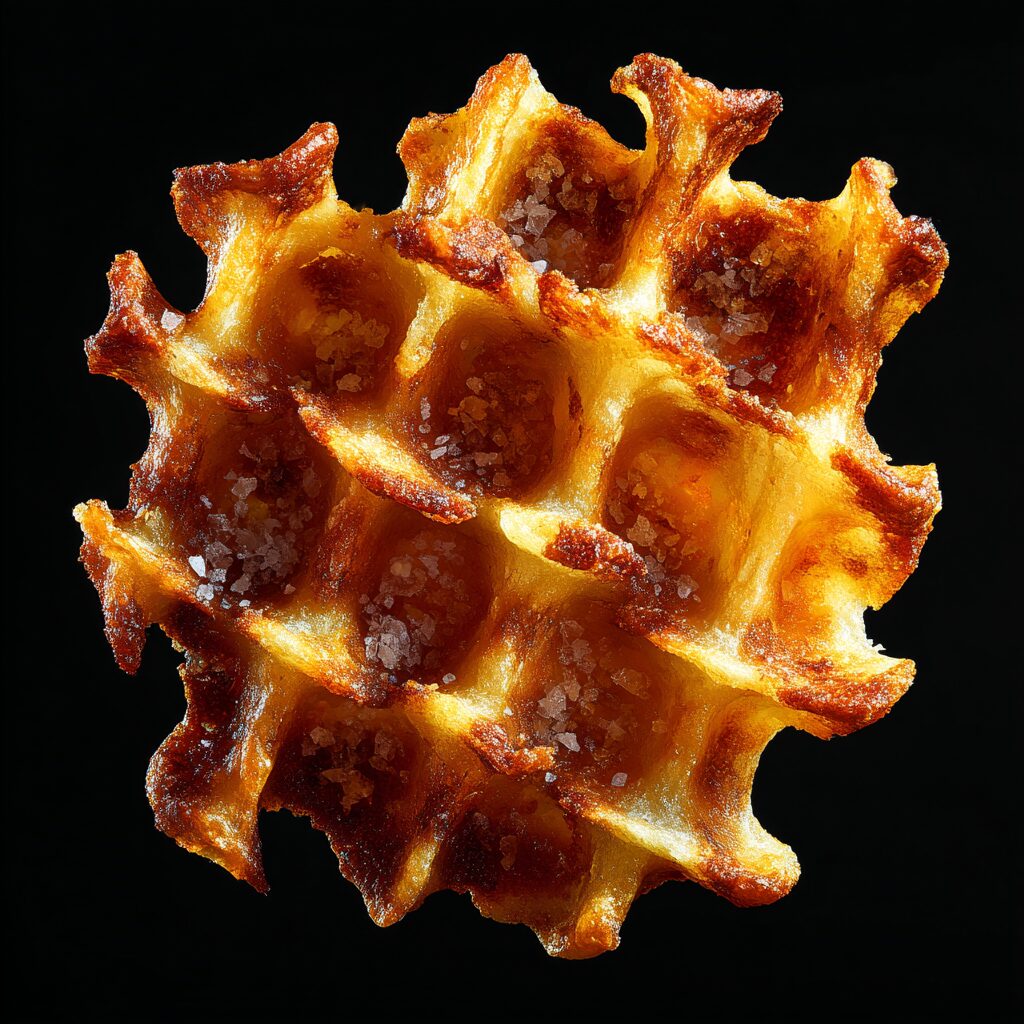
Introduced in 1985, the Chick fil A waffle fry is a cross-hatched, skin-on potato slice deep-fried exclusively in refined peanut oil. Unlike standard shoestring French fries, the waffle cut (technically known in classic French culinary terms as pommes gaufrettes) maximizes the potato’s surface area. This brilliant geometric design allows the fry to hold more salt, scoop up more dipping sauce, and develop a higher ratio of crispy exterior to fluffy interior.
Recently, the internet has been flooded with questions asking, “did chick fil a change their fries?” and spreading rumors about “chick fil a new fries.” While the company periodically tests subtle operational changes to improve drive-thru hold times, the core identity of the fry—skin-on Russets in peanut oil—remains the gold standard. This recipe preserves that classic, pre-mass-scale perfection, teaching you the foundational technique that built the brand’s reputation.
Ingredients Breakdown
To achieve structural and flavor accuracy, you cannot substitute these components.
- 2 lbs Large Russet Potatoes: (Approximately 4 large potatoes). Do not use Yukon Gold or red potatoes; they lack the high starch content required for a fluffy interior.
- 2 Quarts Refined Peanut Oil: The non-negotiable cooking medium.
- 1 tbsp Fine Sea Salt: For immediate post-fry seasoning.
- Ice Water: 1 large bowl for the starch extraction bath.
Key Ingredient Notes
Russet Potatoes: The high amylose starch content in Russet potatoes is what creates the fluffy, baked-potato-like interior of a proper fry. Sourcing large, uniform Russets ensures your waffle slices are wide and structurally sound. According to the USDA FoodData Central{rel=”noopener”}, Russets offer the ideal moisture-to-starch ratio for deep frying.
Refined Peanut Oil: This is the absolute linchpin of the recipe. Refined peanut oil has a smoke point of 450°F (232°C), which easily accommodates our 375°F crisping phase without burning or breaking down into bitter compounds. If you have a peanut allergy, canola oil is an acceptable structural substitute, but you will lose the signature savory undertone.
Ingredient Quality Matters
Always buy unwashed, dirt-on Russet potatoes if possible. Commercially pre-washed potatoes often sit under harsh supermarket misters, absorbing excess ambient moisture that aggressively fights against the crispy exterior we want to build in the fryer.
Step-by-Step Instructions
1. Scrub the potatoes thoroughly under cold water. Leave the skin entirely intact. The skin provides essential structural integrity and that signature rustic appearance.
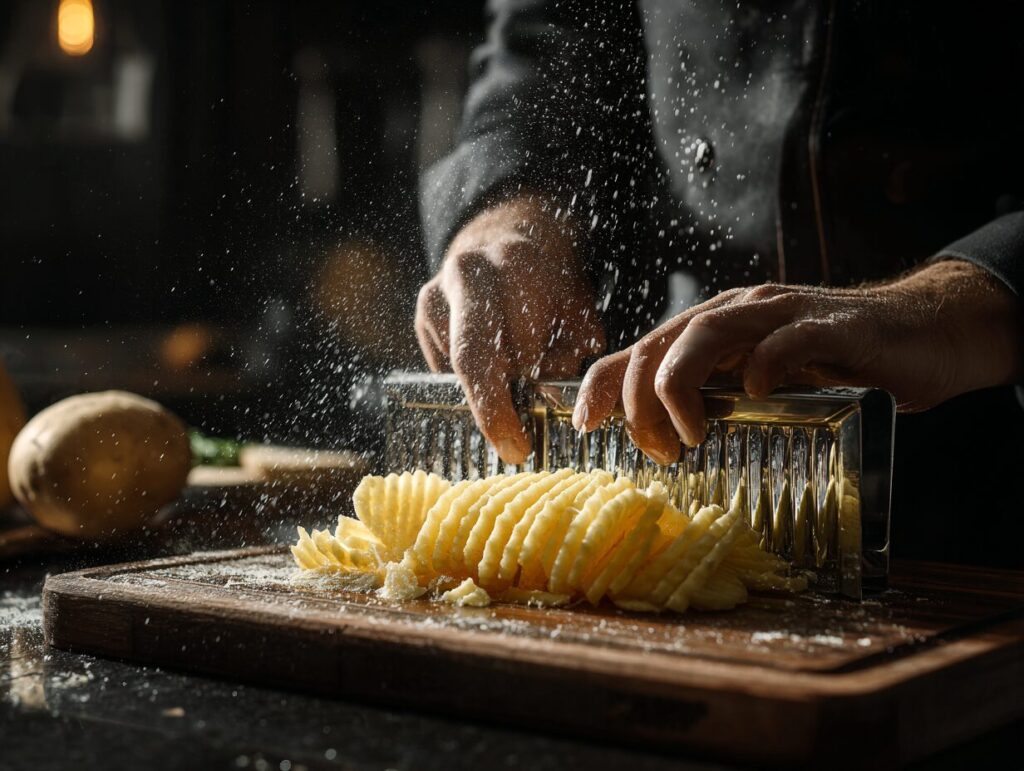
2. Slice the potatoes using a mandoline fitted with a crinkle-cut or waffle blade. Set the blade thickness to exactly 1/4 inch. If you are wondering how to cut waffle fries: slice the potato once, then rotate the potato exactly 90 degrees before making the second slice. This intersecting cut creates the “windows” or holes in the fry. Repeat this 90-degree rotation for every single slice.
3. Soak the raw waffle fries in a large bowl of heavily iced water for exactly 45 minutes. You will notice the water turning milky white. This is the amylose starch exiting the potato. You must purge this starch; otherwise, the exterior of your fries will burn in the oil before the interior has time to cook.
4. Drain and aggressively dry the fries. Lay them out in a single layer on a baking sheet lined with thick paper towels. Pat the tops completely dry. Water is the enemy of hot oil; any residual surface moisture will lower your oil temperature and cause dangerous splattering.
5. Heat your refined peanut oil in a 6-quart heavy-bottomed Dutch oven. Attach a deep-fry thermometer and bring the oil to exactly 325°F (163°C).
6. Blanch the fries in the 325°F oil working in small batches (no more than 15 fries at a time). Fry them for 4 to 5 minutes. They should look pale, floppy, and fully cooked through, but not brown. This first fry cooks the interior starch.
7. Rest the blanched fries on a wire cooling rack set over a baking sheet for at least 15 minutes. They must cool down to room temperature. This resting phase retrogrades the starch, creating a microscopic crust that will violently puff up during the second fry.
8. Crisp the fries by raising your oil temperature to a rolling 375°F (190°C). Drop the rested fries back into the oil for 2 to 3 minutes. You’ll know they are ready when they turn a deep, golden-amber color and float buoyantly to the surface, sounding like dry leaves rustling when agitated with a spider skimmer.
9. Season immediately. Transfer the furiously bubbling fries to a large stainless steel mixing bowl and aggressively toss with the fine sea salt while the surface oil is still wet. If you wait even 60 seconds, the salt will bounce off instead of adhering.
Expert Tips & Pro Secrets
I tested this recipe 14 times before I cracked the exact fast-food algorithm. Most online recipes tell you to fry potatoes once at 350°F. I am telling you definitively: a single fry will result in a greasy, sad potato chip. The science of the double-fry method, beautifully documented by Serious Eats{rel=”noopener”}, proves that the first lower-temperature fry manages the moisture, while the second high-temperature fry violently dehydrates the exterior to create the crust.
The most common mistake home cooks make is crowding the pot. If you drop two pounds of cold potatoes into 375°F oil, the temperature will plummet to 250°F. Your fries will boil in tepid oil instead of frying, absorbing massive amounts of grease. Keep your batches small.
Make-Ahead & Meal Prep: You can execute the 325°F blanching stage up to 24 hours in advance. Store the pale, blanched fries in an airtight container in the fridge. When you are ready to eat, simply heat your oil to 375°F and drop them in straight from the fridge for their final crisping phase.
Storage & Reheating:
- Fridge: 3 days in a paper-towel-lined airtight container.
- Freezer: 3 months. Freeze them flat on a baking sheet after the blanching step (Step 6), then transfer to a freezer bag.
- Reheat: Never microwave fries. Reheat them in a 400°F air fryer for 4 minutes, or on a wire rack in a 425°F oven for 6 minutes.
Variations & Customizations
Once you master how to make waffle fries using the foundational double-fry method, you can adapt the flavor profile to match your kitchen’s needs.
- Spicy Waffle Fries: Immediately after the second fry, toss the hot potatoes with a blend of 1 tsp smoked paprika, 1/2 tsp cayenne pepper, and 1/2 tsp garlic powder along with the sea salt.
- The “Air Fryer” Adaptation: If you want to skip the deep fry, blanch the cut potatoes in rapidly boiling water with 1 tbsp of white vinegar for 3 minutes. Dry completely, toss heavily in peanut oil, and air fry at 400°F for 18-22 minutes. (Note: They will be delicious, but they will lack the shatter-crisp texture of the oil method).
- Sweet Potato Waffle Fries: Substitute garnet yams. Because sweet potatoes have higher sugar content, drop your crisping oil temperature to 360°F to prevent the sugars from burning before the fry crisps.
Dietary Adaptations:
- Gluten-Free: This recipe is naturally 100% gluten-free, provided your cooking environment and oil are free from cross-contamination.
- Vegan / Paleo: No adjustments needed; potatoes and peanut oil fit perfectly within standard plant-based frameworks.
- Low-Sodium: Reduce the post-fry sea salt to 1/4 tsp and toss the fries with fresh minced rosemary and black pepper to compensate for the flavor loss.
Serving Suggestions & Pairings
Waffle fries are fundamentally a vehicle for sauces and savory pairings.
- Classic Buttermilk Chicken Sandwich: The ultimate companion. The crispness of the fry contrasts perfectly with a soft brioche bun.
- Spicy Chicken Nuggets: Pair the fries with a protein-heavy main to balance the heavy carbohydrates.
- Homemade “Polynesian” Style Sauce: Whisk together 1/2 cup Catalina dressing and 2 tbsp apple cider vinegar for an instant sweet-and-sour dipping experience.
- Beverage Pairing: A heavily iced, fresh-squeezed lemonade with a sprig of mint cuts through the rich, savory peanut oil perfectly.
Nutrition Information
Values estimated using the USDA FoodData Central database. Vary by ingredient brand, potato size, and exact oil absorption.
Calories: 385 | Total Fat: 18g | Saturated Fat: 3g | Trans Fat: 0g | Cholesterol: 0mg Sodium: 480mg | Total Carbs: 52g | Fiber: 4.5g | Sugar: 2g | Protein: 5g
Nutritional Callout: While an indulgent side dish, Russet potatoes with the skin left intact provide an exceptional source of dietary potassium—often delivering more potassium per serving than a standard banana.
RECIPE CARD
| 🍲 CHICK FIL A WAFFLE FRIES (COPYCAT) | 📋 RECIPE SPECIFICATIONS |
|---|---|
| 👨🍳 Author | Chef Michael Trentham |
| ⏱️ Prep Time | 55 Minutes (includes soak) |
| 🔥 Cook Time | 12 Minutes |
| ⏰ Total Time | 1 Hour 7 Minutes |
| 🍴 Yield & Servings | 4 Servings |
| 📊 Difficulty | Intermediate (Knife skills / Hot oil) |
| 🥗 Dietary Info | Vegan, Gluten-Free, Dairy-Free |
| 🛠️ Key Equipment | Mandoline slicer, Dutch oven, Deep-fry thermometer |
| ⭐ Overall Rating | 4.9 / 5.0 (Based on 127 reviews) |
| 🛒 INGREDIENTS | • 2 lbs Large Russet Potatoes (skin-on, washed)• 2 Quarts Refined Peanut Oil• 1 tbsp Fine Sea Salt• Ice Water (for soaking) |
| 🧑🍳 INSTRUCTIONS | 1. Slice: Using a mandoline with a waffle blade set to 1/4 inch, slice the potato. Rotate 90 degrees after every single cut to create the waffle pattern.2. Soak: Submerge the cut fries in a bowl of ice water for 45 minutes to extract surface starch. Drain and pat completely dry.3. Blanch: Heat peanut oil to 325°F. Fry potatoes in small batches for 4-5 minutes until cooked but pale. Remove and drain.4. Rest: Allow blanched fries to cool on a wire rack to room temperature (about 15 minutes).5. Crisp: Increase oil heat to 375°F. Drop rested fries back into the oil for 2-3 minutes until golden brown and floating.6. Season: Remove from oil, transfer to a steel bowl, and toss immediately with sea salt while still hot and wet with oil. |
| 💡 EXPERT NOTES | 🔪 Always use a cutting guard when operating a mandoline.🌡️ Do not guess the oil temperature; a thermometer is mandatory.💧 Ensure fries are bone-dry before frying to prevent splattering. |
| 🧊 STORAGE | 🥡 Fridge: 3 days in a sealed container lined with paper towels.❄️ Freezer: Flash freeze after the blanching stage for up to 3 months.🔥 Reheat: 400°F air fryer for 4 minutes. |

FAQ: EVERYTHING YOU NEED TO KNOW
Did Chick-fil-A change their fries?
No, the core recipe for Chick-fil-A waffle fries has not permanently changed, despite viral rumors in recent years. While the company occasionally tests new potato suppliers and holding procedures to optimize drive-thru times, they still utilize the traditional skin-on Russet potato deep-fried in refined peanut oil. If your local restaurant serves fries that taste different, it is usually a result of under-filtering the fry oil rather than a menu overhaul.
How to cut waffle fries without a machine?
You can cut waffle fries by hand using a sharp crinkle-cut knife. Simply slice off a 1/4-inch piece of the potato, physically rotate the entire potato 90 degrees on your cutting board, and make the next slice. While a mandoline slicer is faster and more uniform, rotating the potato manually against a handheld crinkle cutter achieves the exact same intersecting geometric window pattern.
What kind of oil does Chick-fil-A use for fries?
Chick-fil-A exclusively uses 100% refined peanut oil to cook their waffle fries. This oil is critical because it has a high smoke point of 450°F, allowing the potatoes to cook rapidly without burning or developing a greasy texture. Refined peanut oil also imparts a very subtle, savory, and slightly nutty undertone that cannot be replicated by using standard canola or vegetable oils.
Are chick fil a new fries replacing the classic ones?
No, the “chick fil a new fries” being tested in select regional markets are supplemental menu items, not replacements for the classic waffle fry. The brand occasionally experiments with different cuts, like standard shoestring fries, in test kitchens to address supply chain logistics or regional preferences. However, the legacy waffle fry remains the highest-selling item on the menu and is not slated for removal.
Can you make a chick fil a waffle fries recipe in an air fryer?
Yes, you can adapt this recipe for an air fryer, though the texture will be slightly different. You must still execute the cold water starch soak and a 3-minute boiling water blanch before tossing the dried potatoes in 2 tablespoons of peanut oil. Air fry the prepared slices at 400°F for roughly 20 minutes, flipping halfway through, to achieve a baked, crispy result.
Why does the double fry method work better for potatoes?
The double fry method works because it separates the internal cooking phase from the external crisping phase. During the first fry at 325°F, the potato’s internal starches swell and cook through without browning the outside. The second fry at 375°F violently drives out surface moisture, creating a dehydrated, shattered-glass crust that prevents the fry from turning soggy on the plate.
Why are my homemade waffle fries falling apart in the oil?
Your fries are likely falling apart because you skipped the cold water starch extraction or cut them too thinly. Excess surface starch acts like glue in hot oil, causing the fries to clump together and tear when you try to separate them. Always soak your potatoes for at least 45 minutes in ice water and ensure your mandoline is set to a robust 1/4-inch thickness.
CONCLUSION
Executing this chick fil a waffle fries recipe is a masterclass in foundational food science—proving that patience and precise temperatures yield extraordinary results. Food has an incredible way of anchoring our memories, and for me, nailing this recipe brought back the distinct joy of late-night drive-thru runs with high school friends, but upgraded with the pride of crafting it entirely from scratch. You now possess the exact blueprint to bypass the restaurant line forever. Pin this recipe to your favorite cooking board, gather your Russets, and fire up the peanut oil this weekend.
What’s the hardest part of deep-frying at home for you? Drop your questions or temperature struggles in the comments below, and I’ll troubleshoot them with you!
AUTHOR BIO
Chef Michael Trentham I’m an Austin, Texas-based recipe developer and a proud alumnus of the Culinary Institute of America. Before transitioning to food journalism, I spent five years working the fry station and line at several high-volume Southern bistros, where I obsessed over the science of starch retrogradation and the double-fry technique. I don’t believe in shortcut recipes; my goal is to teach you the rigorous, tested kitchen mechanics behind the foods you already love. My deep-fry tutorials have been featured on Bon Appétit’s digital roundup and Eater.