

Imagine a bowl of pure comfort: thick, Creamy Chicken and Rice Soup loaded with tender shredded chicken, perfectly cooked rice, and a rich, savory broth that warms you from the inside out. This is the definition of a hug in a mug.
So many of us crave that perfect creamy chicken and rice soup, but we often end up with results that are… disappointing. Maybe the soup is thin and watery, the rice is a mushy, overcooked mess, or it relies on that familiar metallic taste from a “cream of” can.
This is where we change the game.
This is the definitive guide to a restaurant-quality creamy chicken and rice soup made completely from scratch, and it’s easier than you think. As a culinary specialist who has tested dozens of variations, I’ve perfected the techniques that guarantee a rich, silky texture and deep, layered flavor every single time. No canned soup, no gloppy texture, just pure, unadulterated comfort.
We’re not just making soup; we’re building flavor from the ground up.
Table of Contents
Key Takeaways
- The Secret is a Roux: We use a simple butter and flour mixture (a classic roux) to create a rich, creamy base without any canned soup.
- Cook Rice Separately: This is the #1 pro tip. Cooking rice in the soup makes it mushy and absorbs all the liquid. We’ll avoid that.
- Total Time: This “from-scratch” soup comes together in about 1 hour, making it perfect for a weeknight.
- Better Than Canned: You control the flavor, sodium, and ingredients, resulting in a creamy chicken rice soup that’s miles ahead in quality.
- Versatile & Easy: This recipe is simple to follow and easy to adapt, whether you want to use leftover chicken or add wild rice.
What Makes This Chicken and Rice Soup Irresistibly Creamy?
The difference between a good soup and a great soup lies in the technique. That luxurious, velvety body doesn’t come from a can; it comes from building a proper foundation. As an accessible expert in culinary science, let me break down the ‘why’ behind the ‘what’.
The Secret is in the Roux (Not the Can)
The hero of this recipe is a roux (pronounced “roo”). This is a classic French technique that sounds fancy but is incredibly simple: it’s just fat (butter) and flour cooked together.
- Why it Works: When you toast the flour in butter, you cook out the raw, pasty taste. Then, when you slowly whisk in your liquid (chicken stock), the flour granules swell and disperse, creating a stable, thick, and perfectly smooth base.
- Why it’s Better: A can of chicken and rice and cream of chicken soup is a shortcut, but it’s a compromise. It often contains modified food starch, high sodium, and preservatives that give it a “gummy” texture and a processed flavor. Our roux provides a clean, rich, and purely savory foundation that you control.
The “Holy Trinity” of Comfort Food: Mirepoix
You can’t build a great house on a weak foundation, and you can’t make great soup without a mirepoix (pronounced “meer-pwah”). This is simply a mix of diced onion, carrots, and celery. When sautéed gently in butter, these three vegetables release their sugars and create an aromatic, deeply flavorful base that infers “homemade” and “comforting” to our palate. This is the first layer of flavor, and it’s non-negotiable for a top-tier soup.
Choosing Your Rice: Why Separation is Key
The rice is a star, but it can also be a villain. The biggest mistake most recipes make is telling you to dump raw rice directly into the simmering soup.
Here’s the problem: Rice is a starch. As it cooks, it releases that starch into the liquid, which can make your soup thick and gloppy. Worse, the rice continues to absorb liquid as it sits. The perfect soup you made on Monday will be a thick, mushy porridge by Tuesday.
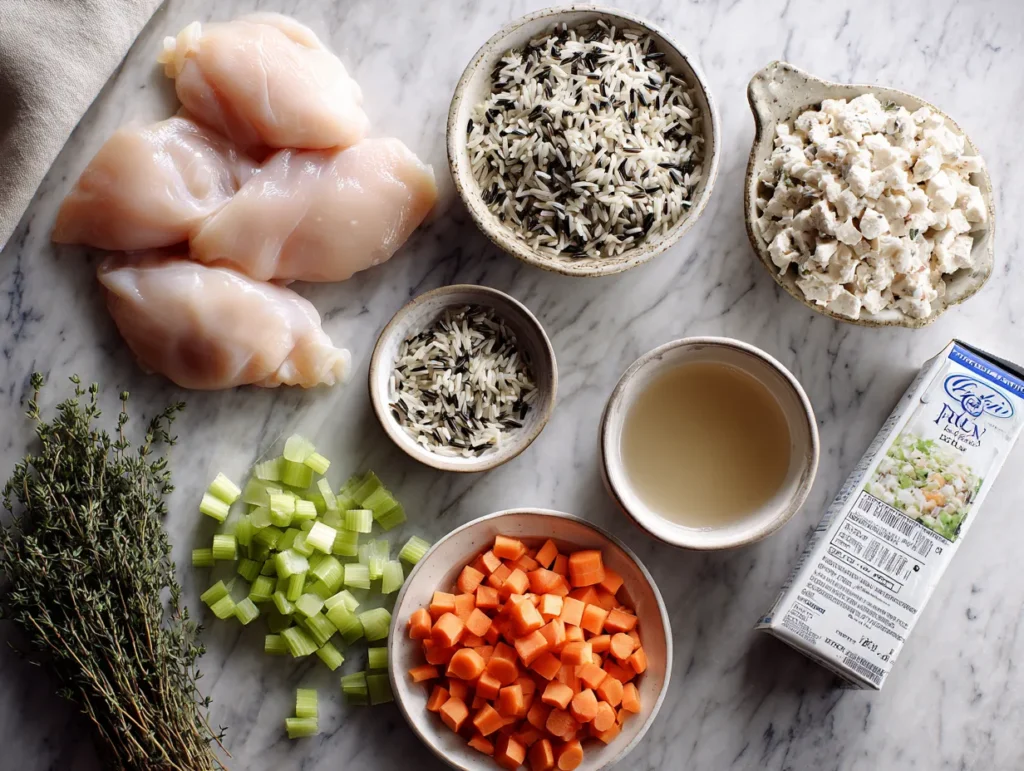
The Pro Solution: We cook the rice separately and add it at the very end. This gives you:
- Perfectly Cooked Rice: No mush, ever.
- Perfect Soup Texture: The soup stays silky and velvety, not starchy.
- Perfect Leftovers: Your soup will be just as good on day two.
For this recipe, a long-grain white rice, like Jasmine or Basmati, is perfect. It holds its shape well and adds a subtle, beautiful aroma. We’ll also cover how to use wild rice later on.
Prefer potatoes? try our chicken potato soup
Essential Ingredients Breakdown (Your Pantry Checklist)
This recipe uses simple, high-quality ingredients. Here’s what you’ll need and why it matters.
- Fats: Unsalted Butter (for the roux) and Olive Oil (for sautéing).
- Aromatics (Mirepoix): 1 large Yellow Onion, 2-3 Carrots, 2-3 Celery Ribs.
- Flavor Builders: Garlic, Bay Leaves, Dried Thyme, (or fresh thyme sprigs).
- The Chicken: About 1.5 lbs boneless, skinless chicken (breasts or thighs).
- The Thickener: All-Purpose Flour (this creates the roux).
- The Liquid Base: High-Quality, Low-Sodium Chicken Stock. Stock has more body and flavor than broth, which is essential here.
- The Rice: 1 cup long-grain white rice (Jasmine or Basmati).
- The Creamy Finish: Heavy Cream. This adds the final layer of luxurious richness that makes it a “creamy” soup.
- The Brightener: Fresh Parsley and a squeeze of fresh Lemon Juice (optional, but highly recommended to cut the richness).
- Seasoning: Kosher Salt and Freshly Ground Black Pepper.
For the Chicken: Rotisserie vs. Raw
You have two great options for the chicken, and both work beautifully.
- Raw Chicken (Best Flavor): Using boneless, skinless chicken breasts or thighs and poaching them directly in the simmering stock before you make the soup is the expert’s choice. Why? The chicken gently cooks, staying incredibly tender, and it also enriches your chicken stock, adding even more “chicken-y” flavor to the final product.
- Rotisserie Chicken (Fastest): Short on time? A store-bought rotisserie chicken is your best friend. Simply shred the meat (you’ll need about 3-4 cups) and add it at the end with the rice. It’s a fantastic shortcut.
The Creamy Trio: Butter, Flour, and Cream
This is the trifecta of creaminess.
- Butter adds rich flavor.
- Flour provides the thickening power.
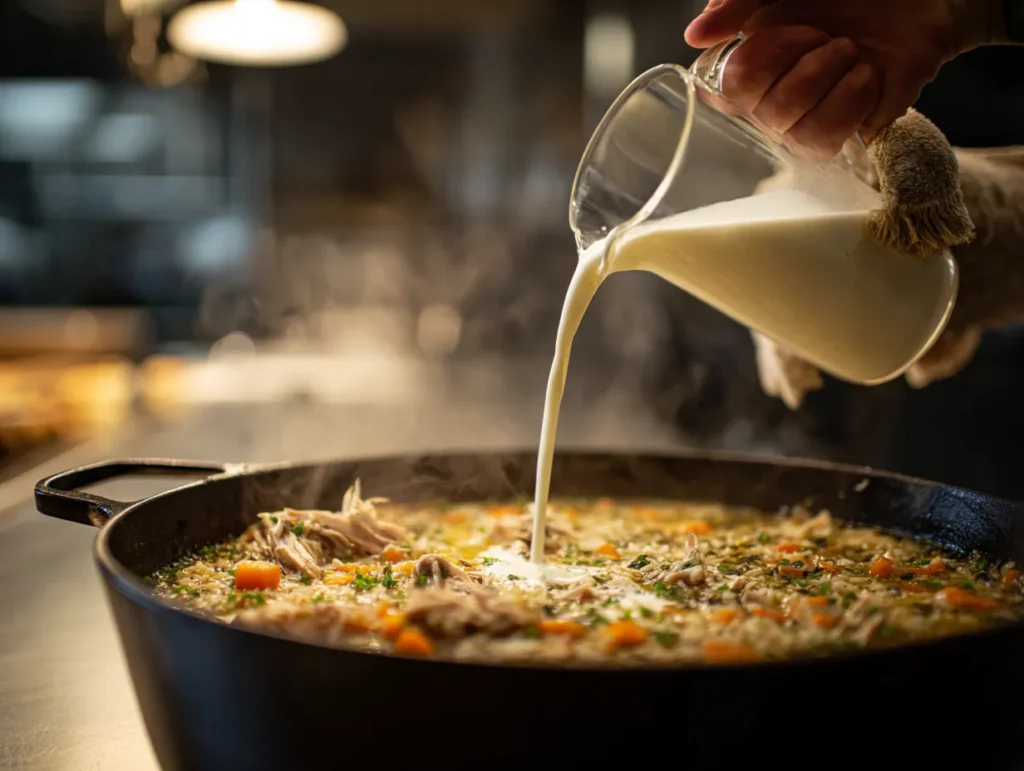
- Heavy Cream (or heavy whipping cream) finishes the soup, adding a decadent, velvety mouthfeel that half-and-half or milk just can’t replicate. Do not boil the soup after adding the cream, as it can curdle.
Table 1: Ingredient Substitutions & Dietary Needs
| Ingredient | Substitution | Notes & Impact |
| All-Purpose Flour | Gluten-Free 1:1 Flour Blend | Use the same amount. A blend containing xanthan gum works best to stabilize the soup. |
| Butter | Olive Oil or Ghee | Use high-quality olive oil for the roux. The flavor will be slightly different but still delicious. |
| Heavy Cream | Canned Full-Fat Coconut Milk | This is the best dairy-free option. It adds a slight coconut flavor but provides excellent richness. |
| Heavy Cream | Half-and-Half | This will result in a lighter, thinner soup. You may need to use a tiny bit more flour in your roux. |
| Long-Grain Rice | Brown Rice or Wild Rice | Both are great! Cook them separately according to package directions, as they take much longer (40-50 min). |
Step-by-Step Instructions: The Ultimate Creamy Chicken and Rice Soup
This recipe is built in
four simple phases:
- Cook the components (Chicken & Rice)
- Build the soup base (Mirepoix & Roux)
- Simmer and build flavor
- Combine and finish
Yields: 6-8 servings
Prep time: 20 minutes
Cook time: 40 minutes
Total time: 1 hour
More comforting chicken soup recipes
Ingredients
- 1 tbsp Olive Oil
- 1.5 lbs Boneless, Skinless Chicken Breasts (or Thighs)
- 8 cups Low-Sodium Chicken Stock, divided
- 1 cup Long-Grain White Rice (e.g., Jasmine)
- 1.5 cups Water (for rice)
- 6 tbsp Unsalted Butter
- 1 large Yellow Onion, finely diced
- 2-3 Carrots, finely diced
- 2-3 Celery Ribs, finely diced
- 4 cloves Garlic, minced
- 1 tsp Dried Thyme
- 1/2 tsp Dried Rosemary, crushed slightly
- 2 Bay Leaves
- 1/2 cup All-Purpose Flour
- 1 cup Heavy Cream
- 1/4 cup Fresh Parsley, chopped
- 1 tsp Lemon Juice (optional)
- Kosher Salt and Freshly Ground Black Pepper, to taste
Instructions
- Cook the Chicken (If Using Raw):
- In a large pot or Dutch oven, add the chicken breasts and 4 cups of the chicken stock.
- Bring to a gentle simmer (do not boil). Poach the chicken for 15-20 minutes, or until cooked through (internal temp reaches 165°F / 74°C).
- Remove the chicken to a cutting board. Reserve the poaching liquid! This is now super-charged, flavorful stock.
- Once cool enough to handle, shred the chicken using two forks.
- Cook the Rice (Separately):
- While the chicken is poaching, cook your rice. In a small saucepan, combine 1 cup of rice and 1.5 cups of water (or follow package directions).
- Bring to a boil, then reduce heat to low, cover, and simmer for 15-18 minutes, or until the water is absorbed.
- Remove from heat and let stand, covered, for 5-10 minutes. Fluff with a fork and set aside.
- Build the Flavor Base:
- In the same large pot (drain the poaching stock into a bowl first), melt the 6 tbsp of butter with 1 tbsp of olive oil over medium heat.
- Add the diced onion, carrots, and celery. Sauté for 8-10 minutes, stirring occasionally, until the vegetables are very soft and the onion is translucent. This step builds the essential flavor base, so don’t rush it.
- Add the minced garlic, dried thyme, and dried rosemary. Cook for 1 more minute, until fragrant.
- Make the Roux:
- Sprinkle the 1/2 cup of flour over the softened vegetables.
- Stir constantly for 2-3 minutes. The flour will absorb the butter and form a thick paste. This “toasting” step is crucial to cook out the raw flour taste.
- Simmer the Soup:
- Slowly—this is important—whisk in the reserved 4 cups of poaching liquid. Add it about one cup at a time, whisking constantly to prevent lumps.
- Once the poaching liquid is incorporated, whisk in the remaining 4 cups of chicken stock.
- Add the 2 bay leaves. Bring the soup to a gentle simmer (not a rolling boil), whisking as it thickens.
- Reduce the heat to low and let it simmer for 15 minutes for the flavors to meld.
- Combine and Finish:
- Remove the bay leaves.
- Stir in the 1 cup of heavy cream, the shredded chicken, and the cooked rice.
- Let the soup heat through for 5 minutes. Do not let it boil, as this can cause the cream to separate.
- Stir in the fresh parsley and the optional teaspoon of lemon juice (this brightens all the flavors).
- Taste and season generously with salt and pepper. It will likely need at least 1-2 tsp of salt, depending on your stock.
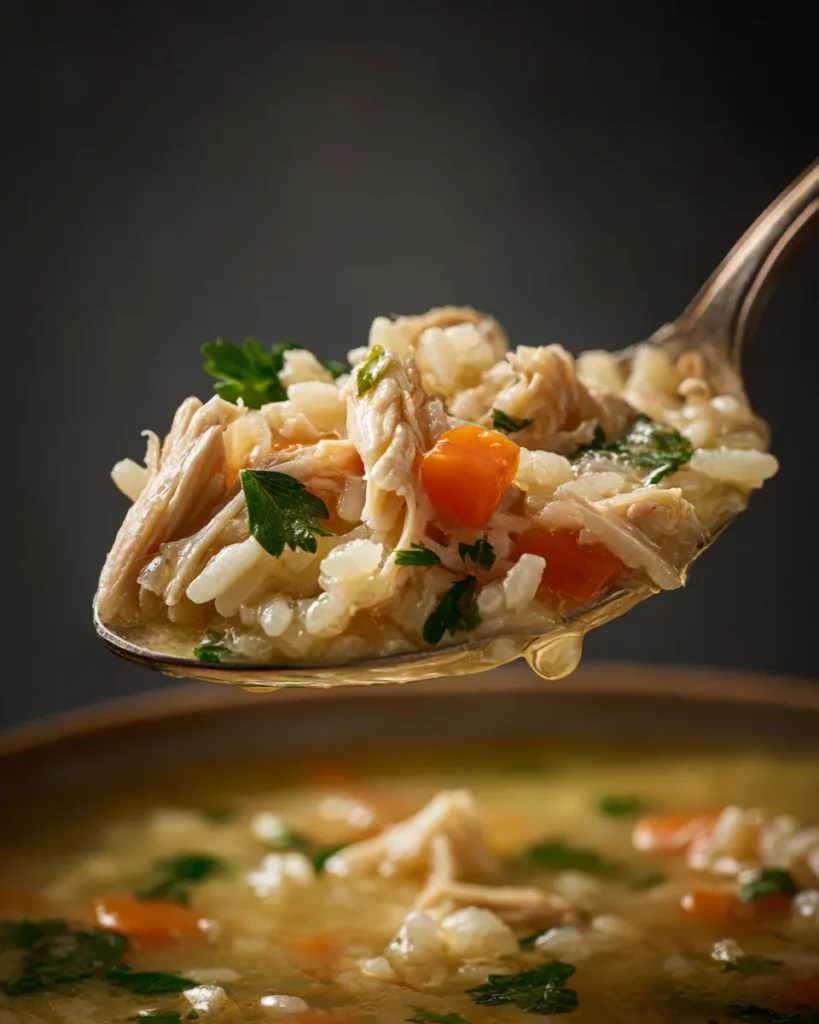
- Serve: Ladle into warm bowls and garnish with extra fresh parsley and a crack of black pepper.
Pro-Tips from the Test Kitchen for Flawless Creamy Chicken and Rice Soup
After making this soup dozens of times, I’ve learned the small things that make a huge difference. These are the E-E-A-T (Experience, Expertise, Authoritativeness, Trustworthiness) signals that separate a good cook from a great one.
The #1 Mistake: Cooking the Rice in the Soup
I mentioned this before, but it bears repeating. Nearly every “quick” recipe tells you to do this, and it’s a structural flaw. The starch from the rice over-thickens the soup to a porridge-like consistency, and the rice itself becomes waterlogged and mushy. Cooking it separately is the only way to guarantee perfect texture in every bite, especially for leftovers.
How to Get Velvety, Tender Chicken Every Time
Poaching the chicken gently in the stock is the key. A rolling boil will seize up the muscle fibers and make the chicken tough and rubbery. A gentle simmer (where bubbles just break the surface) cooks it slowly, ensuring it’s tender and juicy.
Tempering Your Cream: The Key to No Curdling
Ever add milk or cream to a hot Creamy Chicken and Rice Soup and have it curdle into little white flecks? This happens from “thermal shock.” While heavy cream is very stable and unlikely to curdle, it’s a good practice (especially if you’re substituting with half-and-half or milk) to temper it.
- How to Temper: Ladle about 1 cup of the hot soup base into a separate bowl. Slowly whisk your cold cream into the hot soup in the bowl. This gently raises the cream’s temperature. Then, pour that mixture back into the main pot.
Table 2: Multi-Method Cooking Times
Want to use a different method for your chicken or rice? Here’s a quick guide.
| Component | Method | Instructions | Est. Time |
| Chicken | Stovetop (Poach) | Simmer gently in stock until 165°F. | 15-20 min |
| Chicken | Instant Pot | 1 cup stock, High Pressure for 10 min, 5 min Natural Release. | 20 min |
| Chicken | Oven (Bake) | 400°F (200°C) for 20-25 min. | 20-25 min |
| Chicken | Rotisserie | Shred pre-cooked chicken. | 5 min |
| Rice | Stovetop | 1 cup rice, 1.5 cups water. Simmer covered. | 18-20 min |
| Rice | Rice Cooker | Follow manufacturer’s instructions. | 20-30 min |
Watch: How to Make Creamy Chicken and Rice Soup
Sometimes, seeing the technique is the best way to learn. While this video may use slightly different ingredients, it’s a great visual guide for seeing how to build the roux and achieve that perfect, creamy consistency.
Recipe Variations (Making It Your Own)
Now that you’ve mastered the base creamy chicken rice soup, you can get creative.
The Hearty Option: Cream of Chicken and Wild Rice Soup
This is a fantastic, classic variation. The nutty, earthy flavor of wild rice is a perfect match for the creamy base.
- How to Adapt: Use 1 cup of a wild rice blend (which is usually mixed with brown and white rice).
- Crucial Step: Cook the wild rice blend separately according to its package directions. A wild rice blend can take 45-50 minutes to cook, so start it long before you begin the soup.
- Expert Tip: Add 8 oz of sautéed mushrooms (cremini or button) along with the mirepoix for an even deeper, earthier flavor. This is the classic cream of chicken and wild rice soup profile.
The Shortcut: Using “Chicken and Rice and Cream of Chicken Soup”
I get it. Sometimes you have 20 minutes and a can in the pantry. If you must use the canned shortcut, here is how to make it taste infinitely better.
- Sauté a mirepoix (onion, carrot, celery) in butter first. This is the #1 way to add homemade flavor.
- Add a can of cream of chicken soup, a can of cream of celery soup, and 4 cups of chicken stock (not water).
- Bring to a simmer and add 2-3 cups of shredded rotisserie chicken.
- Stir in 1-2 cups of pre-cooked rice (like microwavable or leftover rice).
- Finish with a 1/4 cup of heavy cream and fresh parsley. It’s not “from scratch,” but it’s a massive upgrade.
Other Delicious Variations
- Lemony Chicken and Rice Soup: Add the zest of one lemon along with the garlic and double the lemon juice at the end for a bright, tangy soup (inspired by Greek Avgolemono).
- Spicy-Smoky: Add 1/2 tsp of smoked paprika and 1/4 tsp of cayenne pepper along with the other dried herbs.
- Cheesy Version: Stir in 1 cup of shredded sharp white cheddar or Gruyère cheese at the very end (off the heat) until it’s just melted.
Serving Suggestions & Perfect Pairings
This rich, creamy soup is a meal in itself, but it loves a good partner.
- Crusty Bread: A non-negotiable for dipping. A warm baguette, sourdough, or garlic bread is perfect.
- Simple Green Salad: A light salad with a sharp vinaigrette (like lemon and dijon) cuts through the richness of the soup beautifully.
- Garnishes: Don’t skip the garnish! It adds a final pop of flavor.
- Freshly chopped chives or parsley
- A crack of fresh black pepper
- A few drops of high-quality chili oil
- Oyster crackers or crunchy croutons
Storage, Freezing, and Reheating Guidelines
Because we cooked the rice separately, this soup stores and reheats like a dream.
- To Store: Let the soup cool for 30-40 minutes (but no longer than 2 hours). Transfer to an airtight container and store in the refrigerator for up to 4 days. For food safety guidelines, always refer to the USDA’s recommendations for leftovers.
- To Reheat: Gently reheat on the stovetop over medium-low heat. Do not boil the soup, as this can cause the cream to break. Just heat until steaming. The soup will thicken as it cools; you can thin it out with a splash of chicken stock or water.
A Note on Freezing
In my expert opinion, I do not recommend freezing this soup. Dairy-based soups (especially those with cream) have a high tendency to “break” or separate when thawed. The texture becomes grainy and unappealing. This soup is so quick to make, it’s best enjoyed fresh.
Troubleshooting Common Soup Problems
| Problem | The Cause | The Fix (How to Save It) |
| “My soup is too thin!” | Not enough flour, or too much liquid. | In a small bowl, mix 1 tbsp of cornstarch with 2 tbsp of cold water to make a slurry. Whisk this into the simmering soup and let it cook for 1-2 minutes. It will thicken right up. |
| “My soup is way too thick!” | Too much flour, or the rice was added too early. | This is an easy fix! Simply whisk in more warm chicken stock, 1/2 cup at a time, until it reaches your desired consistency. |
| “My soup tastes bland.” | Needs more salt and/or acid. | Salt is the #1 flavor enhancer. Add more kosher salt, 1/2 tsp at a time, until the flavors “pop.” A squeeze of lemon juice at the end will also wake everything up. |
| “My cream curdled!” | The soup was boiled after the cream was added, or the cream was added too cold (thermal shock). | Prevention is the best cure (temper your cream, don’t boil). If it happens, you can sometimes save it by blending a portion with an immersion blender, but the texture is often compromised. |
Estimated Nutritional Information
Please note this is an estimate and can vary based on your specific ingredients (especially the brand of stock and sodium content).
Table 3: Estimated Nutrition (per 1.5 cup serving)
| Nutrient | Amount | % Daily Value |
| Calories | ~380 kcal | |
| Protein | 28g | |
| Fat | 20g | |
| Saturated Fat | 10g | |
| Carbohydrates | 22g | |
| Fiber | 3g | |
| Sugar | 4g | |
| Sodium | ~650mg | (Varies) |
This information is generated by a nutritional calculator and is not a substitute for a professional nutritionist’s advice. For precise medical or dietary information, always consult with a qualified professional. You can verify safe cooking temperatures at the FDA’s official website.
Frequently Asked Questions
Can I make this soup dairy-free?
Yes! To make it dairy-free, use a high-quality olive oil or a plant-based butter substitute for your roux. For the cream, the best substitute is full-fat canned coconut milk (the kind you use for curry). It adds incredible richness and only a very subtle coconut flavor.
How do I make this creamy chicken and rice soup gluten-free?
This is very easy. Simply substitute the all-purpose flour in the roux with a good quality gluten-free 1-to-1 baking blend (one that contains xanthan gum). The rest of the ingredients, including the rice, are naturally gluten-free.
What’s the best rice to use for this soup?
A long-grain white rice like Jasmine or Basmati is my top pick. It has a lovely aroma and holds its shape. However, you can use brown rice or a wild rice blend; just be sure to cook them separately first, as they take much longer (40-50 minutes). Avoid short-grain rice like Arborio, which will release too much starch.
Can I use leftover chicken or turkey?
Absolutely! This is one of the best ways to use leftover rotisserie chicken or even leftover Thanksgiving turkey. You’ll need about 3-4 cups of shredded, cooked meat. Simply skip Step 1 and add the cooked chicken in Step 6 with the rice and cream.
My soup seems to get thicker the next day. Is that normal?
Yes, this is completely normal. Even though we cooked the rice separately, the starches in the rice and the flour in the roux will continue to absorb some liquid as the soup chills in the fridge. When you reheat it, just add a splash of chicken stock or water to thin it back out to your desired consistency.
Why did my soup curdle?
There are two likely culprits:
- Boiling: You allowed the soup to come to a rolling boil after adding the heavy cream.
- Acid: You added the lemon juice (or another acid) before the cream, or at too high a heat.Always add your cream at the very end, over low heat, and never let it boil.
You’re Ready to Make the Best Soup of Your Life
You now have the complete blueprint for a truly exceptional creamy chicken and rice soup—one that’s rich, savory, and miles ahead of any canned version. By understanding the “why” behind the techniques, like building a proper roux and cooking your rice on the side, you’ve unlocked the secret to a perfect, comforting bowl every single time.
This recipe isn’t just a set of instructions; it’s a foundation. Whether you make the classic version, add wild rice, or use it to clean out your fridge, you’re now equipped to create a restaurant-quality meal that will have everyone asking for seconds.
So, go preheat that pot. Try this recipe, and be sure to come back and leave a comment to let us know how it turned out.
What’s your favorite comfort food memory? Share it in the comments below!