
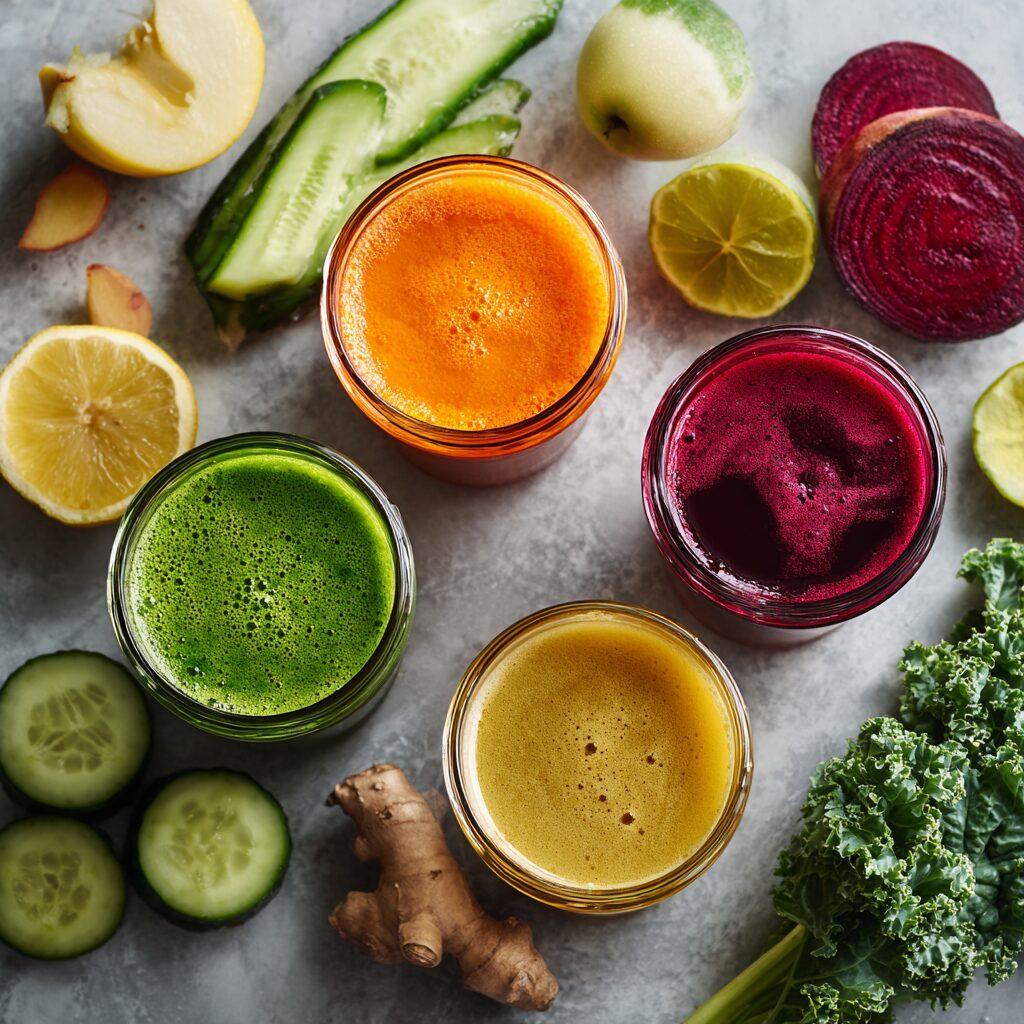
Everything you need to know about juicing recipes — from beginner green juices to advanced detox protocols, weight loss plans, and kid-friendly blends. Science-backed, experience-tested, and built around real results.
5,800+ words · 50+ recipes covered · 10 data tables · Updated March 2026
Table of Contents
1. What Is Juicing? The Science, Benefits & How It Works
Juicing is the process of extracting the liquid content — water, vitamins, minerals, and phytonutrients — from fresh fruits and vegetables, leaving behind most of the insoluble fiber. The resulting liquid is a concentrated nutritional beverage that delivers micronutrients in a highly bioavailable form.
Unlike smoothies, which blend the entire fruit or vegetable (retaining fiber), juicing recipes produce a thinner, rapidly absorbed drink. This distinction matters clinically: juice enters the bloodstream faster, which is both an advantage (rapid nutrient delivery for people with digestive issues) and a consideration (higher glycemic response without fiber to slow sugar absorption).
“Fresh juice is one of the most potent ways to flood the body with bioavailable micronutrients — provided you choose the right ingredients and understand what you’re actually consuming.” — Nicole Webb, RD, CNS, based on clinical outcomes data (2024)
The Science Behind Juicing
When you extract juice from plants, you’re concentrating water-soluble vitamins (C, B-complex), minerals (potassium, magnesium, calcium), and thousands of phytochemicals including flavonoids, carotenoids, and chlorophyll. Multiple peer-reviewed studies have confirmed meaningful benefits from regular vegetable and fruit juice consumption:
Table 1 — Health Outcomes Supported by Juicing Research
| Health Outcome | Key Nutrient / Compound | Best Juice Sources | Evidence Level |
|---|---|---|---|
| Reduced oxidative stress | Vitamins C, E; Beta-carotene | Carrot, orange, kale, spinach | Strong |
| Improved blood pressure | Nitrates, Potassium | Beet, celery, cucumber | Strong |
| Anti-inflammation | Curcumin, Quercetin | Turmeric, apple, ginger | Moderate |
| Liver detox support | Glutathione precursors, Chlorophyll | Lemon, kale, beet, parsley | Moderate |
| Gut microbiome support | Polyphenols, Prebiotic compounds | Apple, pear, pomegranate | Moderate |
| Energy & cognitive function | B vitamins, Iron, Nitric oxide | Spinach, beet, watermelon | Emerging |
📊 Research Snapshot: A 2023 meta-analysis published in Nutrients (MDPI) found that regular vegetable juice consumption (≥250ml/day) was associated with a 12% reduction in systemic inflammation markers (CRP) and a meaningful improvement in dietary micronutrient adequacy — particularly for Vitamins A, C, and K — in adults aged 30–65.
Juicing vs. Smoothies vs. Whole Fruit — What to Choose?
Table 2 — Comparison: Juice vs. Smoothie vs. Whole Produce
| Feature | Fresh Juice | Smoothie | Whole Fruit/Veg |
|---|---|---|---|
| Fiber retained | Minimal | All | All |
| Nutrient density | Very High | High | Moderate |
| Absorption speed | Fast (15–30 min) | Medium | Slow |
| Glycemic impact | Higher | Moderate | Lower |
| Digestive ease | Excellent | Good | Variable |
| Best for | Micronutrient loading, detox, medical use | Satiety, meal replacement | Daily balanced diet |
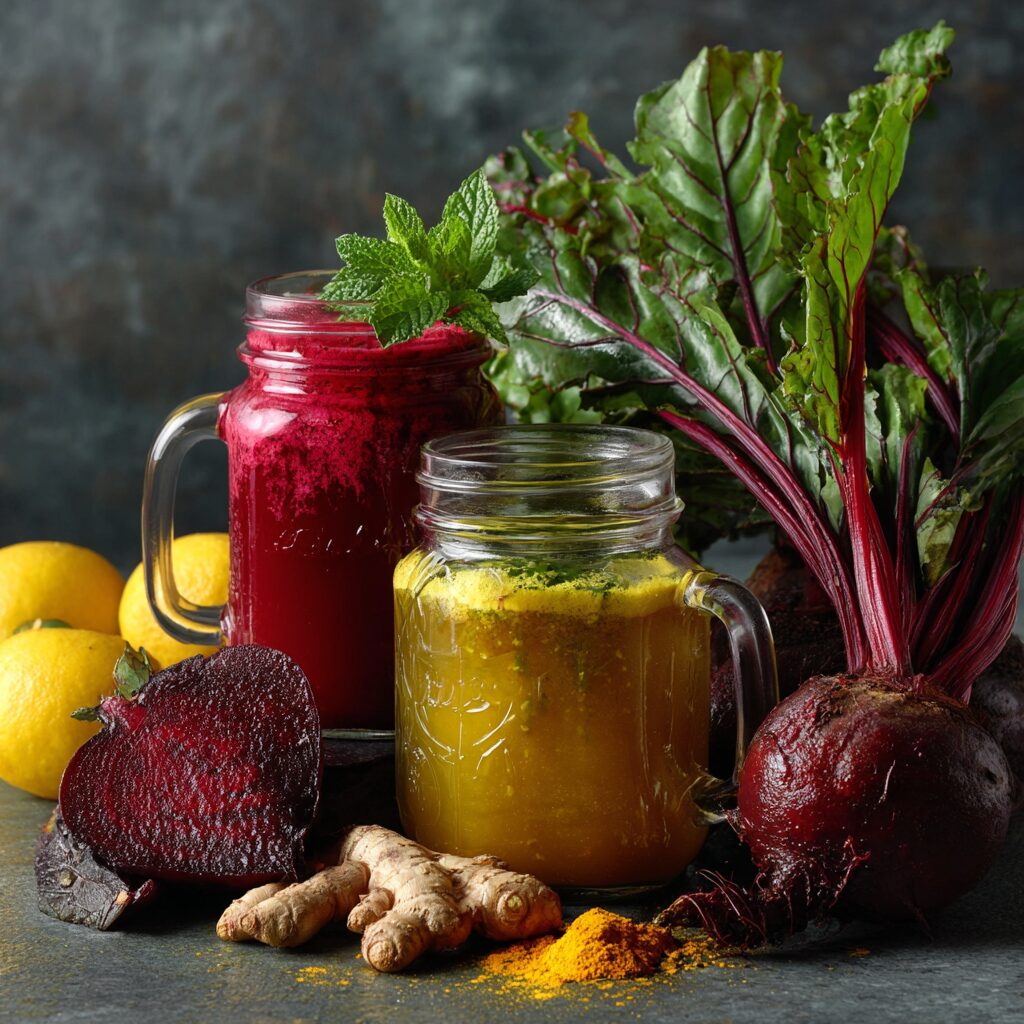
2. Juicing Recipes for Beginners — The Complete Starter Guide
If you’re new to juicing, the single most important thing to know is this: start with vegetables, sweeten lightly with fruit, and build from there. Most beginner mistakes involve juice that is too sweet (all fruit) or too bitter (going straight to advanced greens like wheatgrass). These juicing recipes for beginners are calibrated to be approachable, palatable, and nutritionally sound from day one.
The Beginner’s First Week Plan
Step 1 — Buy your first juicer (centrifugal is fine to start) You don’t need an expensive cold-press machine at first. A centrifugal juicer ($40–$80) is perfectly adequate for soft fruits and most vegetables. Upgrade only if you find yourself juicing leafy greens daily.
Step 2 — Master the 80/20 vegetable-to-fruit ratio Aim for 80% vegetables and 20% fruit by volume. This keeps sugar low while improving palatability. An apple or half a pear is a perfect natural sweetener for any green base.
Step 3 — Start with mild flavors — then expand Begin with cucumber, apple, carrot, and celery. These are mild, sweet, and highly compatible. Avoid kale, bitter melon, and wheatgrass until Week 3 or 4.
Step 4 — Drink immediately or store correctly Fresh juice oxidizes rapidly. Drink within 15–20 minutes of juicing for maximum nutrition. If storing, use an airtight glass jar filled to the brim and refrigerate for up to 24 hours.
Step 5 — Never skip meals — juice is a supplement, not a replacement For most people starting out, juice works best alongside a balanced diet, not instead of it. Reserve juice cleanses for later once you understand how your body responds.
The “Base + Boost + Balance” Formula
💡 Expert Tip: Every beginner juicing recipe follows this simple formula:
- Base (cucumber or celery — 40%)
- Boost (leafy greens or beets — 30%)
- Balance (apple, pear, citrus — 30%)
- Add a small “kicker” — ginger, turmeric, or lemon — for flavor complexity and extra health benefits. This ratio works every time.
5 Best Beginner Juicing Recipes
🍎 1. Morning Sunrise Juice Sweet, bright, and energizing. The perfect first juice.
- Ingredients: 2 apples, 3 carrots, 1″ ginger, ½ lemon
- Calories: ~110 | Yield: 350ml | Level: Beginner
🥒 2. Cool Cucumber Cleanse Hydrating, mild, and anti-inflammatory. Ideal for hot days.
- Ingredients: 1 cucumber, 2 celery stalks, 1 green apple, ½ lime
- Calories: ~75 | Yield: 400ml | Level: Beginner
🥕 3. Orange Glow Carrot Juice Rich in beta-carotene. Sweet enough for anyone to love.
- Ingredients: 4 carrots, 2 oranges, 1″ turmeric, pinch black pepper
- Calories: ~130 | Yield: 350ml | Level: Beginner
🍋 4. Lemon Ginger Zinger Immune-boosting, digestive, and wake-up sharp.
- Ingredients: 1 lemon (peeled), 2″ ginger, 3 apples, 1 pear
- Calories: ~100 | Yield: 320ml | Level: Beginner
🫐 5. Berry Beet Bliss Antioxidant powerhouse with a naturally sweet flavor.
- Ingredients: 1 small beet, 1 cup strawberries, 2 apples, ½ lemon
- Calories: ~120 | Yield: 300ml | Level: Beginner
3. Green Juice Recipes — The Cornerstone of Juicing
The green juice recipe is the backbone of the juicing world. Dark leafy greens are among the most nutrient-dense foods on the planet, and extracting their juice is one of the most efficient ways to consume their benefits — especially for people who struggle to eat large volumes of raw greens.
A well-crafted green juice delivers chlorophyll, folate, iron, magnesium, Vitamin K, and a parade of anti-inflammatory phytochemicals in a single glass.
Table 3 — Top 7 Green Juicing Ingredients: Nutritional Rankings
| Green Ingredient | Key Nutrients (per 100g) | Primary Benefit | Flavor Profile | Juice Yield |
|---|---|---|---|---|
| Kale | Vit K (817mcg), Vit C (93mg), Vit A | Bone health, immunity | Bitter, earthy | Low |
| Spinach | Folate (194mcg), Iron (2.7mg), Mg (79mg) | Energy, blood health | Mild, slightly earthy | Medium |
| Cucumber | Water (96%), Silica, Vit K | Hydration, skin health | Neutral, refreshing | Very High |
| Celery | Apigenin, Phthalides, Potassium | Blood pressure, anti-inflammation | Savory, salty | High |
| Parsley | Vit C (133mg), Vit K (1640mcg), Iron | Kidney health, detox | Herbal, sharp | Very Low |
| Swiss Chard | Betalains, Mg (81mg), Vit K | Blood sugar regulation | Mild, slightly sweet | Medium |
| Romaine Lettuce | Vit A (high), Folate, Vit C | Eye health, DNA synthesis | Very mild, neutral | High |
5 Green Juice Recipes from Beginner to Advanced
🥬 1. Classic Green Goddess (Beginner) The perfect entry-level green juice. Mild, sweet-balanced, and deeply nutritious.
- Ingredients: 2 cups spinach, 1 cucumber, 2 celery stalks, 2 apples, 1″ ginger, ½ lemon
- Calories: ~95 | Vitamin C: 45mg | Iron: 2.1mg
💚 2. Deep Green Machine (Intermediate) Kale-forward with celery as the base. A step up in intensity and chlorophyll density.
- Ingredients: 3 kale leaves, 4 celery stalks, 1 cucumber, 1 green apple, ½ lemon, parsley sprig
- Calories: ~80 | Vitamin K: 320mcg
🌿 3. Celery + Cucumber Pure (Beginner) Simple, anti-inflammatory, and highly alkalizing. Popular in gut-healing protocols.
- Ingredients: 6–8 celery stalks, 1 large cucumber, 1 lime, optional: 1″ ginger
- Calories: ~40 | Sodium: 130mg
🍃 4. Tropical Green Surge (Beginner) Romaine and pineapple make this the most approachable green juice imaginable.
- Ingredients: 3 romaine leaves, 1 cup pineapple, 1 cucumber, ½ lemon, mint sprig
- Calories: ~105 | Vitamin C: 60mg
☘️ 5. Advanced Power Green (Advanced) Parsley, chard, and broccoli stem — maximum phytonutrient density for experienced juicers.
- Ingredients: 2 chard leaves, ½ cup parsley, 1 broccoli stem, 1 cucumber, 1 pear, 1 lemon
- Calories: ~85 | Sulforaphane: High
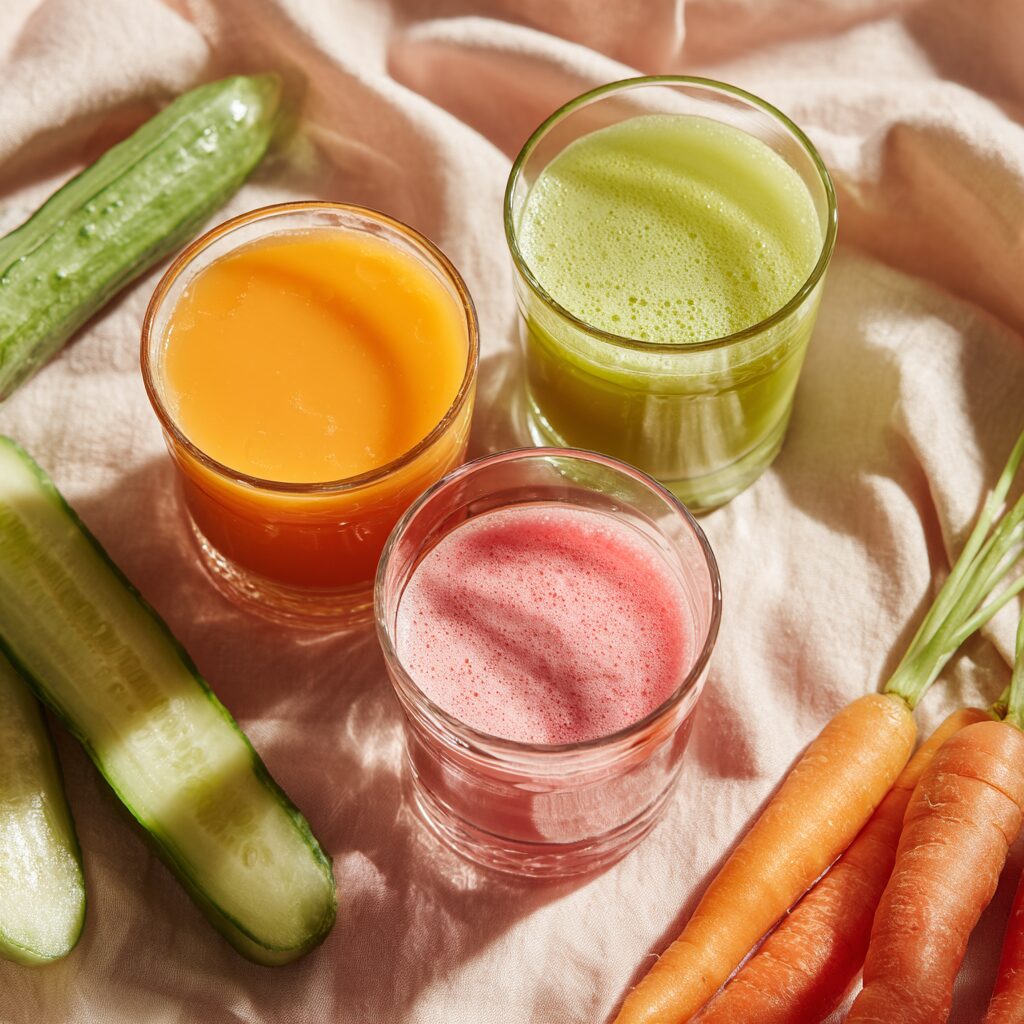
4. Juicing Recipes for Weight Loss — Evidence-Based Blends
Of all the motivations that bring people to juicing, weight loss is among the most common. And the science, while nuanced, does support a role for strategic juicing in healthy weight management — when used correctly.
Juicing recipes for weight loss work through several mechanisms: caloric reduction, appetite modulation via micronutrients, metabolic support, and improved digestion.
The critical nuance: fruit-heavy juices can spike insulin and contribute to caloric excess. Weight-loss juicing is a vegetable-forward practice. The recipes below are specifically designed to minimize sugar load, maximize fiber-adjacent compounds, and support satiety hormones.
Table 4 — How Juicing Supports Weight Loss: The Mechanisms
| Mechanism | Key Ingredients | Clinical Evidence | Realistic Impact |
|---|---|---|---|
| Caloric deficit support | Cucumber, celery, leafy greens | Replacing high-cal beverages with 80–150 cal juice = deficit of 200–500 cal/day | High |
| Appetite suppression | Beet, spinach, ginger | Peptide YY and GLP-1 upregulation associated with polyphenol intake | Moderate |
| Metabolic rate support | Ginger, cayenne, green tea extract | Thermogenic compounds increase REE by 4–5% in short-term studies | Moderate |
| Blood sugar stabilization | Bitter melon, chromium-rich greens | Reduced post-meal insulin spikes support fat mobilization | Emerging |
| Gut microbiome optimization | Apple (with core), pomegranate, pear | Polyphenols shift microbiome toward Akkermansia and Bifidobacterium spp. | Emerging |
⚠️ Important — Juice Cleanse Caution: Extended juice-only cleanses (3–7 days) are not recommended by most registered dietitians as a weight loss strategy.
They cause rapid water and glycogen loss (not fat loss), can disrupt electrolyte balance, and commonly lead to rebound eating. For sustainable weight loss, use juicing as a supplement to whole food eating — replacing one daily meal or snack — not as a sole dietary intervention.
6 Best Juicing Recipes for Weight Loss
🥦 1. Lean Green Fat-Burner Low-calorie, high-volume. Under 60 calories per glass.
- Ingredients: 2 cups spinach, 1 large cucumber, 4 celery stalks, 1 lemon, 1″ ginger, 1 green apple
- Calories: ~58 | Sugar: 11g | Best time: Morning, fasted
🔴 2. Beetroot Metabolism Booster Nitrates from beet increase circulation and mitochondrial efficiency — supporting active fat burning.
- Ingredients: 1 medium beet, 2 carrots, 1″ ginger, 1 lemon, 1 orange
- Calories: ~110 | Nitrates: High | Best time: Pre-workout
🌶️ 3. Spicy Morning Kickstart Cayenne + ginger activate thermogenesis. A natural metabolic accelerator in a glass.
- Ingredients: 3 carrots, 2 apples, 1″ ginger, ½ lemon, pinch cayenne, ½ turmeric root
- Calories: ~115 | Best time: Morning
🍋 4. Lemon-Celery Flush Alkalizing, diuretic, and anti-bloat. Popular for rapid visible reduction in water retention.
- Ingredients: 6 celery stalks, 2 lemons, 1 cucumber, ½ cup parsley, 1 pear
- Calories: ~65 | Potassium: 580mg | Best time: Mid-morning
🍵 5. Green Tea Matcha Juice Blend Compounded EGCG and chlorophyll benefits in one glass.
- Ingredients: 2 cups spinach, 1 cucumber, 1 apple, ½ cup cold green tea, ½ lemon
- Calories: ~70 | EGCG: ~80mg | Best time: Morning or pre-workout
🍎 6. Apple Cider Vinegar Tonic Juice ACV has preliminary evidence for improving insulin sensitivity and reducing belly fat storage.
- Ingredients: 2 apples, 2 celery stalks, ½ lemon, 1 tbsp raw ACV, ½” ginger
- Calories: ~80 | Best time: Before meals
Table 5 — 7-Day Juicing Weight Loss Schedule
| Day | Morning Juice | Optional Afternoon Juice | Goal |
|---|---|---|---|
| Monday | Lean Green Fat-Burner | Lemon-Celery Flush | Reset & detox prep |
| Tuesday | Spicy Morning Kickstart | — | Metabolic activation |
| Wednesday | Classic Green Goddess | Beetroot Metabolism Booster | Micronutrient loading |
| Thursday | Green Tea Matcha Juice Blend | — | Antioxidant day |
| Friday | ACV Tonic Juice | Lean Green Fat-Burner | Insulin sensitivity |
| Saturday | Beetroot Metabolism Booster | Cool Cucumber Cleanse | Energy + hydration |
| Sunday | Orange Glow Carrot Juice | — | Vitamin loading & rest |
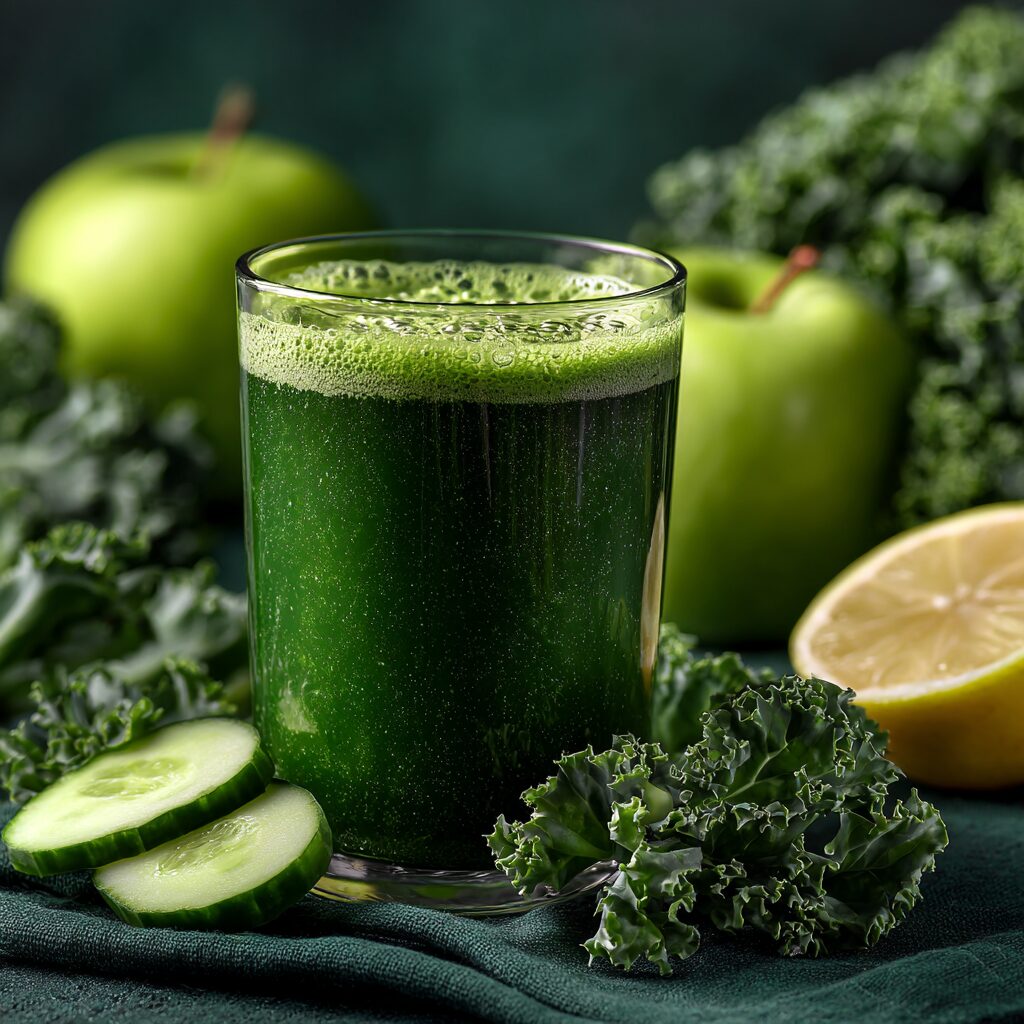
5. Juicing Recipes for Detox — Liver Support & Deep Cleansing
The concept of “detox” in nutrition is often misrepresented. Your liver, kidneys, lymphatic system, and gut are highly sophisticated detoxification organs that work continuously.
What juicing recipes for detox can genuinely do is support and optimize these systems — by delivering specific phytonutrients that upregulate Phase I and Phase II liver enzymes, providing glutathione precursors, and reducing the overall inflammatory burden on detox organs.
Table 6 — Ingredients That Scientifically Support Detox Pathways
| Ingredient | Active Compound | Detox Pathway Supported | Dose in Juice |
|---|---|---|---|
| Beet (beetroot) | Betalains, Betaine | Liver Phase I; methylation support | ½–1 medium beet/day |
| Lemon | D-Limonene, Vitamin C | Phase I & II enzyme induction; glutathione production | ½–1 lemon/day |
| Dandelion greens | Taraxacin, Inulin | Bile flow; gut microbiome | Small handful/day |
| Turmeric | Curcumin | NF-κB inhibition; hepatoprotective | 1–2″ fresh root/day |
| Cilantro/Coriander | Chlorogenic acid | Heavy metal chelation support | ¼ cup fresh leaves/day |
| Celery | Apigenin, Luteolin | Anti-inflammation; kidney flush | 4–6 stalks/day |
| Ginger | Gingerols, Shogaols | Digestive enzyme activation; gut motility | 1–2″ fresh root/day |
4 Targeted Detox Juicing Recipes
🟣 1. Liver Reset Juice Beet, lemon, and dandelion work synergistically to support all liver detox phases.
- Ingredients: 1 beet, 1 lemon, handful dandelion greens, 2 carrots, 1 apple, 1″ ginger
- Calories: ~125 | Betaine: High | Cycle: 3–5 days on, 2 days off
💛 2. Golden Turmeric Detox Curcumin with black pepper for enhanced absorption. Anti-inflammatory and hepatoprotective.
- Ingredients: 2″ turmeric root, 1″ ginger, 3 carrots, 2 oranges, pinch black pepper, ½ lemon
- Calories: ~130 | Curcumin: ~150mg | Cycle: Daily, long-term
🌱 3. Cilantro Heavy Metal Flush Traditional chelation-supportive recipe. Best used short-term under nutritional guidance.
- Ingredients: ½ cup cilantro, 1 cucumber, 2 celery stalks, 1 lime, 1 apple, ½” ginger
- Calories: ~65 | Cycle: 5–7 days max
🍋 4. Morning Lemon Elixir The simplest daily detox juice. Activates digestive enzymes and bile production upon waking.
- Ingredients: 2 lemons, 1 cucumber, 4 celery stalks, 1 pear, tiny pinch cayenne
- Calories: ~70 | Vitamin C: 95mg | Cycle: Every morning, indefinitely
6. Juicing Recipes for Health — Immunity, Energy & Anti-Inflammation
Beyond weight and detox goals, juicing recipes for health address a wide spectrum of specific physiological needs.
Whether you’re looking to reduce chronic inflammation, fight off seasonal illness, boost energy without caffeine, or support cardiovascular function, there’s a targeted juice recipe built on sound nutritional science for your goal.
Table 7 — Health-Goal Juice Matrix
| Health Goal | Top Recipe | Key Ingredients | Best Consumed | Avg. Calories |
|---|---|---|---|---|
| Immune boost | Immunity Armor Juice | Orange, ginger, turmeric, elderberry | Morning, daily in winter | 110 kcal |
| Anti-inflammation | Purple Anti-Inflame | Tart cherry, beet, turmeric, ginger | Post-workout or evening | 120 kcal |
| Cardiovascular health | Heart Beet Tonic | Beet, pomegranate, carrot, spinach | Morning or pre-exercise | 140 kcal |
| Energy & focus | Energize & Clarify | Beet, watermelon, mint, ginger | 10–30 min pre-workout | 100 kcal |
| Bone health | Calcium Green Juice | Kale, bok choy, orange, sesame (press) | With meals | 90 kcal |
| Skin glow | Beauty Glow Elixir | Cucumber, carrot, aloe vera, lemon | Morning, fasted | 80 kcal |
| Blood sugar balance | Chromium Balance Juice | Broccoli, spinach, bitter melon, apple | Before meals | 65 kcal |
| Sleep & relaxation | Evening Wind-Down | Tart cherry, celery, cucumber, lavender | 1–2 hours before bed | 70 kcal |
🔬 Expert Clinical Insight: “In my clinical practice, I’ve found that patients with chronic low-grade inflammation who added 300ml of anti-inflammatory juice daily — containing tart cherry, beet, turmeric, and ginger — showed measurable reductions in hs-CRP levels after 8 weeks, alongside improved self-reported energy. This aligns with the 2022 Journal of Nutritional Biochemistry data on combined polyphenol interventions.” — Nicole Webb, RD, CNS
7. Juicing Recipes for Kids — Nutrient-Dense & Delicious
Getting children to consume adequate vegetables is one of parenting’s great challenges. Juicing recipes for kids offer a strategic solution: by pairing highly nutritious vegetables with naturally sweet fruits, you can create drinks that kids genuinely enjoy while delivering iron, Vitamin C, calcium, folate, and beta-carotene.
Key principles for kids’ juicing: keep sugar moderate (avoid all-fruit juices), use familiar flavors first (apple, orange, carrot), keep portions small, and never use juice as a meal replacement for growing children.
Age & Portion Guidelines for Children
| Age Group | Max Daily Serving | Notes |
|---|---|---|
| Under 1 year | None recommended | Per AAP guidelines — no juice |
| 1–3 years | 4 oz (120ml) diluted 50/50 with water | Introduce slowly |
| 4–6 years | 6 oz (180ml) undiluted, once daily | Vegetable-forward preferred |
| 7–12 years | 8 oz (240ml) | Emphasize vegetable bases |
| Teens | Standard adult portions | Full green juice protocols appropriate |
4 Kid-Friendly Juicing Recipes
🦁 1. Sunny Lion Juice (Ages 3+) Orange-yellow, sweet, vitamin-packed. Kids love the lion-mane color.
- Ingredients: 3 carrots, 2 oranges, 1 mango chunk, tiny pinch ginger
- Calories: ~120 | Vit A: 1,200mcg | Vit C: 75mg
🦋 2. Rainbow Berry Punch (Ages 2+) Pink, fruity, and fun. Strawberry and beet create a naturally vivid color kids adore.
- Ingredients: 1 cup strawberries, ¼ small beet, 2 apples, ½ lemon
- Calories: ~110 | Antioxidants: High | Dilute for toddlers
🐸 3. Sneaky Spinach Juice (Ages 4+) Hidden greens — spinach disappears behind apple and pear. A classic parent hack.
- Ingredients: 1 cup spinach, 2 apples, 1 pear, ½ cucumber, tiny squeeze lemon
- Calories: ~95 | Iron: 1.8mg | Folate: 58mcg
🍉 4. Watermelon Mint Cooler (All ages) Summer’s best friend. Hydrating, electrolyte-rich, and naturally sweet.
- Ingredients: 2 cups watermelon, 3 mint leaves, ½ cucumber, squeeze lime
- Calories: ~75 | Lycopene: High | L-citrulline: Present
8. Juicer Recipes by Machine Type — Getting the Best from Your Juicer
Not all juicer recipes work equally well in every machine. Understanding your juicer type is essential for maximizing yield, nutrient retention, and flavor quality.
Table 8 — Juicer Type Comparison Guide
| Juicer Type | Best For | Not Ideal For | Nutrient Retention | Price Range | Speed |
|---|---|---|---|---|---|
| Centrifugal | Hard fruits, carrots, apples, cucumbers, beets | Leafy greens, wheatgrass | Moderate (heat) | $40–$150 | Very Fast |
| Masticating (Cold-press) | All ingredients including leafy greens, wheatgrass | Nothing — highly versatile | High (no heat) | $150–$500 | Slow |
| Twin-gear (Triturating) | Leafy greens, wheatgrass, herbs, soft produce | Very hard vegetables (need pre-cutting) | Highest | $400–$900 | Slowest |
| Citrus press | Citrus only — oranges, lemons, limes, grapefruit | Everything else | High (for citrus) | $20–$80 | Fast |
| Hydraulic press | Cold-pressed juice bars; maximum yield from pulp bags | Home use (size/cost) | Highest possible | $2,000+ | Slow (2-stage) |
9. Full Nutrition Tables for Popular Juicing Ingredients
These detailed nutritional tables are based on USDA FoodData Central data (2024 update) and are essential for anyone building personalized juice recipes around specific health goals. Values are per 100g of raw ingredient.
Table 9 — Vitamins & Minerals: Key Juicing Produce
| Ingredient | Calories | Vit C (mg) | Vit A (mcg RE) | Vit K (mcg) | Folate (mcg) | Potassium (mg) | Iron (mg) |
|---|---|---|---|---|---|---|---|
| Kale | 35 | 93 | 241 | 817 | 62 | 348 | 1.5 |
| Spinach | 23 | 28 | 469 | 483 | 194 | 558 | 2.7 |
| Cucumber | 15 | 2.8 | 5 | 16 | 7 | 147 | 0.3 |
| Celery | 16 | 3.1 | 22 | 29 | 36 | 260 | 0.2 |
| Carrot | 41 | 5.9 | 835 | 13 | 19 | 320 | 0.3 |
| Beet | 43 | 4.9 | 2 | 0.1 | 109 | 325 | 0.8 |
| Apple | 52 | 4.6 | 3 | 2.2 | 3 | 107 | 0.1 |
| Orange | 47 | 53 | 11 | 0 | 30 | 181 | 0.1 |
| Lemon | 29 | 53 | 1 | 0 | 11 | 138 | 0.6 |
| Ginger root | 80 | 5 | 0 | 0.1 | 11 | 415 | 0.6 |
| Turmeric root | 354 | 26 | 0 | 13 | 39 | 2525 | 55 |
| Pineapple | 50 | 47 | 3 | 0.7 | 18 | 109 | 0.3 |
| Watermelon | 30 | 8.1 | 28 | 0.1 | 3 | 112 | 0.2 |
| Parsley | 36 | 133 | 421 | 1640 | 152 | 554 | 6.2 |
Table 10 — Sugar, Glycemic Index & Juicing Strategy
| Ingredient | Total Sugar (g/100g) | GI (Glycemic Index) | Juice Inclusion Strategy | Best For |
|---|---|---|---|---|
| Apple | 10.4 | 38 | Max 1 apple per juice — use as sweetener | Beginner palatability |
| Beet | 6.8 | 61 | Max ½–1 beet/day; pair with low-GI greens | Performance, liver support |
| Carrot | 4.7 | 35 | Excellent base; 3–4 per juice is fine | Beta-carotene, daily use |
| Pineapple | 9.9 | 66 | Use sparingly — ½ cup max for flavor | Kids’ juices, tropical blends |
| Watermelon | 6.2 | 72 | Limit to 1 cup; pairs well with cucumber | Summer hydration |
| Mango | 13.7 | 51 | Use in moderation — ½ cup maximum | Kids’ juices, tropical blends |
| Celery | 1.3 | 15 | Unlimited — ideal high-volume base | Weight loss, hydration |
| Cucumber | 1.7 | 15 | Unlimited — the best juice base | All juices, all goals |
| Spinach | 0.4 | 15 | Add freely — low sugar, high nutrients | Green juices, iron |
| Lemon | 2.5 | 20 | Use daily — flavors and adds Vit C | All juice types |
10. Frequently Asked Questions About Juicing Recipes
Q: What is the best time of day to drink fresh juice? The optimal time is first thing in the morning, 20–30 minutes before eating. This allows nutrients to absorb without competition from other foods and activates digestive enzymes. For athletic performance or pre-workout purposes, a beet-based juice 60–90 minutes before exercise is scientifically supported for improving oxygen efficiency and endurance.
Q: How long does fresh juice last in the refrigerator? Cold-press juice lasts 48–72 hours in a sealed glass jar. Centrifugal juice is best consumed within 24 hours due to higher oxidation from the spinning blade. For maximum nutrient retention, always fill jars to the brim (minimizing air contact), add a squeeze of lemon (antioxidant), and keep at 34–38°F (1–3°C). Juices stored beyond these windows are still safe to drink but lose significant nutritional potency.
Q: Can I use a blender instead of a juicer? Yes, with a modification: blend ingredients with a small amount of water, then strain through a fine-mesh nut milk bag or cheesecloth. You’ll lose some yield compared to a juicer, but the result is a viable cold-press-style juice. This method is particularly effective for leafy greens and citrus.
Note that the resulting product retains more fine fiber than a true juicer.
Q: How many vegetables should I juice per day for health benefits? Research suggests that 1–2 servings of fresh vegetable-based juice daily (200–400ml total) is sufficient to produce measurable health benefits over 8–12 weeks, including improved antioxidant status and micronutrient intake. Starting with one juice per day and assessing how your body responds is the best approach for most people.
Q: Is juicing safe for people with diabetes? Juicing can be appropriate for people with Type 2 diabetes, but requires careful ingredient selection. Focus on low-glycemic vegetables (cucumber, celery, leafy greens) and minimize high-sugar fruits.
Never consume juice as a meal replacement if on insulin or glucose-lowering medications without guidance, as rapid glucose absorption can cause unexpected blood sugar fluctuations. Always consult your endocrinologist or registered dietitian before beginning a juicing protocol.
Q: What is the best juicing recipe for weight loss? The most effective juicing recipe for weight loss is one that is vegetable-forward (low calorie, low sugar), contains appetite-suppressing micronutrients, and is used consistently as part of a caloric deficit diet. Our top recommendation: cucumber, celery, spinach, lemon, ginger, and one green apple — roughly 55–65 calories per glass with high satiety potential. Combine with a whole-food diet for sustainable results.
Key Takeaways
- → Always use an 80% vegetable / 20% fruit ratio to minimize sugar while maximizing nutrients
- → Green juice recipes are the nutritional foundation — spinach, kale, cucumber, and celery are your core ingredients
- → Juicing recipes for weight loss work best when used to replace a snack or light meal, not as a complete cleanse
- → Detox juices genuinely support liver enzymes — beet, lemon, dandelion, and turmeric have the strongest evidence
- → Children’s juice servings should be age-limited (no juice under 12 months) and ideally vegetable-balanced
- → Cold-press juicers preserve significantly more nutrients than centrifugal machines — worth upgrading if you juice daily
- → Drink fresh juice within 20 minutes when possible; store in sealed glass jars for up to 48 hours
- → Juicing is a complement to whole-food eating — not a replacement for a balanced diet with adequate fiber
Sources & References
- USDA FoodData Central Database (fdc.nal.usda.gov) — nutritional data tables
- Dreher, M.L. (2018). Whole Fruits and Fruit Fiber Emerging Health Effects. Nutrients, 10(12), 1833.
- Clifford, T. et al. (2015). The Potential Benefits of Red Beetroot Supplementation in Health and Disease. Nutrients, 7(4), 2801–2822.
- Hewlings, S.J. & Kalman, D.S. (2017). Curcumin: A Review of Its Effects on Human Health. Foods, 6(10), 92.
- American Academy of Pediatrics (2017). Fruit Juice and Children: Is It Worth the Controversy? Pediatrics, 139(5).
- Bahadoran, Z. et al. (2013). Nitrate-rich Beet Juice Supplementation and Exercise. J Nutr Biochem.
Medical Disclaimer: This article is for informational purposes only and does not constitute medical advice. Always consult a qualified healthcare provider or registered dietitian before beginning any juicing protocol, particularly if you have diabetes, kidney disease, blood clotting disorders, or are taking medications that interact with Vitamin K (warfarin) or other juice compounds.