
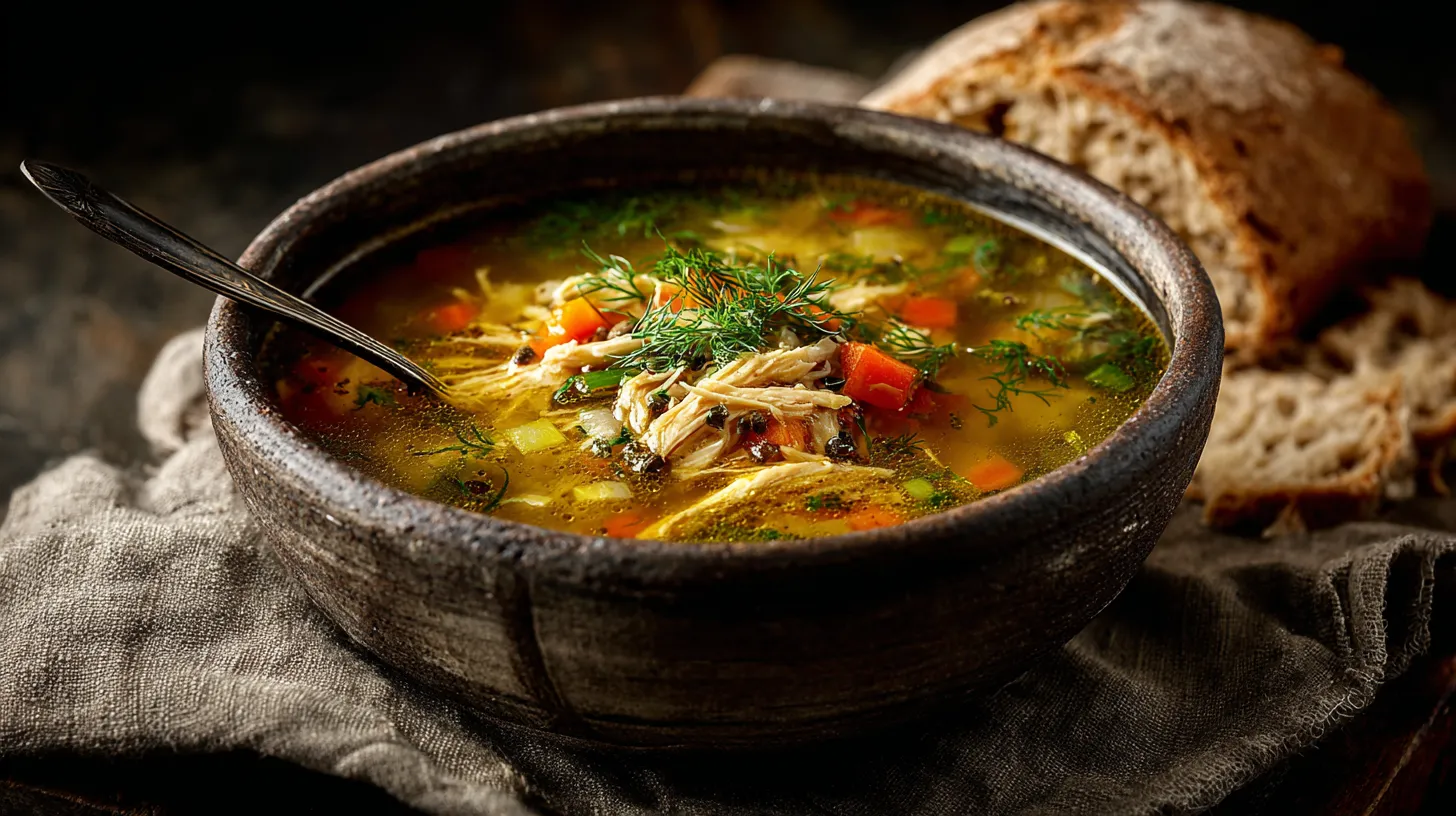
Introduction: Why Homemade Chicken Soup Is Worth Every Minute
Few dishes carry the emotional weight of a steaming bowl of homemade chicken soup. It crosses cultural lines — Greek grandmothers swear by avgolemono, Jewish households treasure matzo ball soup, and Italian-American kitchens simmer rich broths perfumed with parmesan rinds. Yet in the United States, chicken soup has become the definitive comfort food, the edible equivalent of a warm embrace on a cold Tuesday night.
The statistics back this up. The National Chicken Council reports that Americans consume more chicken per capita than any other meat, and a significant slice of that consumption comes in soup form — from family stovetops, drive-throughs, and the ubiquitous canned aisle stocked with Progresso chicken noodle soup and its competitors. But homemade always wins. And this guide will show you exactly why, and exactly how.
This is a pillar resource. Whether you are hunting for a classic chicken noodle soup with rotisserie chicken (ready in under 45 minutes), a gluten-free cream of chicken soup substitute for your casseroles, a lemon chicken soup that rivals your favorite Greek diner, or a chicken orzo soup that channels Panera’s fan-favorite recipe — every answer lives in the pages that follow.
Along the way, you’ll learn the science of a good broth, understand the difference between stock and broth, master flavor-building techniques, and gain the confidence to riff on any recipe with what you already have in your refrigerator. Welcome to the only homemade chicken soup guide you’ll ever need.
Table of Contents
Part 1: The Foundation — Understanding Chicken Broth vs. Stock
What Is the Difference Between Broth and Stock?
The terms “chicken broth” and “chicken stock” are used interchangeably in American home kitchens — and while the distinction is largely a culinary technicality, understanding it helps you make better decisions at the stove.
Chicken stock is made from roasted or raw bones, connective tissue, and aromatics simmered for a long time — typically 3 to 6 hours, though some chefs go longer. The extended simmering extracts collagen from the cartilage, which dissolves into gelatin. This gelatin is why a quality homemade stock gels when refrigerated — a sign of richness. Stock is used as a base for sauces and as a cooking liquid.
Chicken broth, by contrast, is made primarily from meat (not bones), is simmered for a shorter period, and is seasoned. Broth has a lighter body and more chicken-forward flavor. It is often what you’re making when you cook a whole chicken for soup and reserve the liquid.
For homemade chicken soup, you will likely end up with something in between — a rich, lightly gelled liquid that is both flavorful enough to drink on its own and structured enough to carry noodles, vegetables, and dumplings. Call it what you like. What matters is how it tastes.
The Anatomy of a Perfect Chicken Broth
Every outstanding chicken broth is built from four pillars: protein, aromatics, acid, and time. Skip any one of them and you sacrifice depth.
Protein (Chicken): The backbone. Use a whole chicken, carcass, bone-in thighs, or a rotisserie chicken carcass. Dark meat adds richness; bones add gelatin and mineral depth.
Aromatics: Onion, celery, carrots (the classic mirepoix trinity) plus garlic, bay leaves, and fresh parsley stems. These form the flavor scaffolding.
Acid: A splash of apple cider vinegar (1–2 tablespoons) added at the start draws minerals from bones and brightens the finished broth without making it taste sour.
Time: Minimum 1.5 hours for broth; 3–4 hours for a full stock. Low and slow — never a rolling boil, which clouds the liquid and toughens the meat.
Step-by-Step: Classic Homemade Chicken Broth
This is your master recipe — the broth from which all the soups in this guide flow.
Ingredients:
- 1 whole chicken (3–4 lbs) OR 3 lbs bone-in chicken parts
- 2 large onions, halved (skin on for color)
- 4 celery stalks with leaves, roughly chopped
- 3 large carrots, roughly chopped
- 6 garlic cloves, smashed
- 2 bay leaves
- 1 small bunch flat-leaf parsley (stems and leaves)
- 1 teaspoon whole black peppercorns
- 1–2 tablespoons apple cider vinegar
- 12–14 cups cold water
- Salt to taste (add at the end)
Instructions:
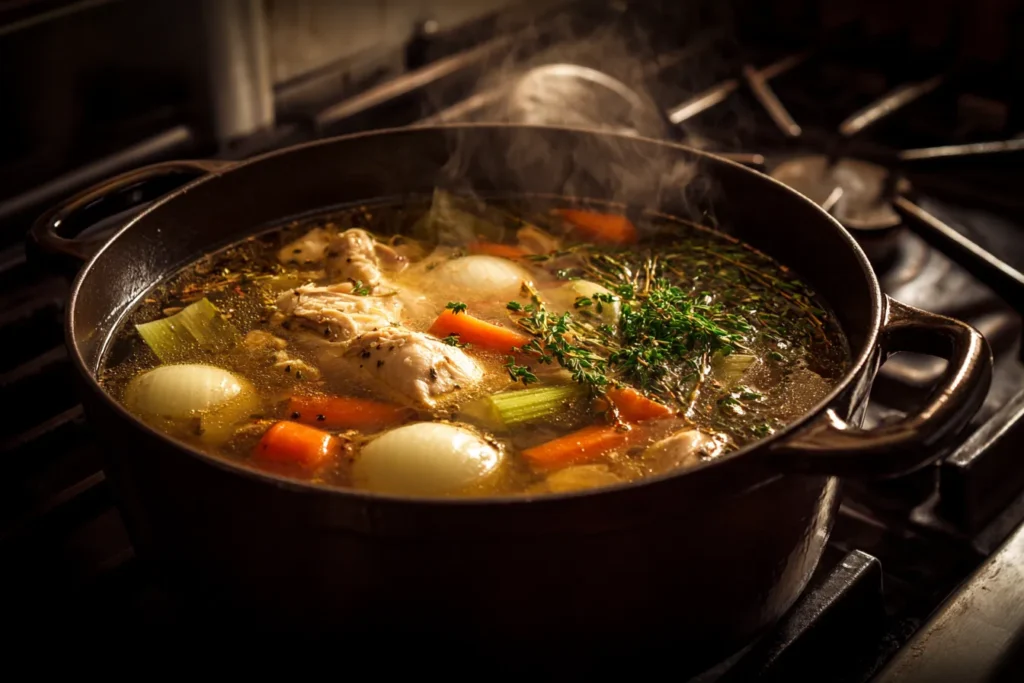
- Place the chicken in a large stockpot and cover with cold water. Bring to a near-boil over medium-high heat, skimming the gray foam from the surface as it rises (about 8–10 minutes). This step is key — it keeps your broth clear.
- Add all aromatics and the apple cider vinegar. Reduce heat to a gentle simmer — just a few lazy bubbles breaking the surface.
- Simmer uncovered for 1.5 hours (for broth) or up to 4 hours (for stock). Resist the urge to stir frequently.
- Remove the chicken. Let it cool enough to handle, then shred the meat and reserve it separately for your soup.
- Strain the broth through a fine-mesh sieve lined with cheesecloth. Discard the spent vegetables.
- Season with salt. If time allows, refrigerate overnight — the fat will solidify and can be easily skimmed.
- Use immediately or store: 5 days in the refrigerator, 6 months in the freezer.
Pro Tip: Leave the onion skin on — it contributes a gorgeous golden color to your broth naturally, no additives needed.

Chicken Soup with Rotisserie Chicken: The Smart Shortcut
Let’s talk about the biggest time-saver in the home soup kitchen: the supermarket rotisserie chicken. For weeknight chicken noodle soup with rotisserie chicken, this approach cuts your active cooking time to under 30 minutes while still delivering deeply satisfying results.
A standard rotisserie chicken yields 3 to 4 cups of shredded meat — perfect for a big pot of soup. Better still, the leftover carcass, skin, and drippings make an excellent express broth. Save every last bit, including the juices that collect at the bottom of the container.
Rotisserie Chicken Noodle Soup — Quick Method: Simmer the rotisserie carcass with aromatics in 8 cups of water or low-sodium store-bought broth for 30–45 minutes. Strain, then add shredded rotisserie chicken meat, cooked egg noodles, and season to taste. Total time: under 1 hour. Flavor: excellent.
Part 2: Classic Chicken Noodle Soup — The American Standard
What Makes a Great Chicken Noodle Soup?
Chicken noodle soup is America’s most recognizable comfort food. It earned that status through simplicity — not complexity. The best bowls are not fancy. They are honest: properly seasoned broth, tender chicken, cooked-through vegetables, and noodles that hold their structure without turning to mush.
The Progresso chicken noodle soup in the red-and-white can has set the flavor memory for millions of Americans. The goal of homemade is not to replicate that — it’s to surpass it in every dimension: deeper color, more pronounced chicken flavor, fresher vegetable sweetness, and noodles cooked to order rather than sitting in liquid for months.
Choosing Your Noodles
The noodle question is surprisingly divisive among soup enthusiasts. Your choice of pasta directly affects the texture of your finished bowl, both at serving time and as leftovers.
Egg noodles (wide or medium): The classic American choice. Sturdy, slightly chewy, golden color. Cook in the soup for 8–10 minutes. Store separately if making ahead.
Orzo: Perfect for chicken orzo soup. Tiny and elegant, orzo absorbs broth beautifully. Watch closely — it can overcook quickly.
Ditalini or small shells: A nod to Italian-American tradition. Holds up well in leftovers.
Rice noodles (gluten-free): The go-to for gluten free chicken noodle soup. Delicate texture, cooks quickly; add to the bowl at service rather than the pot.
Gnocchi (potato): Makes a rich, pillowy soup inspired by Olive Garden chicken gnocchi soup. Purchase fresh or shelf-stable.
No noodles / rice: For Greek lemon chicken soup (avgolemono) or chicken and potato soup, skip noodles entirely in favor of long-grain rice or diced Yukon Gold potatoes.
The Definitive Homemade Chicken Noodle Soup Recipe
Ingredients:
- 8 cups homemade chicken broth (or high-quality low-sodium store-bought)
- 2 cups shredded cooked chicken (rotisserie or poached)
- 3 medium carrots, sliced into coins
- 3 celery stalks, sliced
- 1 medium yellow onion, diced
- 3 garlic cloves, minced
- 2 tablespoons olive oil or unsalted butter
- 2 cups egg noodles (dry weight)
- 1 teaspoon fresh thyme leaves (or 1/2 tsp dried)
- 2 tablespoons fresh flat-leaf parsley, chopped
- Kosher salt and black pepper to taste
- Optional: squeeze of fresh lemon juice at the end
Instructions:
- Heat olive oil in a large heavy-bottomed pot over medium heat. Add the onion, carrots, and celery. Cook, stirring occasionally, until the onion is translucent and the vegetables are beginning to soften, about 7–8 minutes. Add garlic and thyme; cook 1 minute more.
- Pour in the chicken broth and bring to a gentle boil. Taste the broth now and adjust salt — this is the moment that determines the depth of your finished soup.
- Add the egg noodles and cook according to package directions, usually 8–10 minutes, until just tender. Do not overcook.
- Stir in the shredded chicken and heat through for 2–3 minutes.
- Finish with fresh parsley and a squeeze of lemon juice if desired. Serve immediately.
- Storage note: If making ahead, cook noodles separately and store apart from the broth. Combine at serving time to prevent mushiness.
Pro Tip: Season your broth before adding noodles — noodles absorb salt as they cook, so what tastes slightly under-seasoned before adding them will be perfect by the time you ladle up.
Gluten-Free Chicken Noodle Soup
For those avoiding gluten, the great news is that a gluten free chicken noodle soup is effortless to make from scratch — because the broth itself contains no gluten. The only substitution required is the noodle.
The most reliable gluten-free pasta options for soup are brown rice noodles, chickpea pasta, or certified gluten-free egg noodles (available at most major grocery chains). Rice noodles cook faster than wheat-based pasta, so add them in the final 4–5 minutes of cooking, or soak them in boiling water separately and add to individual bowls at service.
Alternatively, skip noodles entirely and use long-grain white rice or cubed Yukon Gold potatoes, both of which are naturally gluten-free and deeply satisfying in a bowl of chicken soup.
Cross-Contamination Alert: If you or someone you cook for has celiac disease (not just gluten sensitivity), use dedicated gluten-free utensils and verify that your broth, soy sauce, and any canned goods carry certified gluten-free labels. Soy sauce is a common hidden gluten source.
Part 3: Restaurant-Inspired Chicken Soups You Can Make at Home
Olive Garden Chicken Gnocchi Soup — Copycat Recipe
Olive Garden’s chicken gnocchi soup has earned a devoted following for its velvety, cream-enriched base and pillowy potato dumplings. It is hearty enough to serve as an entree, and the flavors — roasted garlic, fresh spinach, and thyme — have a way of making you feel cared for.
The key to nailing this at home is achieving the right creamy consistency without making the soup feel heavy. The secret is a light roux (butter and flour cooked together briefly) combined with half-and-half rather than heavy cream. This gives the soup its signature body while keeping it lighter than a pure cream base.
Ingredients:
- 1 lb store-bought potato gnocchi (shelf-stable or refrigerated)
- 2 cups shredded rotisserie chicken
- 4 cups chicken broth
- 2 cups half-and-half
- 1 cup fresh baby spinach
- 1 medium onion, finely diced
- 3 celery stalks, sliced thin
- 2 large carrots, shredded or thinly sliced
- 4 garlic cloves, minced
- 3 tablespoons unsalted butter
- 3 tablespoons all-purpose flour
- 1 tablespoon olive oil
- 1 teaspoon dried thyme
- 1/2 teaspoon dried rosemary
- Salt and pepper to taste
- Fresh parsley for garnish
Instructions:
- In a large pot, heat butter and olive oil over medium heat. Add onion, celery, and carrots. Saute until softened, about 6 minutes. Add garlic, thyme, and rosemary; cook 1 minute.
- Sprinkle flour over the vegetables and stir constantly for 2 minutes to cook out the raw flour taste. This is your roux.
- Gradually whisk in the chicken broth, a little at a time, to prevent lumps. Bring to a gentle simmer.
- Add the gnocchi and cook per package directions (typically 3–4 minutes for shelf-stable; they float to the top when done).
- Reduce heat to low. Stir in the half-and-half and shredded chicken. Simmer gently — do not boil after adding cream.
- Add the baby spinach and stir until wilted, about 1 minute. Season generously with salt and pepper.
- Serve garnished with fresh parsley. Pairs beautifully with crusty bread for dipping.
Pro Tip: Shred the carrots rather than slicing them — it distributes their sweetness throughout the soup more evenly and creates a texture closer to the restaurant original.
Panera Chicken Noodle Soup — Copycat Recipe
Panera Bread’s chicken noodle soup is a lunchtime staple precisely because it tastes clean and unapologetically simple. No cream, no roux — just a clear, perfectly seasoned broth loaded with tender chicken, egg noodles, and vegetables. The hallmark is the balance between the brightness of the broth and the sweetness of the carrots.
The key copycat technique is a touch of turmeric in the broth for color, and a final squeeze of lemon to replicate Panera’s brightness. The vegetables are left in large-ish cuts — Panera’s aesthetic is hearty and visible, not minced fine.
Ingredients:
- 8 cups chicken broth
- 2 cups shredded chicken breast
- 2 large carrots, sliced into thick rounds
- 3 celery stalks, sliced on the diagonal
- 1 medium onion, diced
- 2 garlic cloves, minced
- 2 cups egg noodles
- 2 tablespoons olive oil
- 1/4 teaspoon ground turmeric (for golden color)
- 1 tablespoon fresh lemon juice
- 2 tablespoons fresh parsley, chopped
- Salt and freshly cracked black pepper
Instructions:
- Heat olive oil in a large pot. Saute onion, carrots, and celery over medium heat until slightly softened, about 5 minutes. Add garlic; cook 1 minute.
- Pour in chicken broth. Add turmeric and stir to combine. Bring to a boil.
- Add egg noodles and cook until al dente per package directions.
- Stir in shredded chicken and heat through.
- Finish with lemon juice and fresh parsley. Taste and adjust salt.
- Serve in wide, deep bowls with crusty sourdough on the side.
Pro Tip: Use chicken breast rather than thighs for a cleaner, lighter soup that more closely resembles Panera’s version.
Greek Lemon Chicken Soup (Avgolemono)
Avgolemono — Greek lemon chicken soup — is one of the most elegantly simple soups in the world. It uses only a handful of ingredients: broth, rice, eggs, and lemon juice. Yet the technique of tempering eggs with hot broth creates a silky, naturally thickened soup of extraordinary depth and brightness.
This is genuinely one of the finest things you can do with a good homemade chicken broth. The lemon chicken soup flavor is simultaneously comforting and revitalizing — the citrus cuts through the richness of the broth and makes this the perfect soup for cold season, when you need both comfort and brightness.
Ingredients:
- 8 cups high-quality chicken broth (homemade strongly preferred)
- 1/2 cup long-grain white rice (uncooked)
- 2 cups shredded cooked chicken
- 3 large eggs, room temperature
- 1/3 cup freshly squeezed lemon juice (about 2–3 lemons)
- Salt and white pepper to taste
- Fresh dill or parsley for garnish
- Lemon zest for serving
Instructions:
- Bring chicken broth to a gentle boil in a large pot. Add rice and cook until fully tender, about 15–18 minutes.
- In a medium bowl, whisk together the eggs and lemon juice until light and frothy, about 2 minutes. This step is critical — the more air you incorporate, the creamier your finished soup.
- Tempering (critical step): While whisking constantly, slowly ladle 2–3 cups of the hot broth into the egg-lemon mixture, a little at a time. This gradually raises the temperature of the eggs without scrambling them.
- Pour the tempered egg mixture back into the pot while stirring gently. Reduce heat to low — never let the soup boil again after adding the egg mixture or it will curdle.
- Add the shredded chicken and heat gently for 3–4 minutes.
- Season with salt and white pepper. Serve immediately in warm bowls, garnished with fresh dill and a pinch of lemon zest.
Pro Tip: Room-temperature eggs temper more smoothly than cold ones. Pull them from the refrigerator 30 minutes before you start the soup.
Chicken Orzo Soup
Chicken orzo soup sits at the crossroads of Italian and Greek traditions — the tiny rice-shaped pasta making it heartier than avgolemono but lighter than a classic egg noodle soup. It has become enormously popular in American home kitchens precisely because orzo cooks quickly (8–10 minutes) and the soup comes together in under 45 minutes.
The version most popular in the United States leans Mediterranean: olive oil, garlic, lemon, and sometimes a handful of chopped spinach or kale stirred in at the end. A dusting of parmesan or feta at the table adds a welcome salty, umami note.
Ingredients:
- 8 cups chicken broth
- 2 cups shredded chicken (rotisserie works beautifully here)
- 1 cup dry orzo pasta
- 1 medium onion, finely diced
- 3 carrots, thinly sliced
- 3 celery stalks, sliced
- 3 garlic cloves, minced
- 2 tablespoons olive oil
- 2 tablespoons fresh lemon juice
- 1 teaspoon lemon zest
- 2 cups fresh baby spinach (optional)
- Fresh dill or parsley
- Salt and freshly cracked pepper
- Grated parmesan for serving (optional)
Instructions:
- Heat olive oil in a large pot over medium heat. Saute onion, carrots, and celery until softened, about 6 minutes. Add garlic; cook 1 minute.
- Pour in chicken broth and bring to a boil.
- Add orzo and cook, stirring occasionally, for 8 minutes or until nearly tender (it will continue cooking in the hot broth).
- Add shredded chicken and stir. If using spinach, add now and stir until wilted.
- Remove from heat. Stir in lemon juice and lemon zest. Season well with salt and pepper.
- Ladle into bowls and top with fresh herbs and parmesan if desired.
Pro Tip: If you are making this ahead, cook the orzo separately and stir it in at service. Orzo absorbs liquid aggressively and will turn mushy if it sits in the broth for more than an hour.
Part 4: Hearty Chicken Soups for Fall and Winter
Chicken and Potato Soup
Chicken and potato soup is the unsung hero of the homemade soup canon. Potatoes bring body, starch, and a satisfying heft that transforms a light broth into a full meal. This soup is ideal for cold-weather cooking when you need something filling without the richness of cream.
The best potato choice for soup is Yukon Gold — they have a naturally buttery flavor, hold their shape reasonably well during cooking, and don’t require peeling (a genuine time-saver). Russet potatoes are also excellent if you want a thicker, starchier broth — they tend to break down more, naturally thickening the soup.
Ingredients:
- 8 cups chicken broth
- 2 cups shredded rotisserie or poached chicken
- 1.5 lbs Yukon Gold potatoes, cut into 3/4-inch cubes (unpeeled)
- 1 large onion, diced
- 3 carrots, sliced
- 3 celery stalks, sliced
- 4 garlic cloves, minced
- 2 tablespoons olive oil
- 1 teaspoon smoked paprika
- 1 teaspoon fresh thyme
- 2 tablespoons fresh parsley
- Salt and black pepper
- Optional: 1/2 cup heavy cream or coconut milk for richness
Instructions:
- Heat olive oil in a large pot. Add onion, carrots, and celery; cook until softened, about 7 minutes. Add garlic, paprika, and thyme; cook 1 minute.
- Add potatoes and chicken broth. Bring to a boil, then reduce to a simmer.
- Cook until potatoes are fully tender when pierced with a fork, about 15–18 minutes.
- Using a ladle, scoop out about 1 cup of potatoes and broth. Mash or blend and return to the pot — this naturally thickens the soup.
- Add shredded chicken and heat through. Stir in cream if using.
- Season generously with salt and pepper. Serve topped with fresh parsley.
Pro Tip: Smoked paprika adds an unexpected, gently smoky depth that makes this soup taste like it simmered all day — even when it hasn’t.
French Onion Soup Chicken — A Fusion Worth Making
French onion soup chicken is a brilliant crossover that merges two comfort food classics into one deeply satisfying dish. Think of it as a braised chicken preparation that channels all the caramelized onion, beef broth, and gruyere richness of French onion soup — reinterpreted with chicken as the protein.
In its soup form, this is typically made by caramelizing onions low and slow (40 to 50 minutes — do not rush this), building a broth base from chicken stock and a touch of dry white wine, adding shredded chicken, and finishing with toasted baguette slices blanketed in melted Gruyere floated on top.
The result is spectacular — a golden, intensely savory bowl that impresses guests and satisfies cravings simultaneously. It is also a wonderful use of a rotisserie chicken.
The Caramelization Commitment: True caramelized onions require 40–50 minutes of patient cooking over medium-low heat with occasional stirring. Shortcuts (high heat, baking soda tricks) change the texture and flavor profile. For French onion soup chicken, there is no substitute for the real process. The payoff is profound.
Chicken Taco Soup Recipe
Chicken taco soup lives at the intersection of Tex-Mex and comfort food, and it has earned a legitimate place in the homemade chicken soup conversation. It is one of the easiest soups to assemble (largely pantry-based), freezes exceptionally well, and can feed a crowd without demanding much effort.
The flavor profile is bold — cumin, chili powder, garlic, and a touch of chipotle — balanced by the creaminess of white beans or corn and the brightness of lime juice and fresh cilantro. It is also naturally gluten-free, making it an accessible option for a range of dietary needs.
Ingredients:
- 2 cups shredded rotisserie chicken (or poached chicken breast)
- 6 cups chicken broth
- 1 can (15 oz) black beans, drained and rinsed
- 1 can (15 oz) corn kernels, drained
- 1 can (14 oz) fire-roasted diced tomatoes
- 1 can (4 oz) diced green chiles
- 1 medium onion, diced
- 3 garlic cloves, minced
- 1 tablespoon olive oil
- 2 teaspoons cumin
- 1.5 teaspoons chili powder
- 1/2 teaspoon smoked paprika
- Juice of 1 lime
- Salt and pepper to taste
- Toppings: sour cream, shredded cheese, tortilla chips, avocado, cilantro
Instructions:
- Heat olive oil in a large pot over medium heat. Add onion and cook until softened, about 5 minutes. Add garlic and spices; cook 1 minute until fragrant.
- Add the tomatoes (with juices), green chiles, black beans, corn, and chicken broth. Stir to combine.
- Bring to a boil, then reduce to a simmer. Cook for 15–20 minutes to meld the flavors.
- Add the shredded chicken and heat through for 5 minutes.
- Stir in lime juice and season with salt and pepper.
- Serve with all your favorite toppings — this is a build-your-own bowl experience.
Pro Tip: Crush a handful of tortilla chips into the bottom of each bowl before ladling in the soup — they provide crunch, body, and a subtle corn flavor that ties everything together.
Part 5: Cream of Chicken Soup — From Scratch and Substitutions
Homemade Cream of Chicken Soup
Cream of chicken soup is the unsung workhorse of American baking and casserole cooking. It serves as the binding agent in chicken pot pie with cream of chicken soup, the creamy base of countless casseroles, and the sauce in family-recipe green bean dishes passed down through generations.
The canned version is convenient but notoriously high in sodium and heavily processed. Making it from scratch takes under 20 minutes and produces a far superior product — richer, more flavorful, and entirely customizable in salt level.
Ingredients:
- 3 tablespoons unsalted butter
- 3 tablespoons all-purpose flour
- 1.5 cups chicken broth
- 1/2 cup whole milk or heavy cream
- 1/2 cup finely diced cooked chicken (optional but adds flavor)
- 1/4 teaspoon garlic powder
- 1/4 teaspoon onion powder
- Salt and white pepper to taste
- Pinch of celery salt
Instructions:
- Melt butter in a medium saucepan over medium heat. Add flour and whisk constantly for 2 minutes to create a roux — it should smell nutty and turn pale golden.
- Gradually pour in the chicken broth while whisking constantly to prevent lumps. The mixture will thicken quickly.
- Add the milk or cream and whisk to incorporate. Bring to a gentle simmer, stirring frequently.
- Add diced chicken, garlic powder, onion powder, and celery salt. Simmer 3–4 minutes until creamy and thick.
- Season with salt and white pepper. Use immediately as a casserole binder, or thin with additional broth to serve as a soup.
Pro Tip: This recipe makes approximately 1.5 cups — equivalent to one standard can of condensed cream of chicken soup. Double the recipe for casseroles that call for two cans.
Gluten-Free Cream of Chicken Soup
For gluten free cream of chicken soup, the roux is the only component that needs adjustment. All-purpose flour simply swaps out for any of the following alternatives.
Cornstarch slurry: 2 tablespoons cornstarch dissolved in 2 tablespoons cold water, whisked in at the end. Clear, neutral, slightly glossy finish. This method is also the fastest, since there is no need to cook out a flour roux.
Sweet rice flour: Swap 1:1 for all-purpose. Best roux-based substitute — closest to wheat flour texture.
Arrowroot powder: Delicate, clear finish. Does not hold well when reheated; use only for immediate service.
GF AP flour blend: Swap 1:1. Check that it contains xanthan gum for proper binding. Slightly grainier finish.
Potato starch: Works well; produces a slightly heavier, starchier consistency. Good for casseroles.
Substitute for Cream of Chicken Soup — 7 Reliable Alternatives
Whether you’ve run out, are avoiding processed ingredients, or need a dairy-free option, here are the best substitutions for cream of chicken soup in recipes that call for it as a casserole binder or sauce base.
- Homemade roux-based cream of chicken (above recipe) — the gold standard.
- Cream of mushroom soup — same consistency, earthy mushroom flavor. Works well in most casseroles.
- Greek yogurt + chicken broth — mix 3/4 cup plain whole-milk Greek yogurt with 1/4 cup broth. Tangy but effective. Lower in fat.
- Sour cream — use undiluted as a 1:1 swap. Rich, slightly tangy. Excellent in chicken casseroles.
- Coconut cream + broth (dairy-free) — 1/2 cup coconut cream + 1/2 cup chicken broth + 1 tablespoon cornstarch. Works surprisingly well and adds subtle sweetness.
- Cashew cream (vegan) — blend 1/2 cup soaked raw cashews with 3/4 cup broth until smooth. Neutral, rich, excellent binder.
- White bean puree + broth — blend 1 cup cooked white beans with 1/2 cup broth. Creamy, high-protein, naturally gluten-free.
Chicken Pot Pie with Cream of Chicken Soup
Chicken pot pie with cream of chicken soup is one of America’s best-loved baked casseroles — a golden, flaky-crusted masterpiece concealing a bubbling, creamy filling of chicken, peas, carrots, and potatoes. Cream of chicken soup (canned or homemade) is the shortcut that makes a genuinely excellent pot pie accessible on a weeknight.
The assembly is straightforward: line a pie dish with pastry, fill with a mixture of shredded rotisserie chicken, frozen vegetables, and a can or batch of cream of chicken soup diluted slightly with broth or milk, top with a second pastry layer, vent, and bake at 400°F for 30–35 minutes until golden.
For a gluten-free chicken pot pie, use a gluten-free pie crust (store-bought options are widely available) and your homemade gluten-free cream of chicken soup. The result is fully satisfying and indistinguishable from the original to most palates.
Shortcut Pot Pie Trick: In a hurry? Skip the bottom crust entirely — fill a baking dish with your chicken and vegetable mixture, and top with store-bought puff pastry (gluten-free or regular) or even refrigerated biscuits. Press them lightly over the filling and bake per package directions. Same flavors, fraction of the effort.
Part 6: Seasonal and Specialty Chicken Soups
The Best Chicken Soup for Cold and Flu Season
The claim that chicken soup helps fight colds has been tested scientifically — and while the evidence is modest, several studies have found biological plausibility behind the folk wisdom. A 2000 study published in Chest (the journal of the American College of Chest Physicians) found that chicken soup inhibited neutrophil migration, which may reduce upper respiratory congestion.
More practically, hot broth hydrates, the steam opens nasal passages, and the nourishing simplicity of a well-made bowl of soup provides both calories and comfort when appetite is suppressed. For maximum immune-boosting potential, enhance your basic broth with a whole head of garlic (roasted or raw, added during simmering), fresh ginger (a 2-inch piece, sliced), and turmeric (1/2 teaspoon). These additions have well-documented anti-inflammatory properties.
Cold-Season Broth Boosters: Roasted garlic (whole head, wrapped in foil at 400°F for 40 minutes) adds sweet depth plus allicin. Fresh ginger adds warmth and mild antibacterial compounds. Turmeric adds color and curcumin. Star anise adds unexpected complexity and has traditional medicinal use in Chinese herbalism. Use any or all.
Make-Ahead and Freezer-Friendly Chicken Soup
One of homemade chicken soup’s greatest advantages over restaurant and canned versions is that it freezes beautifully. A batch of broth or fully assembled soup can be made on a Sunday and provide comforting weeknight meals for months.
The key freezer rules: always freeze soup without noodles or rice — these absorb liquid and turn mealy upon reheating. Freeze broth or the soup base (broth + vegetables + chicken), then cook fresh noodles or rice when you reheat and serve. Use freezer-safe containers with 1 inch of headspace to allow for expansion, and label clearly with date and contents. Frozen chicken soup is best consumed within 4 to 6 months.
Chicken Soup for Specific Dietary Needs
Modern chicken soup is entirely adaptable to virtually every dietary pattern.
Gluten-free: Use GF noodles or rice; substitute cornstarch for flour in cream soups; verify broth labels.
Dairy-free: Skip cream additions; use full-fat coconut milk or oat milk for cream soups; use olive oil instead of butter.
Low-sodium: Make broth from scratch (no added salt during cooking); add salt only at the table.
Paleo / Whole30: Use cauliflower florets or zucchini noodles instead of pasta; skip legumes; use arrowroot to thicken.
Keto / Low-carb: Omit noodles and potatoes; add extra vegetables; a splash of heavy cream adds richness and fat.
High-protein: Use extra chicken (thigh meat preferred); add white beans or chickpeas for additional protein.
Part 7: Troubleshooting, Tips, and Techniques
Why Does My Chicken Soup Taste Flat?
A flat-tasting chicken soup is almost always an issue of insufficient seasoning, insufficient fat, or insufficient acid. Here is how to diagnose and fix each problem.
Too little salt: Salt does not make soup taste salty — it makes it taste like chicken soup. Add salt in stages, tasting as you go. Most home cooks dramatically under-season their broth.
Too little fat: Fat carries flavor. If you skimmed too aggressively or used lean chicken breast exclusively, the soup can taste thin and hollow. A tablespoon of butter stirred in at the end adds immediate richness.
Missing acid: A squeeze of lemon juice, a splash of white wine vinegar, or even a spoonful of tomato paste (added during sauteing) wakes up a flat broth dramatically.
Vegetables undercooked: Half-raw carrots and celery taste raw, not sweet. Make sure vegetables are genuinely tender before adding noodles or finishing.
Bland broth base: If using store-bought broth, add a parmesan rind, a bay leaf, and a smashed garlic clove while the soup simmers. Even 20 minutes of this treatment significantly improves commercial broth.
How to Store and Reheat Chicken Soup
Refrigerator (broth): Up to 5 days in an airtight container. Skim the solidified fat before reheating or stir it in for richness.
Refrigerator (soup with noodles): Up to 3 days, but noodles will absorb broth and swell. Add a splash of extra broth when reheating.
Freezer (broth only): 4–6 months in freezer-safe containers with 1 inch headspace. Freeze in 2-cup portions for flexible use.
Freezer (soup, no noodles): 4–6 months. Freeze without starch components; cook noodles or rice fresh when serving.
Reheating: Stovetop over medium-low heat, stirring occasionally. Microwave in covered containers at 70% power. Avoid boiling — it toughens chicken and muddies broth.
Broth Concentrate: Making Your Own Soup Base
One of the most useful techniques in a soup-making repertoire is making broth concentrate — essentially reducing your finished broth by two-thirds to create a potent paste or liquid that reconstitutes instantly with hot water.
To make a concentrate, simmer your finished, strained broth uncovered over medium heat until it has reduced to one-third of its original volume. Pour into ice cube trays and freeze. Each cube is equivalent to roughly half a cup of broth when dissolved in 1 cup of hot water. This is far superior to most commercial bouillon cubes in both flavor and ingredient quality.
Part 8: Buying Guide — When Store-Bought Is the Right Choice
Progresso Chicken Noodle Soup: A Benchmark and Its Limitations
Progresso chicken noodle soup is, by many objective measures, among the better canned chicken soups on the American market. It uses white and dark chicken meat, has a reasonably clean ingredient list compared to many competitors, and delivers a consistent, familiar flavor that many Americans have grown up eating.
Its limitations are well-understood by anyone who has made homemade: the sodium content is high (typically 690–890mg per serving, and the can contains two servings), the broth is thin compared to a gelatin-rich homemade stock, and the vegetables and noodles are, by necessity, fully cooked before canning — meaning they are soft rather than pleasantly tender.
Progresso is excellent for emergency sick-day preparedness, quick lunches, and a benchmarking exercise — tasting it side-by-side with your homemade version is deeply motivating.
Choosing the Best Store-Bought Chicken Broth
For weeknight soups when homemade broth isn’t available, the choice of store-bought broth matters more than most cooks realize. Look for low-sodium options (you can always add salt; you cannot remove it), broths with “chicken stock” or “chicken broth” listed as the first ingredient (not water), and products that gel when cold (a sign of real gelatin content from bones).
Brands consistently well-reviewed by independent taste testers include Swanson’s organic low-sodium chicken broth, Kitchen Basics original chicken stock, and Imagine Foods free-range chicken broth. The Trader Joe’s organic broth is also frequently praised for quality at an accessible price point.
Enhancement Tip: If you find yourself with store-bought broth and want to deepen its flavor quickly, simmer it with a halved onion, 2 smashed garlic cloves, a carrot, a celery stalk, and a bay leaf for 20 minutes. Strain and use. This simple step adds meaningful depth to commercial broth at minimal time cost.
Frequently Asked Questions About Homemade Chicken Soup and Broth
Can you make chicken soup with rotisserie chicken?
Absolutely — and many home cooks argue it is the smartest weeknight approach. A rotisserie chicken provides 3–4 cups of seasoned, cooked meat and a carcass for making a quick 45-minute broth. Simply simmer the carcass in water with aromatics, strain, shred the reserved meat, add fresh vegetables and noodles, and you have a from-scratch-quality soup in about an hour total.
What is the best substitute for cream of chicken soup?
The best substitute depends on your goal. For casseroles and binders, the homemade roux-based cream of chicken recipe in this guide is superior in every way to canned. For a quick swap, equal parts sour cream and chicken broth provides creaminess and tang. Greek yogurt is the best lower-fat alternative. For dairy-free needs, a cashew cream or white bean puree both work beautifully.
How do you make gluten-free chicken noodle soup?
The broth itself is naturally gluten-free, making this easy. Substitute the noodles with certified gluten-free rice noodles, brown rice pasta, or chickpea pasta. Cook noodles separately from the broth to prevent them from absorbing too much liquid. Verify that any store-bought broth is labeled gluten-free, as some add thickeners containing wheat. Avoid soy sauce as a flavoring unless it specifies tamari (GF soy sauce).
Why does homemade chicken soup gel when refrigerated?
This is a sign of quality, not spoilage. When you simmer chicken bones for an extended period, the collagen in the connective tissue breaks down into gelatin. This gelatin is what causes the broth to set like loose Jell-O when cold. It liquefies again completely upon gentle reheating. A broth that gels is richer in protein and body than one that stays liquid — it’s what professional chefs call a “good stock.”
What is the difference between lemon chicken soup and avgolemono?
Avgolemono is the Greek word for egg-lemon, which precisely describes the soup’s distinguishing technique: eggs and lemon juice are tempered together with hot broth to create a silky, naturally creamy consistency — no cream, no roux, just emulsified eggs providing the body. Lemon chicken soup is a broader category that may refer to any chicken soup with pronounced lemon flavor, including avgolemono, or simply a classic broth-based soup brightened with lemon juice at the end. In American usage, the terms are often used interchangeably.
How long does homemade chicken broth last?
Refrigerated in an airtight container: up to 5 days. Frozen in proper freezer containers: 4 to 6 months at peak quality. Some sources suggest up to 12 months frozen, but flavor degrades beyond 6 months. Always smell and taste broth before using — a sour or off smell indicates spoilage regardless of the timeline.
Can I use bone broth instead of chicken broth?
Yes, and it’s an excellent upgrade. Bone broth is essentially a long-cooked stock with particularly high gelatin and mineral content. It will make your soup richer and more nourishing. Use it 1:1 in place of regular broth. If using a highly concentrated store-bought bone broth, dilute as directed on the package — many are twice the concentration of regular broth.
Conclusion: The Enduring Case for Homemade
Chicken soup, in all its forms, is perhaps the most democratic of all foods. It asks nothing of you in the way of equipment, exotic ingredients, or advanced technique. It rewards patience and attention with results that no can, no drive-through, and no delivery service can replicate.
The recipes and techniques in this guide are designed to meet you wherever you are — whether that means a Sunday afternoon commitment to a four-hour bone broth, a Tuesday-night rotisserie chicken shortcut, or an emergency bowl of chicken taco soup assembled from pantry staples in 30 minutes.
What unites every bowl in this guide is the same thing that has made chicken soup a human constant across cultures and centuries: intention. Someone cared enough to make it from scratch, or nearly so. That care is present in every spoonful — in the depth of the broth, the sweetness of the carrots, the yielding texture of well-cooked chicken, and the simple, profound comfort of a warm bowl on a hard day.
Make the broth. Taste as you go. Season bravely. And serve it to someone you love.
Margaret Ellen Holt, RDN, is a Registered Dietitian Nutritionist and Senior Food Editor at Nourished Table Magazine, where she has covered home cooking, nutrition science, and American food culture for over 14 years. A graduate of the Culinary Institute of America and Cornell University’s Division of Nutritional Sciences, Margaret specializes in translating professional culinary technique for home cooks without sacrificing flavor or nutrition. She is the author of three cookbooks, including The Whole Chicken Cookbook, and her work has appeared in Food & Wine, Bon Appétit, and The Washington Post.
To know more
| Source | link |
|---|---|
| “study published in Chest” | https://journal.chestnet.org |
| “anti-inflammatory properties of turmeric” | https://www.ncbi.nlm.nih.gov |
| “benefits of garlic allicin” | https://www.healthline.com/nutrition/garlic-fights-colds-and-flu |
| “collagen and gelatin explained” | https://www.seriouseats.com/the-food-lab-how-to-make-great-chicken-stock |